




The Ceylon Chamber of Commerce will host a business networking session with a visiting delegation from the Indian Chamber of Commerce (ICC) on 28 July at the Hilton Colombo Residences, offering Sri Lankan businesses a valuable opportunity to connect with Indian companies and explore new avenues for trade, investment, and commercial partnerships.
The networking session is designed to facilitate direct business-to-business (B2B) interactions, enabling participants to identify partnership opportunities, discuss potential collaborations, and establish new commercial relationships across a wide range of industries.
The visiting 30-member delegation represents a diverse cross-section of Indian industries, highlighting the growing depth of economic engagement between Sri Lanka and India. Participating companies span sectors including manufacturing, construction, engineering and infrastructure, healthcare and pharmaceuticals, IT and digital services, renewable energy, agriculture, travel and tourism, water treatment, consultancy and advisory services, industrial minerals, food processing, breweries, distilleries and wineries, exports, immigration services, fine arts and heritage, and sports products.
With India remaining one of Sri Lanka's largest trading partners and a key source of investment, the event is expected to provide a timely platform for businesses to strengthen cross-border relationships and explore opportunities in one of the region's fastest-growing markets.
The networking session is being organised in collaboration with the Indo Lanka Chamber of Commerce and Industry (ILCCI), which operates under the Ceylon Chamber's network to promote bilateral business engagement between Sri Lanka and India.
The event will take place from 10.00 a.m. to 11.30 a.m. at the Hilton Colombo Residences. Businesses interested in participating are encouraged to register early due to limited availability.
Sri Lanka’s Foreign Reserves Decline to US$6.4 Billion Amid Higher Imports, CBSL Expects Recovery
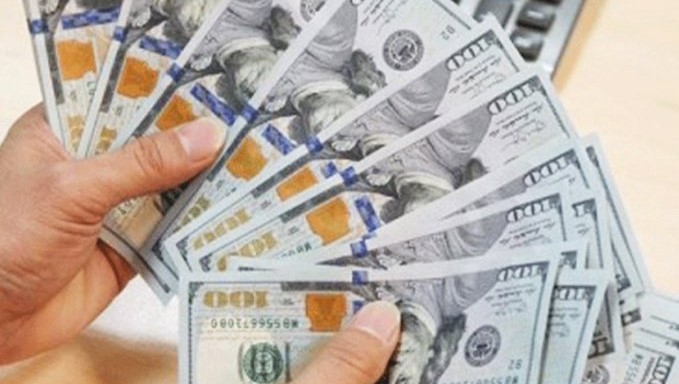
Sri Lanka's foreign exchange reserves have come under renewed focus after official reserves declined from US$6.8 billion to US$6.4 billion, prompting concerns over the country's external position. However, the Central Bank of Sri Lanka (CBSL) has attributed the decline to increased import expenditure rather than foreign exchange market intervention and expects reserves to recover with upcoming external inflows.
The issue was raised by Opposition MP Ravi Karunanayake, who noted that the decline moved Sri Lanka further away from the US$8.9 billion year-end reserve target outlined under the International Monetary Fund (IMF) programme. He suggested that the Central Bank may have been selling US dollars to support the rupee and prevent further currency depreciation.
Responding during the Central Bank's latest monetary policy review, CBSL Governor Dr. Nandalal Weerasinghe rejected the claim, explaining that the reduction in reserves was mainly driven by elevated import demand.
According to the Governor, Sri Lanka's monthly import bill has remained above US$2 billion for several months, reaching US$2.4 billion during one month. The increase was largely attributed to higher global petroleum prices, greater imports of vehicles and fuel, petroleum suppliers building buffer stocks in April, and broader import growth supported by private sector credit expansion of around 27%.
Despite the recent decline, Dr. Weerasinghe expressed confidence that the country's reserve position will improve in the coming months, supported by inflows from multilateral development partners. Sri Lanka has already received the fifth and sixth disbursements under the IMF programme, while additional funding is expected from the Asian Development Bank (ADB) and the World Bank.
The Governor noted that although the gross official reserve target remains above US$8 billion by the end of the year, the IMF programme also monitors the Net International Reserves (NIR) target, which excludes certain short-term liabilities and is set at a lower level.
He added that reserve and NIR targets for end-June and end-December were revised to reflect prevailing market conditions. While the figures remain provisional, the Central Bank believes it has achieved the revised end-June NIR target. Continued purchases of foreign exchange from the domestic market, together with expected multilateral inflows, are anticipated to strengthen Sri Lanka's reserve position over the remainder of the year.
Sri Lanka’s Private Sector to Host Business Networking Session with Indian Chamber of Commerce