




What began nine years ago as a small guesthouse in Negombo has developed into an inclusive tourism initiative with ambitions reaching well beyond Sri Lanka. Lilly Palace Villa, which introduced a sign-language-based hospitality model, has welcomed more than 1,000 visitors from over 15 countries and currently holds a 4.8-star rating.
The experience gained through the homestay has since led to the creation of Ceylon Deaf Adventures (CDA), a Negombo-based travel enterprise focused on developing tourism experiences for Deaf and hard-of-hearing travellers.
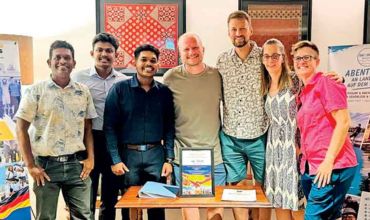
CDA has now entered into a Memorandum of Understanding (MOU) with Germany-based DeafVentures, marking a new stage in the development of its international operations. Announced on August 20, the agreement is understood to be the first formalised cross-border Deaf tourism partnership involving a Sri Lankan tourism operator.
The partnership builds on an existing relationship between the two organisations. Prior to signing the MOU, CDA and DeafVentures had jointly organised an inbound tour for a group of German Deaf travellers, providing a fully accessible travel experience with sign-language guidance throughout their journey, from arrival in Sri Lanka to departure.
Under the new agreement, the two companies will work together on the development, marketing and operation of Deaf tourism packages linking Sri Lanka and Germany.
The partnership comes as the global tourism industry continues to face challenges in adequately serving Deaf and hard-of-hearing travellers. While the demand for accessible travel experiences is significant, many destinations continue to have limited access to accommodation providers, tour operators and guides capable of communicating directly through sign language.
CDA's experience through Lilly Palace Villa has provided a practical foundation for addressing this gap, demonstrating how sign-language communication can be incorporated into the hospitality and tourism experience rather than being treated solely as an additional accessibility service.
With the new partnership, the Negombo-based enterprise aims to build on that experience and develop a more structured model for inclusive tourism connecting Sri Lanka with international Deaf travel markets.
SLTDA Launches NTSP Campaign to Raise Tourism Standards Nationwide
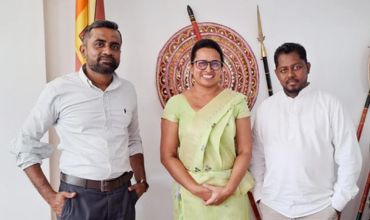
The Sri Lanka Tourism Development Authority (SLTDA) has launched a nationwide capacity-building campaign aimed at strengthening the capabilities of micro, small and medium-sized enterprises (MSMEs) operating within the country's tourism sector.
Titled “Grow Your Tourism Business with National Tourism Skilling Program (NTSP),” the initiative was officially launched on 31 August in Ella, with the programme focusing on improving the digital readiness and business formalisation of smaller tourism enterprises across the country.
The campaign is being implemented under the leadership of Tourism Deputy Minister Prof. Ruwan Ranasinghe, while the islandwide programme is being coordinated by SLTDA Director of Standards and Quality Assurance Tharanga Rupasinghe.
Through the NTSP framework, the initiative seeks to provide rural tourism operators and other small-scale businesses with practical tools and knowledge to strengthen their operations and align with modern hospitality standards.
Key areas covered by the campaign include access to digital payment solutions, online marketing practices and business compliance frameworks. The programme is aimed at supporting a wide range of stakeholders, including village-level tourism businesses, handicraft artisans and independent tour operators.
The initiative also seeks to encourage greater integration of smaller tourism enterprises into the formal tourism economy, while helping them respond to changing consumer expectations and the increasing importance of digital platforms in the global travel industry.
Speaking at the launch in Ella, Deputy Minister Prof. Ruwan Ranasinghe highlighted the importance of strengthening smaller tourism stakeholders as part of the country's broader tourism development efforts.
“True economic resilience in our tourism sector cannot be achieved through large-scale infrastructure alone, but must be built from the ground up by transforming our local communities and regional MSMEs into direct, digitally enabled beneficiaries of global travel traffic,” Prof. Ranasinghe said.
The SLTDA expects the campaign to contribute towards building a more digitally capable and standards-oriented tourism ecosystem, with greater opportunities for regional and community-based enterprises to participate in the country's growing tourism economy.
Negombo Homestay’s Sign-Language Tourism Initiative Gains International Recognition