





Jio Platforms shares surged 21% on their Mumbai stock market debut on Wednesday, marking a strong start for India's largest-ever initial public offering (IPO) and the first stock market listing by Mukesh Ambani's Reliance Industries group in two decades.
The successful listing has propelled Jio, whose telecommunications business serves more than 530 million customers, into the ranks of India's largest publicly traded companies by market capitalisation. The digital and telecoms business has attracted investments from global technology giants, including Meta Platforms and Google's parent company, Alphabet.
Jio shares opened at 1,358 rupees, significantly above their IPO offer price of 1,119 rupees, reflecting strong investor demand.
The listing represents a major milestone in Ambani's broader strategy to transform Reliance Industries from a traditional oil and chemicals conglomerate into a diversified consumer and technology powerhouse, often described as an "everything company".
The listing ceremony was attended by Mukesh Ambani, his eldest son Akash Ambani, who serves as Jio's Managing Director, and his wife Nita Ambani. His other children, Isha and Anant Ambani, were also present.
An emotional moment unfolded during the ceremony when Mukesh Ambani was seen in tears as Anant reflected on the history, legacy and development of Reliance and Jio in his speech.
India's IPO Market Continues to Gather Momentum
Ahead of the stock market debut, major Indian newspapers carried full-page advertisements from Reliance Jio featuring the message "Thank You, India", acknowledging the public's support.
Investor enthusiasm was also evident in the unofficial grey market, where Jio shares were trading at a premium of approximately 22% ahead of the listing.
India has emerged as the world's busiest IPO market this year in terms of the number of offerings, recording 246 listings so far. However, in terms of total funds raised, the country ranked fourth with $13.5 billion, behind the United States, mainland China and Hong Kong, according to data from LSEG.
President Calls for Faster Implementation of Projects to Expand Passenger Capacity at Katunayake International Airport
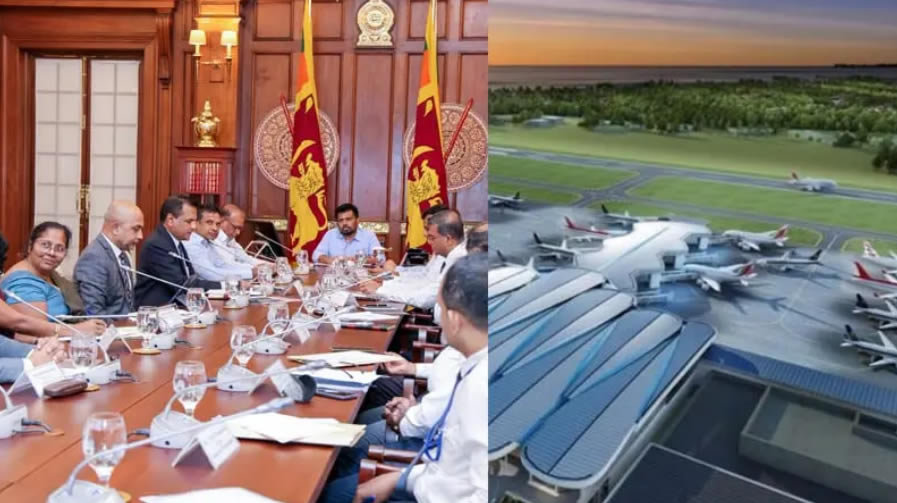
President Anura Kumara Dissanayake has instructed officials to accelerate ongoing projects aimed at expanding passenger-handling capacity at Bandaranaike International Airport (BIA) in Katunayake while enhancing facilities and convenience for air travellers.
The President also stressed the importance of developing other domestic airports across the country alongside the expansion of Katunayake Airport to cater to future aviation demands.
He made these remarks during a discussion on the 2027 Budget proposals relating to the Ministry of Ports and Civil Aviation, held at the Presidential Secretariat on Tuesday (27).
During the meeting, officials reviewed the progress of ongoing development projects at Katunayake Airport and discussed plans to further strengthen its infrastructure, including improvements to the surrounding road network.
Particular attention was given to the status of projects designed to increase passenger-handling capacity at Katunayake Airport and other domestic airports, as well as measures to upgrade airport facilities and improve the overall experience of passengers.
The meeting was attended by Minister of Ports and Civil Aviation and Minister of Energy Anura Karunathilaka, Minister of Labour and Deputy Minister of Finance and Planning Dr Anil Jayantha Fernando, Deputy Minister of Ports and Civil Aviation Janith Ruwan Kodituwakku, Chief of Staff to the President Prabath Chandrakeerthi, and senior government officials representing the relevant ministries and institutions.
Jio Shares Jump 21% in Mumbai Debut Following Record-Breaking $3.2 Billion Indian IPO