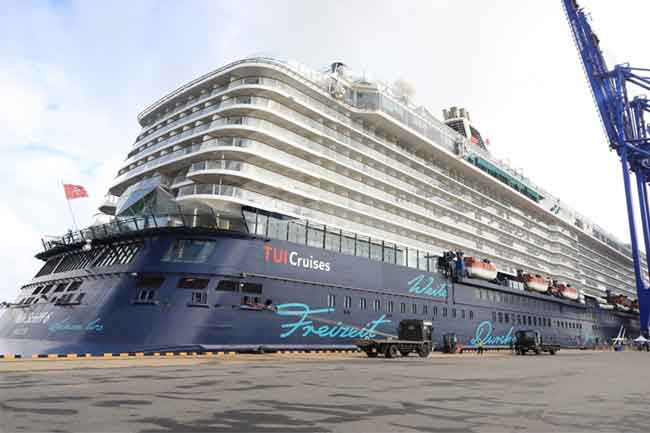





A warm “Ayubowan” was extended to the elegant Mein Schiff 6 as it made its much-anticipated calls to Sri Lanka, arriving first at Hambantota Port on 19 May 2026 and later at Colombo Port on 20 May 2026.
The vessel brought thousands of international visitors eager to experience Sri Lanka’s culture, hospitality, and natural beauty.
Operated by TUI Cruises in partnership with Aitken Spence Travels, the arrival of Mein Schiff 6 carries added significance. Following earlier disruptions to tourism caused by Cyclone Ditwa, the ship’s previous call was seen as an important boost in restoring confidence in Sri Lanka’s cruise sector.
This latest visit continues that momentum, with more than 1,800 passengers taking part in excursions organized by Aitken Spence Travels. These tours contributed to a wide network of local stakeholders, including guides, transport providers, small businesses, and artisans.
The repeated calls at both Hambantota and Colombo further underline Sri Lanka’s growing reputation as a multi-port cruise destination. With its combination of heritage, coastline, and cultural experiences, the country continues to attract international cruise operators.
The German passengers and crew of Mein Schiff 6 were wished “Ayubowan,” with hopes that their visit created lasting memories of Sri Lanka.
Yala National Park: Sri Lanka’s Wild Heart for U.S. Safari Travelers
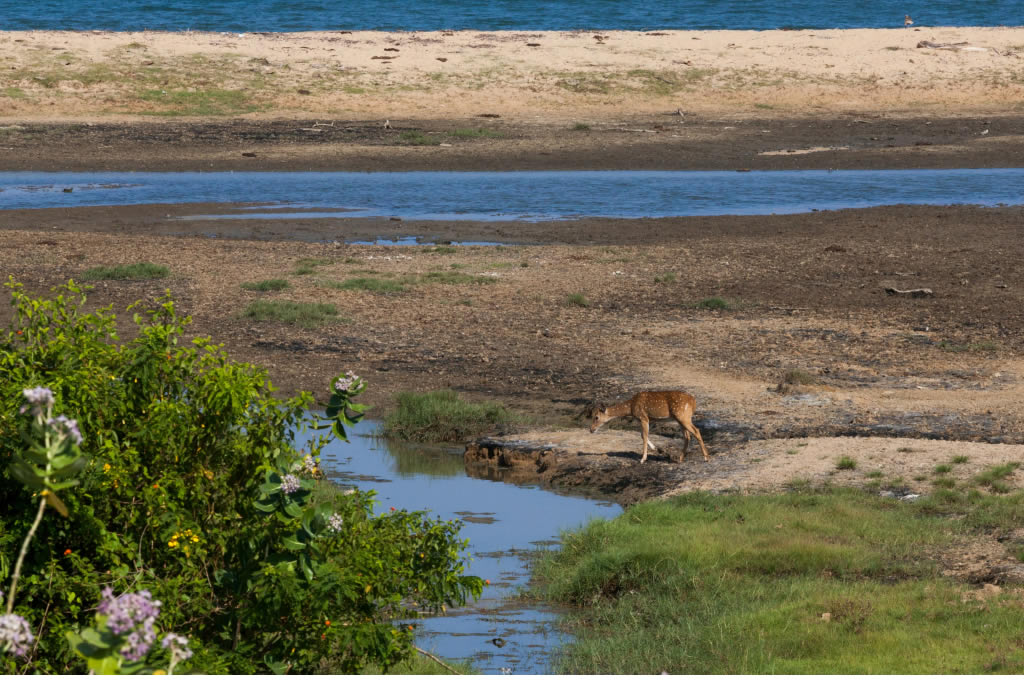
First light over Yala National Park in southern Sri Lanka feels almost cinematic. Jeep engines idle in the darkness, peacocks call from the scrub, and the air carries a mix of dust and salt drifting in from the Indian Ocean as rangers open the park gates. Within minutes, vehicles are moving through Yala National Park, scanning rocky outcrops for the flick of a leopard’s tail or the slow movement of a wild Asian elephant.
Yala National Park: The Iconic Landmark of Tissamaharama
Yala National Park sits along Sri Lanka’s southeast coast, a few hours’ drive from Tissamaharama, and has grown into one of Asia’s most celebrated wildlife destinations. According to Sri Lanka Tourism and the Department of Wildlife Conservation, it is the country’s most visited and second-largest national park, known for its rich mix of wildlife, lagoons, scrubland, and coastline where the jungle meets the Indian Ocean.
For American travelers who dream of safari experiences but assume they require a trip to Africa, Yala offers a more accessible alternative. It is frequently cited by outlets such as National Geographic for having one of the highest densities of wild leopards in the world, especially in the park’s Block 1 area. This makes sightings of big cats during daylight hours more likely than in many larger wildlife reserves.
The landscape is unmistakably Sri Lankan. At junctions, small shrines appear; Buddhist stupas rise just beyond the park boundaries; and coastal dunes meet crashing waves while buffalo graze nearby. Instead of open African savanna, visitors travel through thorny scrub forest, granite rock formations, and seasonal lakes that reflect soft pink sunrise skies. The result is a safari experience that blends global appeal with a strong sense of local identity.
The History and Meaning of Yala National Park
Long before it appeared on modern maps as Yala National Park, this region was part of ancient Ruhuna, a kingdom frequently mentioned in early Sri Lankan chronicles. Archaeological findings documented by the Department of Archaeology point to ancient settlements, irrigation tanks, and temples scattered across the wider Yala landscape, forming part of the larger Ruhuna complex.
Formal protection began during the British colonial period. According to the Department of Wildlife Conservation and related heritage records, Yala was first declared a wildlife sanctuary in 1900 and later designated as a national park in 1938. This gives Yala nearly a century of protected status—older than many well-known U.S. national parks established after World War II, and only a few decades younger than early landmarks such as Grand Canyon National Park, established in 1919.
Mein Schiff 6 has called at Hambantota and Colombo, further strengthening Sri Lanka’s cruise tourism growth