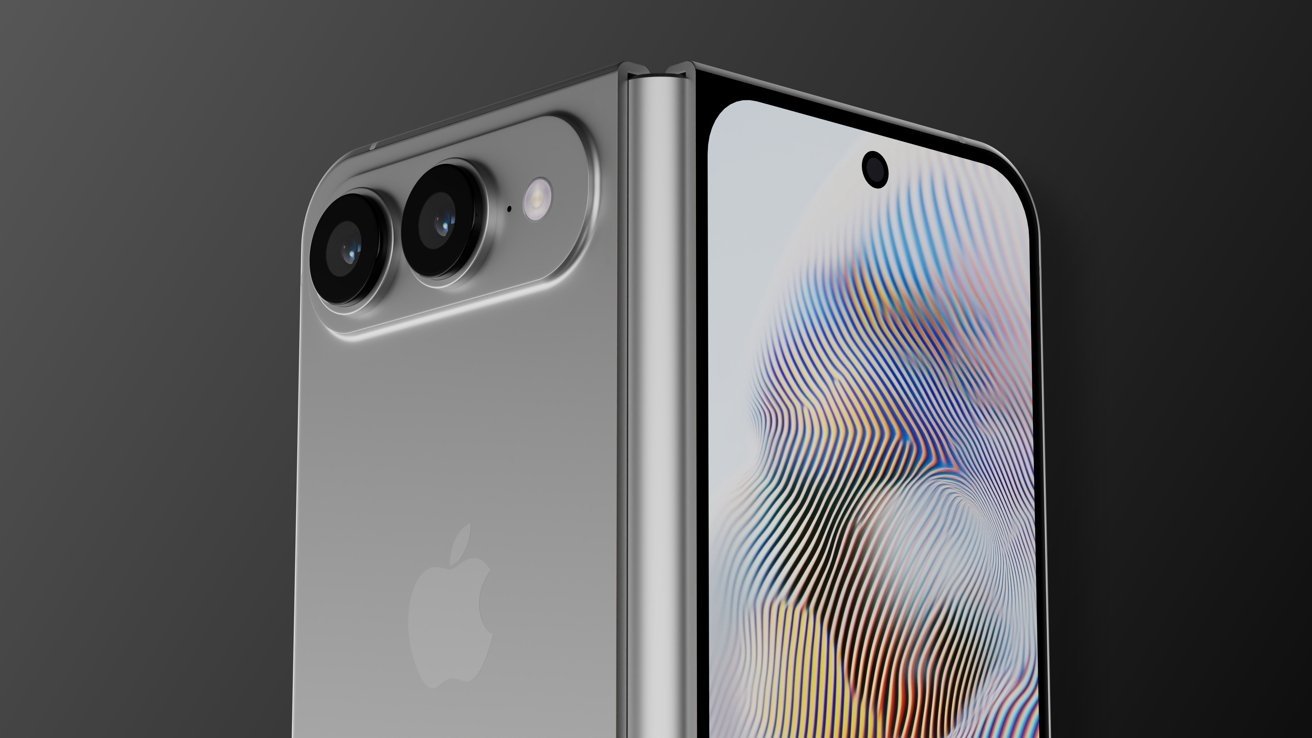





iPhone Fold Reportedly Facing Manufacturing Delays Due to Circuit Board Assembly Issues
Manufacturing challenges surrounding Apple’s anticipated iPhone Fold are reportedly continuing, with new claims suggesting that the device is facing difficulties related to circuit board assembly ahead of mass production.
As a foldable device incorporating a hinge-based design, the iPhone Fold has long been expected to present engineering complexities. Earlier reports have pointed to concerns around structural durability and production stability, and the latest claims indicate that the issue is now centred on circuitry.
According to a post shared on Tuesday by Weibo-based tipster Fixed Focus Digital, citing supply chain sources, Apple is not currently experiencing broad manufacturing failures. However, the report suggests that the company is facing specific challenges in moving the device into mass production due to issues involving Surface Mount Technology (SMT) in the circuit board assembly process.
The leak indicates that these SMT-related complications are resulting in slower-than-expected production progress, with the situation described as “not optimistic.” SMT, or Surface Mount Technology, is a method used in printed circuit board (PCB) manufacturing where electronic components are mounted directly onto the surface of the board, enabling compact and efficient circuit design.
Unlike older Through-Hole Technology (THT), which required component leads to pass through drilled holes in the PCB before being soldered on the opposite side, SMT allows for more compact layouts and is widely used in modern electronics manufacturing.
While Apple has not officially commented on the reported issues, the claims highlight the ongoing engineering and production complexities involved in developing foldable smartphone hardware at scale.
Apple Details Security Patches Included in Recent OS Updates

Apple Inc. has updated its security releases page with additional information detailing vulnerabilities that were resolved across multiple operating system updates, including iOS 18, iOS 26, iPadOS, macOS, visionOS, and watchOS.
The updated disclosures include new details on security fixes implemented in iOS 26, iPadOS 26, visionOS 26, and watchOS 26, as well as clarifications on issues addressed in iOS 18.7, iPadOS 18.7, macOS 14.8, and macOS 14.8.2.
Among the newly added information, Apple highlighted a Siri-related vulnerability fixed in iOS 26, which previously allowed access to Private Tabs without proper authentication. The issue was resolved through improved state management mechanisms.
For iOS 18.7 and iPadOS 18.7, Apple noted a patched call history vulnerability that could allow apps to fingerprint users. The company addressed the issue by strengthening protections around sensitive data redaction.
The updated macOS 14.8 security documentation also includes multiple fixes, including patches for two CoreServices vulnerabilities, a FaceTime issue, a Phone-related security flaw, and a StorageKit vulnerability.
One CoreServices issue previously allowed applications to modify protected system areas of macOS and was mitigated through additional system restrictions. Another logic vulnerability could allow unauthorized access to sensitive user data and was resolved through improved validation processes.
The updates form part of Apple’s ongoing efforts to improve platform security and provide greater transparency around vulnerabilities addressed in its software ecosystem.
iPhone Fold Reportedly Delayed Due to Circuit Board Issues