





Pan Asia Bank has launched Pan Asia EZY, its next-generation digital banking platform designed around evolving customer needs and the simple proposition of making everyday banking “EZY”, giving customers greater freedom to do more.
Developed for both digital-first users and the Bank’s existing customer base, Pan Asia EZY brings everyday banking, payments and selected financial services together on a single mobile platform. Built around the theme “Built for More”, the platform aims to provide customers with greater convenience, control and flexibility in managing their finances.
Through the app, customers can check account balances, transfer funds, pay bills and make QR payments. The platform also supports JustPay, enabling customers to make transfers from accounts maintained with other banks. Customers can top up their Pan Asia Bank accounts and manage routine financial transactions digitally, reducing the need for branch visits.
Pan Asia EZY also introduces digital solutions for specific customer requirements. Pawning customers can repay, renew and top up their facilities through the app, while Fixed Deposit customers can access real-time cashback loans when they require additional financial flexibility.
Through GovPay, customers can also make selected government-related payments, including traffic fines and Inland Revenue Department payments, directly through the platform.
The platform has been developed with everyday customer behaviour in mind. Users can choose whether to display or hide account balances, save preferred beneficiaries and billers along with payment amounts, and receive payment reminders through push notifications and email.
New-to-bank customers can open accounts digitally through the Bank’s LIME digital account opening platform, while existing customers can register using their account, debit card or credit card details. Integrated eKYC capabilities also support registration using international mobile numbers.
Commenting on the launch, Pradeepan Sivalingam, Chief Digital Officer of Pan Asia Bank, said the platform was developed around the changing expectations of customers.
“Pan Asia EZY was built around our customers and what they want from banking today – simplicity, convenience, security and greater control. We have brought together the services they use regularly while adding features that address real everyday needs. The idea behind ‘Built for More’ is simple: we want to make banking EZY so our customers have more time and freedom to do more,” he said.
Naleen Edirisinghe, Director/CEO of Pan Asia Bank, said the changing digital banking landscape is reshaping the relationship between customers and financial institutions.
DFCC Bank’s Future Ready Sri Lanka Forum Examines the Nation’s Economic Outlook
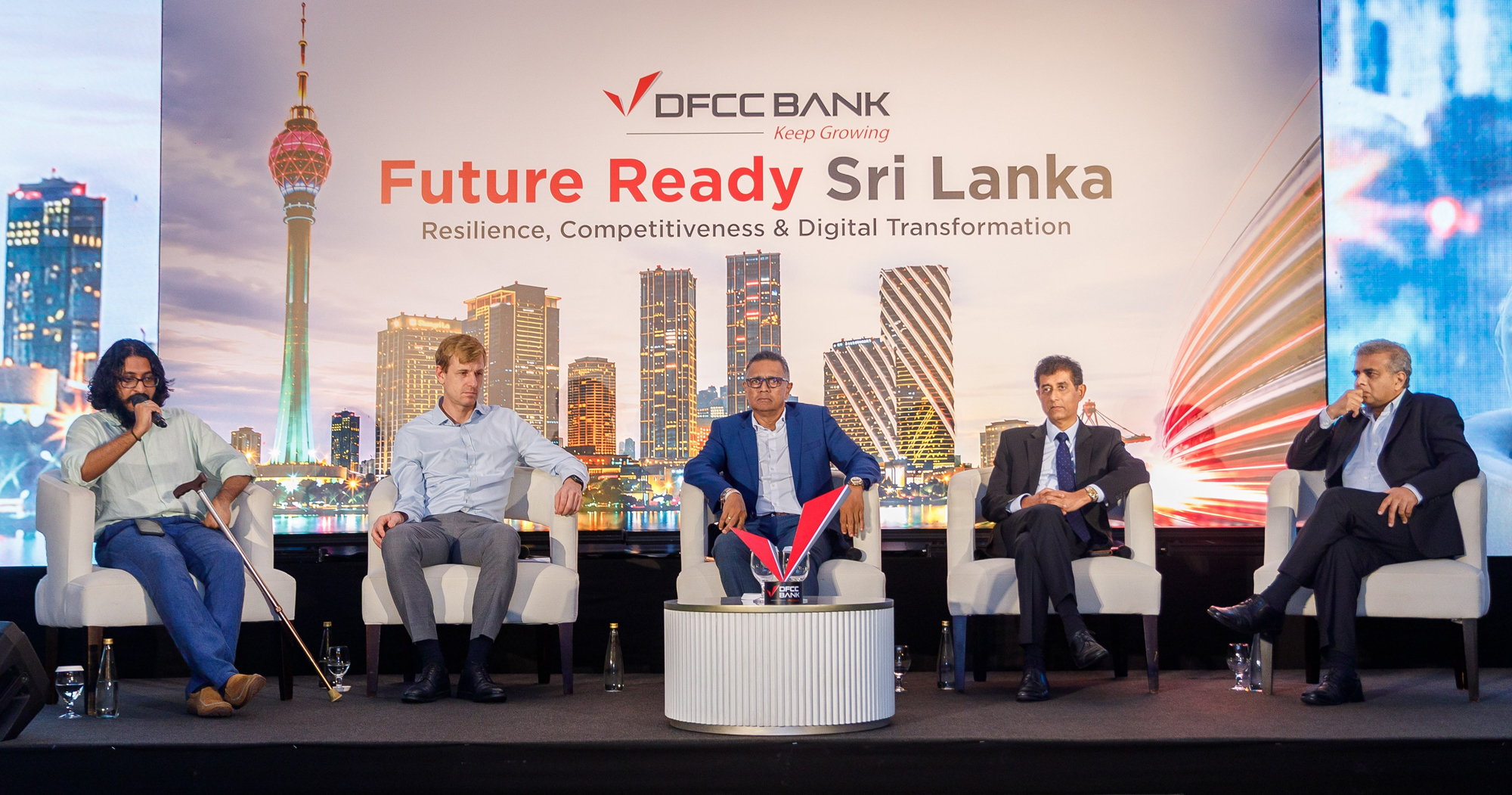
DFCC Bank recently convened Future Ready Sri Lanka: Resilience, Competitiveness and Digital Transformation, bringing together leaders from economics, investment, digital government and banking to examine the steps Sri Lanka must take as it moves beyond economic stabilisation towards sustainable and resilient growth.
The keynote address was delivered by Mr Gregory Smith, IFC Manager for Country Advisory and Economics in South Asia. This was followed by a panel discussion featuring Dr Hans Wijayasuriya, Chief Advisor to the President on Digital Economy and Chairman of GovTech Sri Lanka; Mr Duminda Hulangamuwa, Chairman of the Board of Investment of Sri Lanka; and Mr Thimal Perera, Director and Chief Executive Officer of DFCC Bank PLC. The discussion was moderated by Mr Chayu Damsinghe, Head of Macroeconomic Advisory at Frontier Research.
In his keynote address, Mr Gregory Smith acknowledged Sri Lanka’s progress since the economic crisis, highlighting improvements in government revenue, stronger foreign reserves, controlled inflation and renewed growth in private-sector credit.
However, he cautioned that economic stability should not be mistaken for resilience, particularly as Sri Lanka approaches a period of higher debt repayments amid continued global uncertainty surrounding energy, trade and geopolitics.
“There will be shocks. There will be big shocks,” Mr Smith said, framing the challenge around a direct question: “How do we survive 2030?”
He identified active debt management, affordable access to international capital markets, restoring a solid single-B credit rating, scaling up renewable energy development and protecting fiscal gains as key priorities for strengthening Sri Lanka’s economy against future disruptions.
Mr Smith also drew comparisons with India, Vietnam, Georgia and Armenia to illustrate how quickly countries can gain or lose economic ground when their growth trajectories diverge.
The panel discussion subsequently focused on the practical barriers that continue to stand between economic stability and stronger growth.
Mr Duminda Hulangamuwa highlighted the time and complexity involved in securing investment approvals in Sri Lanka. He noted that a tourism project may require approvals from approximately 18 institutions, while accessing government land or completing a major tender can take around two years.
He also emphasised the importance of Sri Lanka looking beyond its domestic market and expanding its focus towards global opportunities.
“If you sell to 22 million people, we cannot grow more than 3% to 4%. We have to sell to the world,” he said.
Pan Asia EZY Transforms Sri Lanka’s Digital Banking Experience