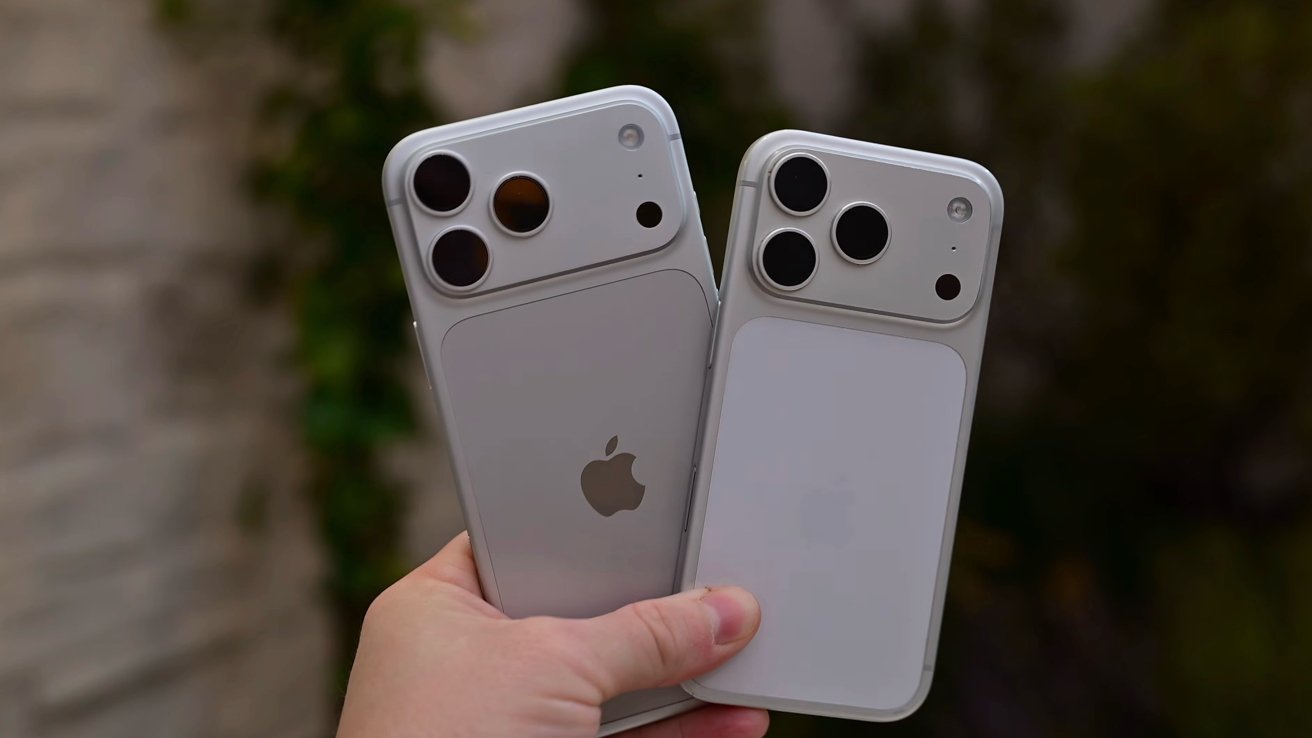





Apple's new iPhone Handoff feature, which allows users to use the same phone number across two iPhones, is gradually expanding to more mobile carriers. However, AT&T does not currently appear to be among those embracing the feature.
The original iPhone launch was closely tied to Cingular, the only carrier that Steve Jobs was able to secure for Apple's first smartphone while also giving Apple greater control over the user experience. AT&T acquired Cingular before the iPhone launched, making it the exclusive US carrier for the device that would transform the mobile phone industry.
Nearly two decades later, AT&T appears to be taking a more cautious approach to another Apple feature. With iOS 27, Apple introduced iPhone Handoff, allowing customers to have two iPhones associated with the same phone number.
"While we see that there could be potential in capabilities like iPhone Handoff," an AT&T spokesperson told CNET, "our focus remains on delivering innovations that make life simpler and keep customers connected with confidence."
The carrier also pointed to its existing eSIM activation and transfer options for compatible devices. That means customers who want to switch between two iPhones would still need to go through the existing eSIM transfer process rather than simply picking up the other device.
With iPhone Handoff, the process is designed to be much simpler. After completing the initial setup, users can simply unlock whichever iPhone they want to use, and that device becomes the one that handles calls.
The feature reflects Apple's broader approach to simplifying tasks that can otherwise involve several steps. It also gives users a practical reason to keep two iPhones available for different situations.
For carriers, however, supporting the feature could potentially reduce the need for customers to maintain separate mobile plans for two devices. Carriers that do support iPhone Handoff may instead charge customers an additional fee for the capability.
Jamf Brings Corporate IT Management to Your Personal AI Account

Personal AI accounts used on company-managed iPhones may soon face greater oversight from corporate IT, as Jamf plans to expand its enterprise controls to mobile apps and web browsers in 2027.
The new capabilities were announced at the Jamf Nation User Conference in Kansas City. Jamf says most of its upcoming AI-focused security features are expected to arrive in the fourth quarter of 2026, while several additional management and support capabilities are scheduled to enter public beta in early 2027.
While Addigy Intelligence recently introduced AI-assisted tools aimed at helping administrators manage IT environments, Jamf is taking a different approach. Its new features are focused on the AI services employees use and the corporate information those services can potentially access.
Personal AI Accounts Come Under IT Management
Jamf already offers AI Governance, which can identify AI tools operating on managed Macs, enforce organizational policies and generate reports for internal compliance reviews and regulatory requirements.
The company plans to extend those capabilities to web browsers, including Safari, Chrome, Edge and Firefox. This will allow IT administrators to detect when employees are using personal AI accounts and establish rules around potentially sensitive activities, such as attempting to upload company files to an AI service.
Importantly, these controls are not designed to give employers direct access to an employee's personal AI account. Instead, restrictions are enforced through the organization's managed device and browser when protected corporate information is about to leave the company's environment.
AT&T Helped Launch the iPhone, but Handoff Support Won’t Be Coming