Imperial College of Business Studies (ICBS) successfully concluded LEVEL UP 2.0 – The Next Million Mind-set on September 9, 2026, at Kandy Myst by Cinnamon, bringing together more than 120 professionals, business leaders and emerging talent for an evening focused on wealth creation, career development, continuous learning and personal growth.
Following the success of its inaugural edition in 2024, LEVEL UP 2.0 has evolved from an inspirational forum into a platform for practical industry insights, professional dialogue and networking opportunities.
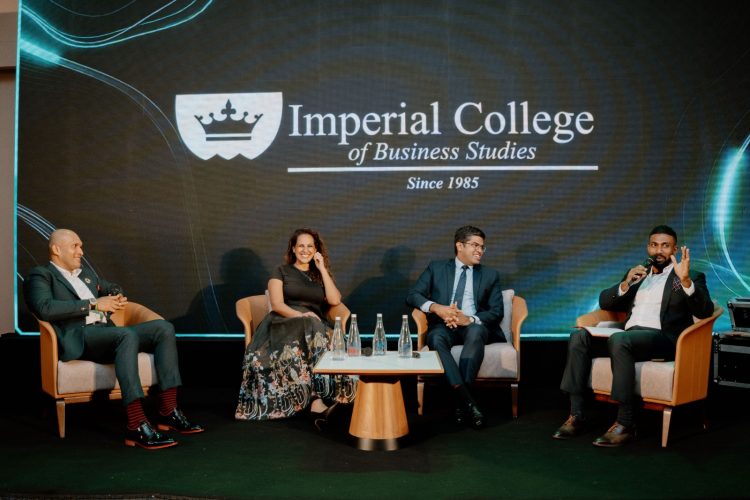
Held under the theme “Building Wealth. Careers. Futures.”, the event featured three industry personalities who explored the concept of investment from different perspectives.
Tharindra Gooneratne, Head of Business – Fixed Broadband and International Services at Dialog Axiata PLC, shared insights drawn from his corporate and international investment banking experience, focusing on wealth creation and the importance of making informed financial decisions.
Stephanie Siriwardhana, Director at Infinite Grace Works (Pvt) Ltd, focused on the importance of investing in oneself, discussing personal branding, purpose and the deliberate development of skills and identity beyond one’s professional role.
The keynote sessions concluded with Dr. Niroshan J. Pieris, Cluster CEO at LAUGFS Gas PLC and a member of the ICBS postgraduate lecturing panel. Drawing on his corporate leadership and academic experience, he highlighted the value of mentorship, continuous learning and adaptability in building a sustainable career.
The discussions were followed by an interactive panel moderated by Tharindu Wijewardhana, Country Head of AICPA & CIMA Sri Lanka, giving participants the opportunity to engage directly with the speakers and gain practical perspectives from their experiences.
Beyond the formal sessions, LEVEL UP 2.0 provided a platform for professionals from different industries to connect, exchange ideas and develop new relationships, reflecting ICBS’s focus on extending professional development beyond traditional classroom learning.
Established in 1985, Imperial College of Business Studies has continued to develop professionals through internationally recognised education and industry engagement. Through initiatives such as LEVEL UP, the institution continues to create opportunities for participants to strengthen their knowledge, professional networks, confidence and exposure to industry perspectives.
LEVEL UP 2.0 further highlighted ICBS’s approach to professional development, bringing together education, industry knowledge and meaningful connections to support professionals in their ongoing career journeys.
Asia Asset Finance’s Rights Issue Draws Strong Investor Response with Full Subscription
Asia Asset Finance PLC (AAF) has strengthened its capital base following the successful oversubscription of its latest Rights Issue, providing the company with additional capacity to support business expansion and its long-term growth strategy.
The Rights Issue offered 45,162,012 Ordinary Voting Shares at Rs. 33.30 per share, on the basis of four shares for every 11 shares held. The issue was aimed at raising approximately Rs. 1.504 billion.
Investor demand exceeded the amount targeted, with applications amounting to approximately Rs. 1.937 billion. This resulted in an oversubscription of around Rs. 432.49 million.
AAF received 1,264 applications for 44,582,154 shares under shareholder entitlements, along with a further 247 applications for 13,597,662 additional shares.
The additional capital is expected to further strengthen AAF’s capital position and support its focus on maintaining a strong Capital Adequacy Ratio (CAR). The enhanced capital base will provide greater capacity to expand its business, strengthen operational resilience and pursue sustainable growth while maintaining financial discipline.
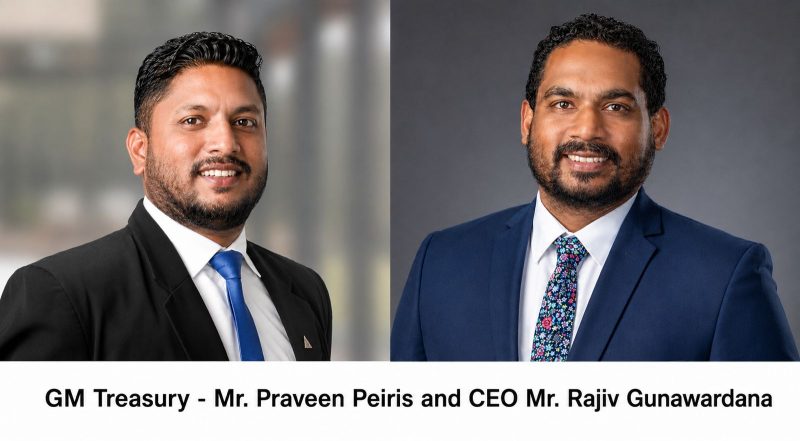
Commenting on the successful Rights Issue, Rajiv Gunawardane, Chief Executive Officer of Asia Asset Finance PLC, said the strong investor response reflected confidence in the company’s growth journey.
He said the additional capital would strengthen the company’s capital adequacy and support responsible expansion, while AAF remains focused on advancing financial inclusion, promoting women’s financial empowerment and expanding access to responsible financial services in underserved communities.
The successful capital raising adds further strength to AAF, which has more than 55 years of experience in Sri Lanka’s financial services sector. The company is the Sri Lankan subsidiary of Muthoot Finance, providing access to the financial expertise and resources of the Indian financial services group.
AAF currently operates an islandwide network of more than 125 branches, offering a diversified range of financial services including leasing, gold loans, fixed deposits, mortgage financing and other financial solutions.
The company also holds an A+(lka) rating with a Stable Outlook from Fitch Ratings, reflecting its position within Sri Lanka’s financial services sector.
LEVEL UP 2.0 Highlights Imperial College’s Growing Role in Professional Development in Kandy