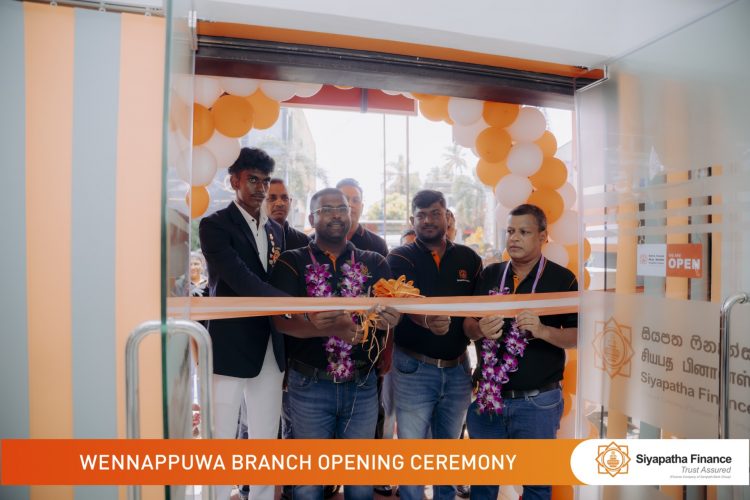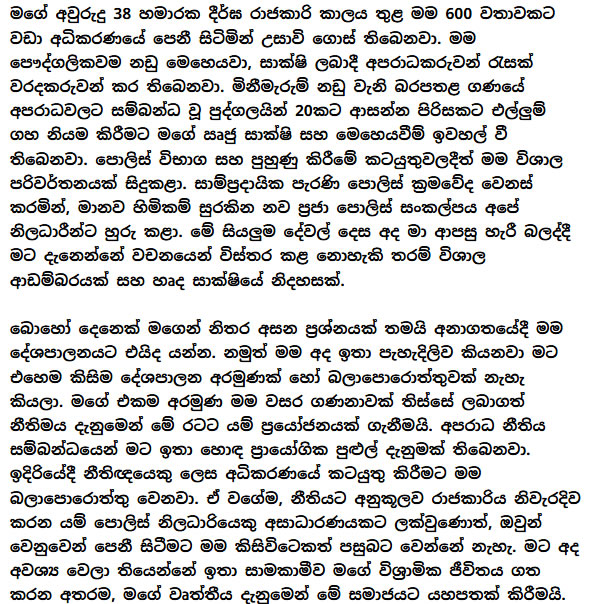





Siyapatha Finance PLC has expanded its islandwide branch network with the opening of its 67th branch in Wennappuwa, Puttalam District, further extending the company's financial services footprint across the North Western Province.
Situated in the heart of Sri Lanka's coconut-growing belt, the new Wennappuwa branch is positioned to provide customers in the area with greater access to a range of tailored financial solutions. The locality also benefits from strong overseas employment links and a growing coastal tourism sector, contributing to increasing demand for accessible and formal financial services.
The new branch was officially opened by Siyapatha Finance PLC Chief Executive Officer (CEO) Mathisha Hewavitharana, with Chief Operating Officer (COO) Rajeev De Silva and senior management and staff members of the company in attendance.
Also present at the opening ceremony were Warnakulasuriya Nirudaka Vishal Fernando of Joseph Vas College, Wennappuwa, a recipient of the company's “Siyapatha Shilpaloka” initiative, Wennappuwa Grama Niladhari Buddika Vidyapathige, Trade Association President Thilak Dabarera, representatives of government and private sector banks and insurance companies, and other invited guests and well-wishers.
Addressing the gathering, Siyapatha Finance PLC CEO Mathisha Hewavitharana said the company was pleased to extend its services to the people of Wennappuwa.
“We are deeply honored to be of service to the people of Wennappuwa. Opening this branch takes our expansion strategy into a town built on coconut cultivation, fisheries and a strong base of small and medium-scale entrepreneurs. Reaching communities like this one is what our branch network is for, and we look forward to supporting the ambitions of families and businesses here as we have across the island,” he said.
The new branch offers a comprehensive portfolio of financial products designed to meet the changing requirements of individuals, entrepreneurs and small and medium-scale enterprises (SMEs).
Its services include leasing, fixed deposits, gold financing, business loans, personal loans, Fast Draft, factoring and Smart Pay, Siyapatha Finance's bill payment facility.
The opening of the Wennappuwa branch further reflects Siyapatha Finance's efforts to bring its financial solutions closer to customers across key economic and commercial centres in the country.
Seylan Bank Opens 295th ‘Pahasara’ Library at Pannala School to Promote Financial Literacy
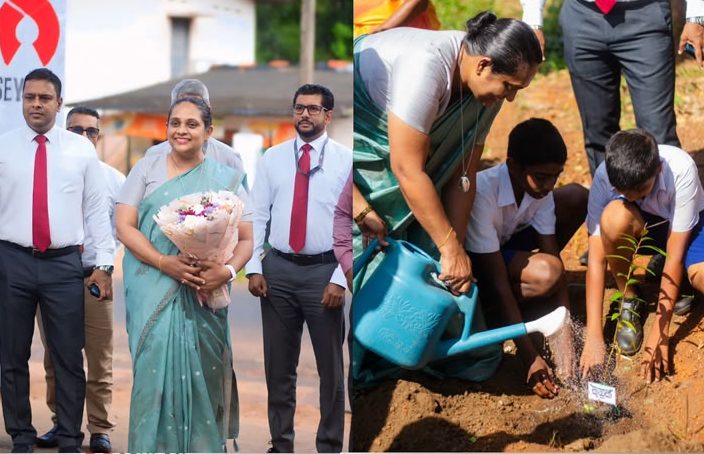
Seylan Bank PLC, the Bank with a Heart, has reached another milestone in its flagship Environmental, Social and Governance (ESG) programme with the opening of its 295th ‘Pahasara’ Library at Giri/Gemunu Central College, Ingaradaula, Pannala.
The library was officially opened on 3 July 2026 at a ceremony attended by Zonal Assistant Director of Education – North Western II, Prasad Kinigama; Principal K.M. Wijerathne; Seylan Bank Deputy General Manager – Corporate Banking, Nilanthie De Meral; Assistant General Manager – Marketing and Sales, Asiri Abhayaratne; Chief Manager – Marketing, Nalin Karunaratne; Senior Manager – Sustainability, Sandrine Gomez; Regional Manager – North Western Region, Upendra Adhikari; Branch Manager – Pannala Branch, N.G.R. Sanjeewa; and Seylan Bank staff members.
The newly refurbished library was handed over following the conclusion of ‘Pahasara Week’, a series of activities organised jointly by Seylan Bank and the school to support students' educational and personal development.
As part of the initiative, Seylan Bank provided the school with a collection of books, along with a laptop and smart board, supporting the integration of digital tools into the teaching and learning process.
The week-long programme featured a range of activities designed for students across different age groups. These included a volleyball tournament for students aged between Under-15 and Under-19, an art competition for Grade 1 students, and a financial literacy programme for Commerce students in Grades 11, 12 and 13.
The financial literacy session focused on introducing students to the importance of saving and basic money-management practices, helping them develop sound financial habits from an early age.
Beyond financial and digital literacy, the Pahasara initiative also incorporates environmental awareness as an important component of its sustainability agenda. Students are encouraged to plant and care for trees within their school premises, helping foster environmental responsibility and awareness among younger generations.
Through these activities, Seylan Bank continues to use the Pahasara programme as a platform to support education while encouraging students to become environmentally conscious and socially responsible citizens.
Speaking at the event, Seylan Bank Assistant General Manager – Marketing and Sales, Asiri Abhayaratne, said the opening of the 295th library marked an important milestone as the Bank moves closer to its goal of establishing 300 Pahasara Libraries across Sri Lanka.
“The opening of the 295th library represents a significant step as the Bank moves steadily toward its commitment of establishing 300 Pahasara Libraries across the country. Seylan Bank remains committed to funding library refurbishments and providing essential educational resources to cultivate students’ knowledge and skills,” he said.
The programme received the support of education officials, teachers, parents and students, while strong participation was recorded throughout the activities conducted during Pahasara Week.
Commenting on the significance of the latest Pahasara initiative, Nilanthie De Meral, Deputy General Manager – Corporate Banking at Seylan Bank, highlighted the role of education in equipping Sri Lanka's younger generation with the knowledge and resources needed for the future.
“As we near the completion of 300 Pahasara libraries across the country, we at Seylan Bank are reminded of the immense potential of education in bridging Sri Lanka's youth with the tools for success. Furthermore, we recognise each Pahasara chapter as a vital platform in nurturing the next generation of socially conscious and responsible citizens through the expansion of access to effective learning material,” she said.
Siyapatha Finance Expands North Western Presence with New Wennappuwa Branch