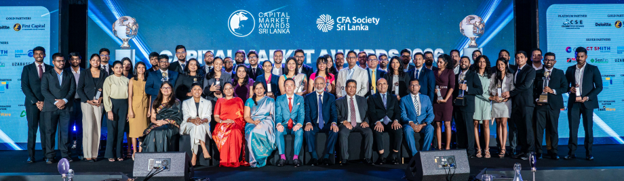





The 13th edition of the CFA Society Sri Lanka Capital Market Awards was held on September 10, 2026, at the Oak Room of Cinnamon Grand Colombo, bringing together senior figures from Sri Lanka’s capital markets, regulatory bodies and investment industry.
The annual awards serve as CFA Society Sri Lanka’s flagship platform for recognising excellence across the country’s capital markets while highlighting professional standards and industry best practices.
The event was attended by Securities and Exchange Commission of Sri Lanka (SEC) Chairman Senior Professor Hareendra Dissabandara and Colombo Stock Exchange (CSE) Chairman Dimuthu Abeyesekera. Reseena Abdullah, Regional Director, Society Relations – APAC, CFA Institute, also attended the event, alongside representatives from regulatory institutions, capital market organisations and industry associations.
Delivering the opening address, Rashmi Peiris Paranavitane, CFA, President of CFA Society Sri Lanka, said the country’s capital markets are operating in an increasingly complex environment influenced by economic and regulatory developments, artificial intelligence, geopolitical shifts and rapidly changing sources of information.
She noted that the ability to interpret complex developments, exercise sound judgement, communicate clearly and maintain high professional standards has become increasingly important.
According to Paranavitane, the awards recognise individuals and organisations that demonstrate these qualities while contributing to stronger market insight, investor confidence and the continued development of Sri Lanka’s capital markets.
The keynote address was delivered by Simon Ng, CFA, APAC South Presidents Council Representative at CFA Institute.
Ng emphasised the importance of capital markets in supporting economic development, noting that they should not be regarded merely as a benefit that follows economic recovery, but as an engine that can help drive it.
He said Sri Lanka has an opportunity to develop deeper and more sophisticated capital markets capable of mobilising domestic savings, attracting foreign investment and supporting businesses, infrastructure and innovation.
SDB Bank Celebrates 29 Years of Empowering People and Communities
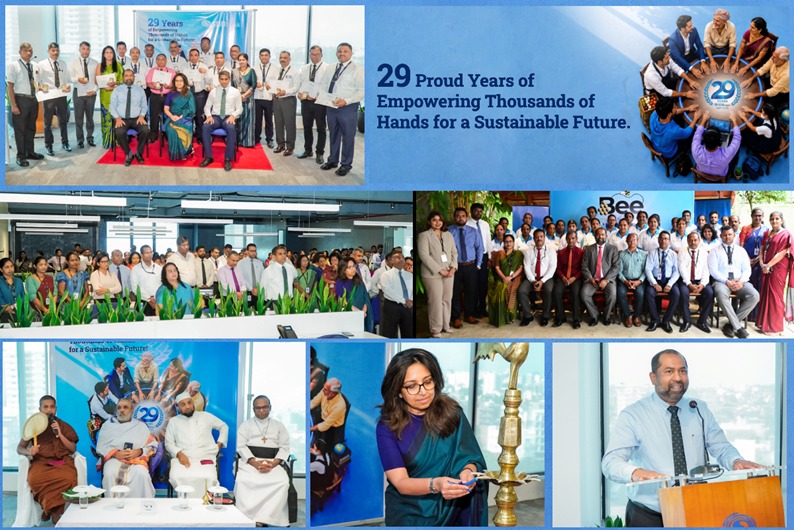
SDB Bank recently marked its 29th anniversary, celebrating nearly three decades of supporting individuals, businesses and communities while contributing to inclusive economic development across Sri Lanka.
The anniversary was celebrated under the theme “29 Years of Empowering Thousands of Hands for One Sustainable Future,” recognising the contributions of customers, entrepreneurs, small and medium-sized enterprises (SMEs), cooperatives, employees and communities that have been part of the Bank’s journey.
The milestone also highlighted SDB Bank’s efforts to expand access to financial opportunities, strengthen livelihoods and support sustainable development across the country.
The anniversary programme commenced with multi-religious observances attended by employees and stakeholders, providing an opportunity for reflection and gratitude while recognising Sri Lanka’s diverse communities.
As part of the celebrations, the Bank also recognised employees who have completed 25 years of service. A special appreciation ceremony was held, with gold coins presented to acknowledge their long-standing commitment and contribution to the organisation.
Extending the anniversary activities beyond the Bank, the SDB Bank Welfare Society is scheduled to conduct a blood donation programme in September. The initiative will encourage employees and other participants to contribute to an important national need.
Branches across the country also marked the anniversary through local celebrations, providing opportunities for employees to engage with customers and communities in their respective areas.
Further reinforcing the sustainability theme of the anniversary, SDB Bank has initiated a beekeeping entrepreneur development project in Badulla. The initiative aims to support sustainable livelihoods while promoting environmentally responsible income-generating opportunities among local communities.
CFA Society Sri Lanka Capital Market Awards 2026 Recognise Excellence in Investment and Finance