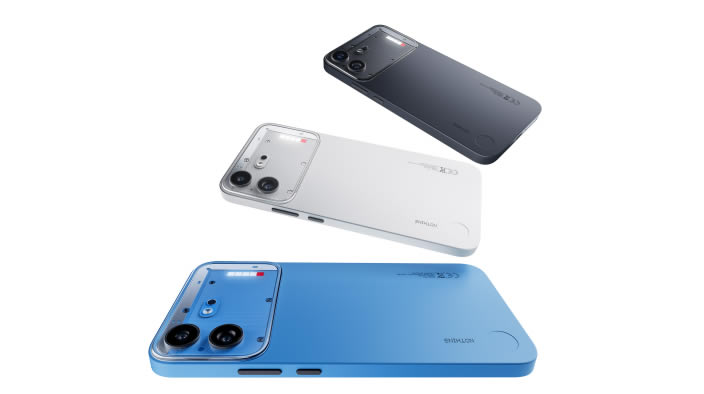





After spending a full year with the iPhone 17, I've found plenty of things to appreciate about Apple's standard smartphone. Even so, all those positives haven't quite been enough to make me genuinely love the device.
Released in 2025 as Apple's baseline iPhone, the iPhone 17 quickly became a popular choice among consumers. Apple CEO Tim Cook has repeatedly highlighted the model's strong performance in the market, calling attention to its position among the company's best-selling iPhones.
My own move to the iPhone 17 was less about excitement and more about necessity. My much-loved iPhone 13 mini was approaching the end of its usable life, and going without a reliable smartphone in 2026 simply wasn't practical.
So, I handed over a substantial amount of money, along with my aging iPhone, and came home with another glass-and-metal slab from Apple.
A year later, my relationship with the iPhone 17 remains complicated.
iPhone 17: A Quick Recap
I wouldn't describe myself as someone who enjoys spending time on a smartphone. In fact, I generally dislike having to interact with my phone at all. It can sometimes feel less like a useful device and more like something constantly demanding my attention.
Still, there are several ways in which having an iPhone genuinely makes my life easier.
I don't own a car, for instance, so I occasionally depend on rideshare services when cycling or walking isn't practical because of the weather or the distance involved.
Navigation is another feature I value, particularly when I'm traveling. Having access to current maps means I can explore unfamiliar places without constantly worrying about getting lost.
The camera is also genuinely useful. Carrying a capable camera everywhere means I can quickly take a photo whenever I need to, without having to bring another device along.
Canon EOS R8 Mark II Arrives in Malaysia with In-Body Stabilisation, Dual Pixel AF II and 40fps Burst Shooting
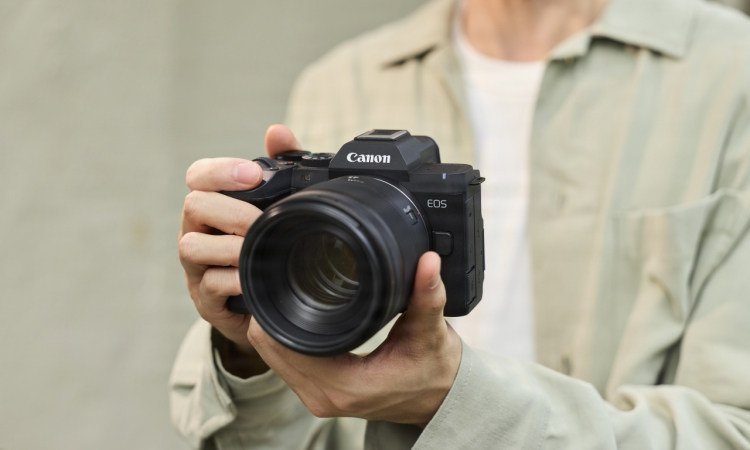
Canon Marketing Malaysia recently announced the EOS R8 Mark II, bringing full-frame mirrorless performance to Canon’s smallest and lightest body featuring 5-axis In-Body IS. The camera carries a 24.2MP full-frame CMOS sensor with a DIGIC X processor, deep learning Dual Pixel CMOS AF II with up to 40fps electronic continuous shooting, Register People Priority tracking mode, and Coordinated Control IS offering up to 7.5 stops of stabilization at the center when paired with compatible optical IS lenses.
Designed to bridge entry-level portability with high-end control, the EOS R8 Mark II introduces a dedicated multi-controller joystick, 384-zone metering, ISO expansion up to 204,800 for stills, and electronic shutter speeds reaching 1/16,000s. Creative stills features include new "NegativeFilmtone" and "PositiveFilmtone" color filters with adjustable filter strength, alongside a Handheld Night Scene mode offering "Blue", "Black & Orange", "Pink", and "Green" modes, plus exposure-smoothed interval timer shooting. The camera weighs in at approximately 131.4 x 90.0 x 79.7mm and 546g.
Video creators can get 6K-oversampled 4K 60p recording, Full HD at up to 180p, Canon Log 3 support, Cinema EOS Custom Picture parameter tuning with Custom LUT support, and four distinct livestreaming setups including UAC/UVC webcam output and Live Switcher Mobile app support. The camera also expands VR and 3D workflows with VR Clear Mode, compatibility with full-frame and APS-C VR lenses, and 3D photo rendering via Dual Pixel 3D Converter software.
Accessories include the Extension Grip EG-E2 with dial-lock battery access, the Tripod Grip HG-1000TBR with BR-E2 remote, and the updated Speedlite EL-5 (Ver. 2) featuring an extended 50m wireless range. Single UHS-II SD card storage, Wi-Fi 6, Bluetooth 5.3, Micro HDMI, 3.5mm audio input, and LP-E17 battery power round out the tech specs.
While there’s no Malaysia release dates or pricing details yet, it does offer creators a portable full-frame body camera from Canon, which could be useful for creators on the go. Stay tuned to TechNave.com for more updates on tech.
Nothing Phone (4b) and Ear (3a) Launch in Malaysia Starting at RM1,599 and RM399