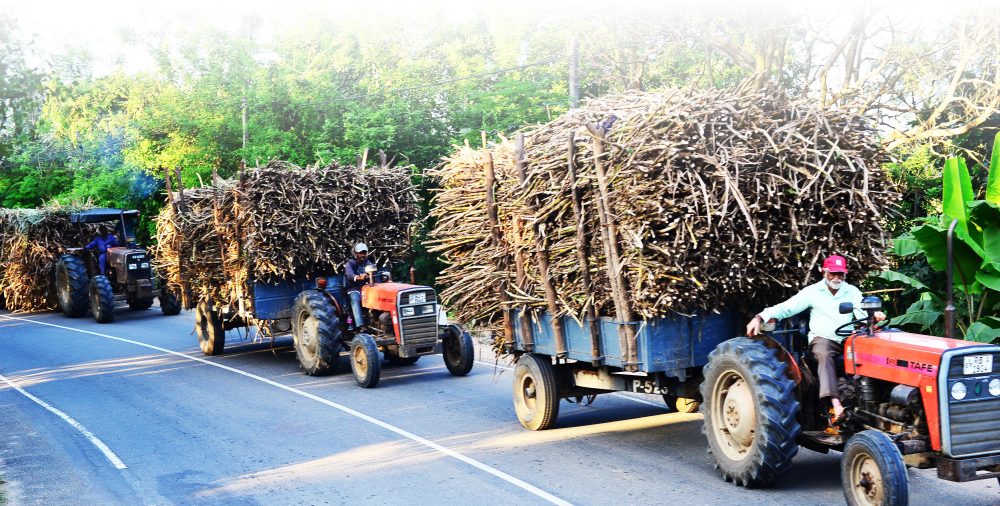


For almost a decade, the Hingurana Sugar Factory in Ampara stood as a stark reminder of what had been lost. Established in 1959 as a state-owned enterprise and later privatised in 1991, the factory endured years of declining investment before operations were halted by the Government in 1997.
For thousands of sugarcane farming families across the Gal Oya region, the closure had consequences far beyond the factory gates. With the plant serving as their only major buyer, farmers suddenly lost a dependable market for their crops. Cultivated land was left unused, while many families shifted towards paddy cultivation and temporary employment to sustain their incomes.
A Partnership Built on More Than Capital
The significance of the Gal Oya experience lies not simply in the factory's reopening, but in the partnership model behind its revival.
In 2007, the Government of Sri Lanka entered into a landmark Public-Private Partnership (PPP), retaining a 51% stake while Brown & Company PLC and LOLC Holdings PLC jointly took the remaining 49% and assumed operational responsibility for turning the dormant facility around.
Bringing a factory that had remained inactive for nearly a decade back into operation required extensive rehabilitation. Irrigation canals had become silted, roads had deteriorated and much of the machinery required major repairs or replacement.
Yet restoring the physical infrastructure was only part of the challenge. Rebuilding confidence among farmers proved equally important.
Many farmers had already experienced the uncertainty of an industry that once provided a stable livelihood before disappearing. Regaining their trust required a sustained commitment from the private partners, including technical assistance, quality seed cane and fertiliser, machinery support and an assured and fair price for harvested sugarcane.
The approach reflected a more structured private-sector operating model being applied to a state-owned asset. Browns and LOLC introduced project management practices, financial and regulatory compliance standards associated with listed companies, and governance systems designed to provide greater confidence to both farmers and the Government.
The Gal Oya experience has subsequently been viewed as an example of how PPP structures can potentially be used to rehabilitate dormant state assets, combining public ownership with private-sector operational expertise and long-term investment.
From Ruin to Regional Reference Point
The transformation extended well beyond simply restarting the old sugar mill.
Machinery that had deteriorated over decades was replaced with modern, computerised processing systems, while the operation expanded beyond conventional sugar production into a broader agri-industrial model.
Today, Gal Oya Plantations cultivates approximately 8,500 hectares and directly employs around 1,300 people. It also works with approximately 8,000 farmers through active cultivation partnerships.
The operation has expanded its activities to include sugar production alongside ethanol, power generation and bio-fertiliser, creating multiple avenues for value generation from the agricultural process.
Its economic impact now extends beyond the factory and farming communities directly involved in production, with the wider ecosystem estimated to benefit more than 30,000 people across the region.
What began as an effort to restore an abandoned industrial facility has therefore evolved into a broader regional economic platform — reconnecting farmers with a reliable market while creating employment, supporting agricultural activity and demonstrating how a carefully structured public-private partnership can extend beyond physical revival to wider economic renewal.
Home Lands Completes 60% of Piling Work at Central Park Boulevard in Record Time
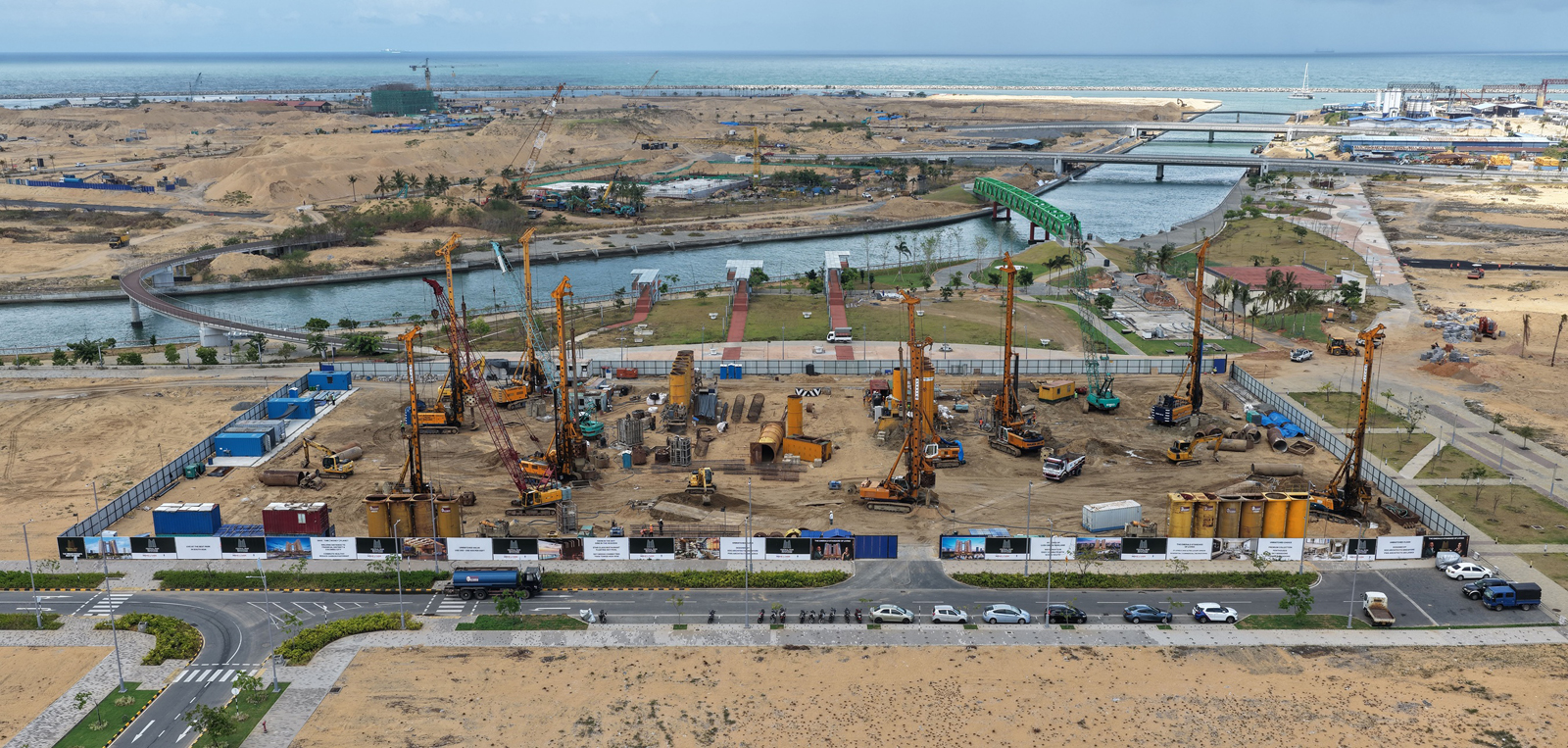
Home Lands has announced that its flagship development, Central Park Boulevard Port City Colombo, has reached a major construction milestone, with 60% of its piling work completed less than three months after the project's launch.
The progress is reportedly 10% ahead of the project's planned schedule, highlighting the pace at which construction is advancing and the developer's focus on timely execution of the large-scale development.
A total of 192 piles are being installed as part of the project, with nine piling machines currently deployed at the site. Three major contractors — Access Engineering PLC, Sanken Construction’s San Piling (Pvt) Ltd. and D P Jayasinghe Piling Company (Pvt) Ltd. — are engaged in the piling programme.
The contractors' machinery fleets and specialised expertise have enabled the piling operations to progress at scale, supporting the accelerated construction timeline.
USD 150 Million Investment in Port City
Central Park Boulevard Port City Colombo is positioned as a major investment in Sri Lanka's real estate sector, with Home Lands committing USD 150 million to the project. The overall project value is estimated at more than USD 300 million.
According to Home Lands, the investment represents the largest real estate investment by a single Sri Lankan developer and is expected to contribute to foreign currency inflows through global marketing efforts aimed at international buyers.
Located within the Central Park District of Port City Colombo, the ultra-luxury twin-tower development is designed around a global branded-lifestyle concept. The project will offer residents views of approximately 40 acres of Central Park as well as the Indian Ocean.
Home Lands' Track Record
The developer said its previous delivery record provides additional confidence in its ability to execute the project.
Home Lands has been recognised as Best Developer – Sri Lanka at the PropertyGuru Asia Property Awards in 2021, 2024 and 2025, while it became Sri Lanka's only real estate Superbrand in 2025.
The company has sold more than 5,000 residences and delivered over 3,750 homes. A further 400 units are expected to be ready for delivery within 2026, while more than 2,850 units are currently under construction.
Commenting on the latest construction milestone, Chairman of Home Lands Group of Companies Nalin Herath said the project was progressing steadily.
“Construction progress of Central Park Boulevard Port City Colombo is well underway, with 60% of the piling work completed already,” he said.
“Our vision to bring a truly world class lifestyle development to Port City Colombo takes shape with the steady construction progress of Central Park Boulevard Port City Colombo.”
Further Expansion in the Central Park District
Home Lands has also strengthened its presence in Port City Colombo through the acquisition of a second land parcel within the Central Park District.
The company acquired the additional property shortly after securing its first parcel. The second site covers more than three acres and is similar in size to, and located adjacent to, the land on which Central Park Boulevard Port City Colombo is being developed.
The acquisition further reflects Home Lands' continued investment in Port City Colombo and its confidence in the development's long-term potential.
From Abandoned Factory to Regional Lifeline: The Story of a Public-Private Partnership