





Motorola has officially begun sales of the new Motorola Razr Fold and Moto Buds 2 Plus in India, with both devices now available through Flipkart, Motorola’s official website (Motorola.in), and leading retail stores starting from 12pm today.
The Motorola Razr Fold is priced at an effective starting price of ?1,39,999, while the Moto Buds 2 Plus is available for ?4,999. Launch offers have also been introduced for early buyers across platforms.
Motorola Razr Fold highlights
The new foldable is powered by the Snapdragon 8 Gen 5 processor, paired with up to 16GB of LPDDR5X RAM and up to 512GB of UFS 4.1 storage. It features a large 6,000mAh silicon-carbon battery, offering over 43 hours of claimed usage, along with support for 80W TurboPower fast charging, 50W wireless charging, and 5W reverse charging.
On the display front, it sports an 8.1-inch 2K Extreme AMOLED main screen and a 6.6-inch external AMOLED display, both supporting Dolby Vision, HDR10+, full DCI-P3 colour coverage, and up to 6,200 nits peak brightness.
The device comes in premium finishes inspired by Pantone, including Blackened Blue and Lily White, along with Corning Gorilla Glass Ceramic 3 protection and IP48/IP49 water and dust resistance ratings. It runs on Hello UI based on Android 16, featuring AI-powered tools such as Catch Me Up 2.0, Pay Attention, AI Image Studio, Recall, and Global Search for enhanced productivity.
Moto Buds 2 Plus highlights
The Moto Buds 2 Plus features 11mm dynamic drivers with Knowles balanced armature tuning, along with adaptive Dynamic ANC and CrystalTalk AI for clearer calls. It supports high-resolution wireless audio via LHDC and LDAC codecs.
Battery life extends up to 40 hours with the charging case, and the earbuds include Bluetooth 6.0, dual-device connectivity, gaming mode, wear detection, fit testing, and IP54 water resistance—positioning them as a premium audio companion for everyday use.
Everything Google Announced at I/O 2026: Gemini 3.5, Omni, Spark, and a Reinvented Search Experience
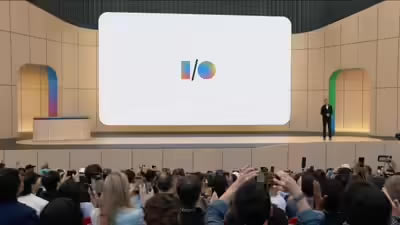
Google’s I/O 2026 keynote in Mountain View signalled a major shift in direction, focusing less on standalone features and more on deeply integrating AI “agents” across its entire product ecosystem. CEO Sundar Pichai described the moment as “hyper progress,” reflecting the company’s push to embed autonomous AI capabilities into everyday tools. With Gemini reaching 900 million monthly users and AI Mode in Search surpassing 1 billion users, Google framed this as a transition toward systems that don’t just respond—but act.
Gemini 3.5 Flash becomes the default layer
A major announcement was Gemini 3.5 Flash, now positioned as the default model powering AI Mode and the Gemini app. Google claims it outperforms earlier models like Gemini 3.1 Pro in agentic and coding tasks while being significantly faster and more cost-efficient. The goal is to make Search and Gemini interactions feel near-instant while maintaining higher capability levels.
The model is also being used internally to support “Antigravity 2.0,” Google’s agent orchestration system, which was demonstrated during the keynote by building a custom operating system capable of running Doom.
Gemini Omni brings multimodal video generation
Another key reveal was Gemini Omni, a new multimodal generation model designed to handle text, images, video, and audio inputs simultaneously. The system focuses on editable, conversational video creation—allowing users to modify scenes in real time while maintaining consistency in physics and characters.
Omni Flash also introduces avatar-style generation, enabling users to insert themselves into AI-generated videos using their own likeness and voice. All outputs include SynthID watermarking for traceability. The feature is rolling out across premium Gemini tiers and platforms like YouTube Shorts.
Gemini Spark introduces always-on AI agents
Gemini Spark represents Google’s vision of a persistent, cloud-based personal agent that runs continuously on Google Cloud virtual machines. Unlike traditional assistants, Spark remains active even when a user’s device is offline, connecting deeply with Gmail, Drive, Docs, and third-party services via MCP integrations.
Google demonstrated use cases such as tracking subscriptions for hidden charges, consolidating scattered emails into structured documents, and automatically generating event plans complete with invitations and presentations. Any action involving sensitive tasks like payments or emails requires user confirmation, reinforcing a semi-autonomous but controlled agent model.
The bigger picture
Taken together, these announcements show Google shifting toward an ecosystem where AI agents are not just tools but active participants in workflows—embedded across search, productivity, media creation, and personal assistance.
Motorola Razr Fold and Moto Buds 2 Plus Go on Sale in India with Launch Offers