City of Dreams Sri Lanka is playing an increasingly significant role in reshaping the country’s tourism and hospitality industry by introducing world-class infrastructure and entertainment experiences designed to encourage international visitors to spend more time in Colombo, according to Kamal Munasinghe, Senior Vice President – Colombo Hotels at Cinnamon Hotels & Resorts and General Manager of Cinnamon Life at City of Dreams.
Speaking at a recent press conference announcing the upcoming entertainment production Once Upon a Christmas – The Greatest Xmas Show, Munasinghe highlighted how the integrated resort is helping address a long-standing gap in Sri Lanka’s tourism offering by creating more reasons for visitors to explore and stay in the capital.
He explained that Colombo has traditionally been a short stop for many international tourists, with visitors often travelling directly to other destinations across the island after arriving in the country. City of Dreams aims to change this pattern by strengthening Colombo’s appeal as a destination for leisure, entertainment and business tourism.
“Our idea is to get these tourists whoever come to Sri Lanka spend two to three nights in Colombo and then they can go into the other areas of the country. So with these kind of events it's making even more worthwhile for people to stay in the city,” Munasinghe stated.
He further pointed out that Colombo previously lacked purpose-built facilities capable of hosting major international events, including Meetings, Incentives, Conferences and Exhibitions (MICE), sporting competitions and large-scale theatrical productions. The introduction of City of Dreams is helping bridge this infrastructure gap while attracting international business and leisure travellers who may not previously have considered Colombo for such experiences.
Although the Cinnamon brand has maintained a presence in Sri Lanka for two decades, City of Dreams represents a significant advancement in the country's urban hospitality, leisure and entertainment landscape.
The integrated development features a lifestyle shopping mall, an entertainment centre, a convention centre with five ballrooms, 12 food and beverage outlets, five specialised restaurants and two hotel properties offering 113 and 687 rooms respectively.
“When we launched City of Dreams Sri Lanka, the main intention of bringing City of Dreams Sri Lanka is to give a different kind of experience to the audience not just for the locals but also for all visitors who are coming to Sri Lanka,” Munasinghe emphasised.
As part of its efforts to strengthen Colombo’s festive tourism and entertainment calendar, City of Dreams has partnered as the official hospitality partner for Once Upon a Christmas – The Greatest Xmas Show. The production is organised by Ceilao Enterprises, chaired by Dr. Manjula Kulatunga, in collaboration with Kooka Productions and ICrave Entertainment. The open-air circus musical will feature renowned Australian circus performers alongside a full Australian production team.
The event follows Ceilao Enterprises’ previous success in bringing international comedian Russell Peters to Sri Lanka in early 2026, further contributing to the country's international entertainment calendar.
City of Dreams will officially launch its festive celebrations with a Christmas tree lighting ceremony on December 4, followed by the two-and-a-half-hour production scheduled to run from December 10 to 12, 2026, at the resort’s Podium. Ticket sales for the show commenced on November 1, 2026.
Addressing the financial challenges associated with bringing large-scale international productions to Sri Lanka, Munasinghe highlighted the importance of bold business decisions and strategic partnerships in sustaining Colombo’s appeal as an active entertainment destination.
“It's not easy to bring events of this scale to Sri Lanka because if you look at the economics it's really thin line... but brave decisions to bring these kind of events helps us keep the city alive,” he remarked.
Through its investment in hospitality infrastructure, international entertainment and major events, City of Dreams Sri Lanka continues to position Colombo as a more attractive destination for both international travellers and local visitors, supporting the broader development of the country's tourism industry.
Sri Lanka Unveils AgriConnect Implementation Plan to Modernise Agriculture and Expand Employment Opportunities
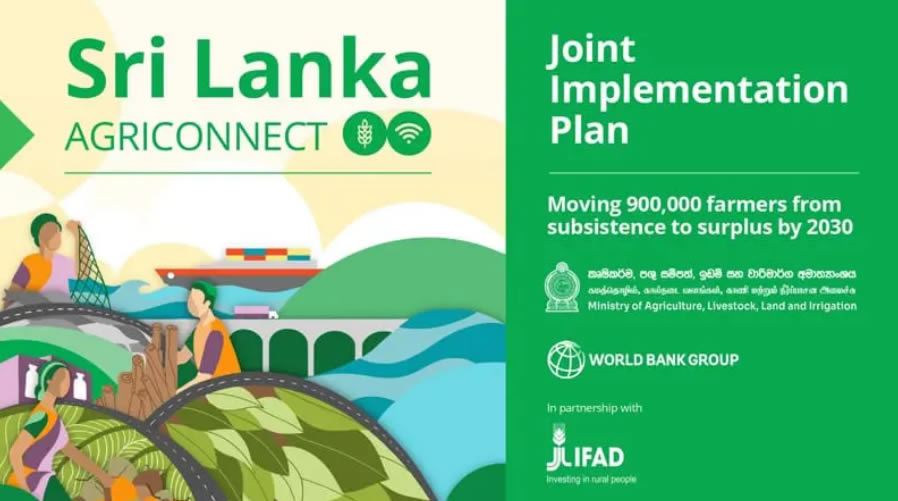
Sri Lanka has launched the AgriConnect Joint Implementation Plan in partnership with the World Bank Group and the International Fund for Agricultural Development (IFAD), marking a major step towards modernising the country’s agricultural and food production sectors, expanding employment opportunities and strengthening national food security.
The initiative aims to transform Sri Lanka’s agrifood industry into a more productive, value-added and internationally competitive sector while creating sustainable economic opportunities for farmers, fishers and rural communities.
Commenting on the initiative, Prime Minister Dr. Harini Amarasuriya said the Government is committed to moving beyond traditional commodity-based agricultural production towards an industry that generates greater value, quality employment and stronger opportunities for rural communities.
She noted that farmers, fishers and rural communities would play an active role in the country's economic transformation, with the AgriConnect plan supporting Government efforts to connect agricultural producers with financing, modern technology and markets while encouraging private investment and employment generation.
Aligned with the Government’s national development priorities and Public Investment Programme 2026–2030, as well as the World Bank Group’s Country Partnership Framework, the programme brings together government institutions, international development partners, financial institutions, agribusinesses and farming communities under a common development strategy.
By 2030, the initiative aims to improve access to agricultural value chains for 900,000 farmers. Its financial backing includes US$550 million in investments from the World Bank Group and US$115 million from IFAD, while also seeking to mobilise up to US$170 million in private-sector investment over the next five years.
Agriculture and food processing currently contribute at least 15% of Sri Lanka’s Gross Domestic Product (GDP), account for 30% of merchandise exports and provide approximately one in every three jobs in the country, highlighting the sector's importance to the national economy.
IFC Regional Vice President for Asia and the Pacific Sarvesh Suri highlighted the importance of connecting agricultural producers and businesses with the resources required to expand their operations and improve competitiveness.
He noted that Sri Lanka already possesses internationally competitive agricultural products and considerable entrepreneurial potential, while AgriConnect would help unlock further growth through improved access to finance, technology, markets and innovative investment mechanisms.
As the first country in South Asia to officially join the AgriConnect initiative, Sri Lanka will focus on strengthening partnerships between farmers and agribusinesses while advancing agricultural financing, digital agriculture, agricultural technology, cold-chain infrastructure, connectivity, climate-resilient irrigation, skills development and research.
Priority will be given to agricultural value chains with significant potential for value addition and export growth, including coconut, cinnamon, tea and fisheries, alongside dairy, poultry, aquaculture and horticulture. The programme will also seek to expand economic opportunities in less-developed regions, particularly the Northern and Eastern Provinces.
The initiative is expected to strengthen cooperation between government institutions, development organisations and private-sector stakeholders by addressing policy challenges, improving access to financing and creating an environment that supports large-scale agricultural investment.
IFAD Associate Vice-President of the Department for Country Operations Donal Brown emphasised the importance of ensuring that rural investments reach smallholder farmers and contribute to long-term economic resilience. He highlighted how AgriConnect could combine the expertise and financial resources of its partners to strengthen rural food systems, generate employment and protect communities against future economic and climate-related challenges.
Implementation of AgriConnect is already underway through the Integrated Rurban Development and Climate Resilience Project (IRDCRP), financed by the International Development Association (IDA). The project supports commercially viable businesses led by smallholder farmers by connecting them with improved financing opportunities and more profitable markets through productive partnerships.
Meanwhile, the International Finance Corporation (IFC), a member of the World Bank Group, is supporting the development and international competitiveness of Sri Lanka’s cinnamon and coconut industries. Its efforts also include expanding access to finance for agribusinesses through direct investments and risk-sharing facilities within the financial sector.
Through this coordinated approach, Sri Lanka aims to build a more resilient and commercially competitive agricultural sector while improving rural livelihoods, strengthening export capacity and creating new employment opportunities across the country.
“Giving Visitors More Reasons to Stay”: Kamal Munasinghe Highlights City of Dreams’ Contribution to Sri Lankan Tourism