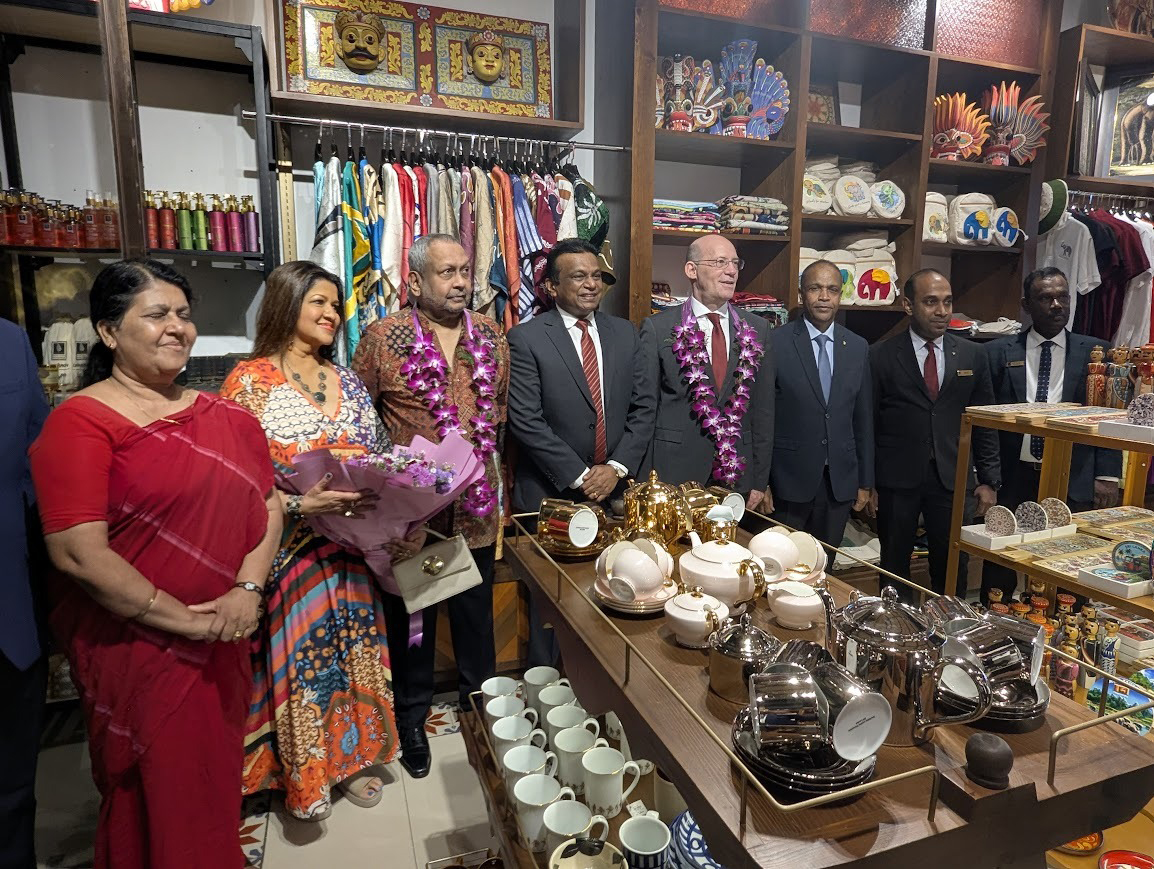





Lakarcade, Sri Lanka’s premier luxury heritage retailer, has expanded its footprint with the opening of its eighth showroom at Shangri-La Colombo on August 7, further strengthening its presence across the country’s luxury retail and hospitality sectors.
The new showroom represents Lakarcade’s third collaboration with the Shangri-La Group, following its established locations at One Galle Face Mall and Shangri-La Hambantota. The partnership reflects a shared commitment to creating world-class retail experiences while showcasing Sri Lanka’s rich artistic and cultural heritage.
At the core of Lakarcade’s mission is the creation of sustainable market opportunities for rural Sri Lankan artisans. By connecting traditional craftsmanship with international visitors and discerning local customers, the retailer helps bring authentic Sri Lankan products to a wider market.
Through its presence within leading hospitality destinations, Lakarcade supports the tourism industry, strengthens artisan livelihoods and contributes to Sri Lanka’s foreign exchange earnings.
“This expansion enables us to further elevate the global reach of Sri Lanka’s talented craftsmen, offering guests from around the world an authentic piece of our heritage while empowering artisan communities across the country,” said Anil Koswatte, Managing Director and CEO of Lakarcade.
He also expressed appreciation for Shangri-La’s continued partnership and its shared vision of promoting Sri Lankan craftsmanship on the global stage.
The opening ceremony was attended by Lakarcade Deputy Chairman Darup Peiris and Manjaree Peiris, together with Andreas Streiber, General Manager of Shangri-La Colombo.
Welcoming Lakarcade to the hotel, Streiber described the new showroom as a meaningful addition to the guest experience at Shangri-La Colombo.
“At Shangri-La, we are committed to offering both international and local guests authentic cultural experiences. Lakarcade’s presence provides visitors with direct access to Sri Lanka’s finest handcrafted heritage products while supporting rural artisans and the country’s tourism ecosystem,” he said.
Sri Lankan Diaspora Can Strengthen Business Ties Between Sri Lanka and New Zealand – David Pine
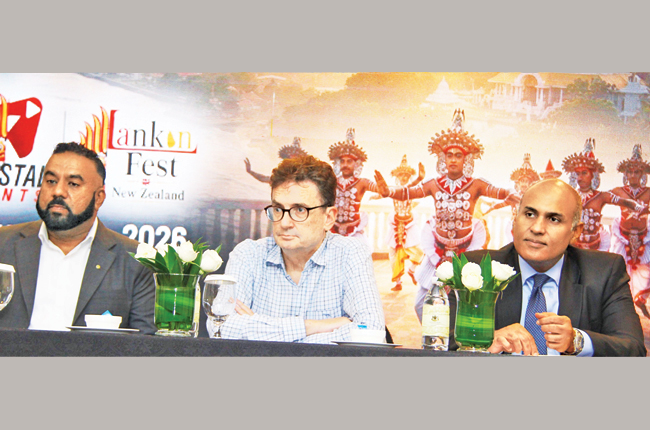
Sri Lanka’s vibrant diaspora community in New Zealand can play a greater role in strengthening bilateral trade, investment, tourism and broader economic relations between the two countries, New Zealand High Commissioner to Sri Lanka David Pine said in Colombo.
Speaking at a media briefing on Lankan Fest 2026, Pine highlighted the potential of the Sri Lankan community in New Zealand to serve as an important bridge between the two countries. The festival is scheduled to take place at Wakaraka Park in Auckland on November 1, 2026.
“We have 25,000 Sri Lankan ambassadors in New Zealand, so we want to mobilise them and get them more involved in the relationship,” Pine said.
He explained that establishing Lankan Fest as a regular annual event could strengthen community pride while increasing the visibility of Sri Lanka among New Zealand audiences. Greater exposure, he noted, could create new opportunities across tourism, business and economic cooperation.
Pine pointed out that Indian and Filipino communities in New Zealand already organise major events to showcase their respective cultures and countries. While the Sri Lankan community is active across many sectors, he said it had not previously had a comparable large-scale annual event.
“What excites me most about this is hearing that they really intend this to be a regular, ongoing, annual event,” he said.
According to Pine, Lankan Fest could generate tangible economic benefits by promoting Sri Lanka as a tourism and business destination while strengthening people-to-people connections between the two countries.
“It offers a great sense of pride to the community, but at the same time, it lifts the visibility of Sri Lanka as a country in New Zealand. And that has all sorts of benefits for tourism, for business, and just for deepening and strengthening our ties,” he said.
The High Commissioner also outlined several upcoming initiatives aimed at deepening Sri Lanka-New Zealand relations. New Zealand is expected to support the Sri Lankan Expo in Colombo in January by facilitating the participation of a strong New Zealand business delegation.
Such business-to-business engagement could help identify new opportunities for trade, investment and commercial partnerships between companies in both countries.
Pine also highlighted plans surrounding the Sri Lankan cricket team’s tour of New Zealand in February 2027. The year will mark 100 years since the first cricket match between Sri Lanka and New Zealand was played in 1927.
“We’re planning a lot of big events around that cricket tour,” he said, adding that another New Zealand business delegation is expected to visit Sri Lanka later in the year.
He described the planned programme as a comprehensive initiative covering cultural, sporting, tourism and business dimensions of the bilateral relationship.
“It touches on all the elements of the relationship between our two countries,” Pine said, reaffirming the New Zealand High Commission’s active support for the initiatives.
Together, the planned activities are expected to create new platforms for commercial engagement while leveraging Sri Lanka’s diaspora in New Zealand as an important link for promoting tourism, investment and trade.
By transforming strong people-to-people connections into stronger business networks, the initiatives could help unlock new economic opportunities and further deepen Sri Lanka-New Zealand economic cooperation.
Lakarcade Expands Luxury Presence with New Outlet at Shangri-La Colombo