




Sustainability is increasingly influencing how organisations approach strategy, risk management, governance and long-term value creation. For directors and senior executives, understanding these areas has become essential to making informed decisions and navigating evolving regulatory requirements, stakeholder expectations and business challenges.
In response to this growing need, the Sri Lanka Institute of Directors (SLID), in partnership with the Association of Chartered Certified Accountants (ACCA), is offering the internationally recognised Certificate in Sustainability Strategy and Management to corporate leaders in Sri Lanka.
The programme aims to equip participants with the knowledge and skills to integrate sustainability into organisational strategy and decision-making, while deepening their understanding of governance, accountability, stakeholder engagement and sustainable long-term value creation.
Ms Anitra Perera, CEO of SLID, said, “Our continued collaboration with ACCA represents a shared commitment to strengthening the capabilities of Sri Lanka’s directors and business leaders in an increasingly complex and globally connected environment. By extending exclusive access to internationally recognised ACCA qualifications at preferential rates for SLID members, we are creating a valuable pathway for continuous professional development, particularly in financial stewardship, governance and strategic decision-making.
“At SLID, we believe that stronger organisations begin with better-informed and future-ready leaders. Our collaboration with ACCA brings together SLID’s focus on boardroom excellence with ACCA’s global expertise and professional standards, enabling us to further strengthen the quality of leadership and governance across Sri Lanka’s corporate sector.”
Building a Strong Foundation in Sustainability Strategy
The Certificate in Sustainability Strategy and Management introduces participants to key areas increasingly shaping corporate decision-making, including strategy development, governance and accountability, stakeholder engagement, and long-term value creation.
Participants will develop an understanding of how sustainability strategies can be designed and aligned with broader organisational objectives. This approach encourages leaders to view sustainability not as an isolated responsibility, but as an integral element of effective management, strategic planning and organisational success.
Port City Colombo and University of Moratuwa Partner to Align Urban Development with Talent Growth
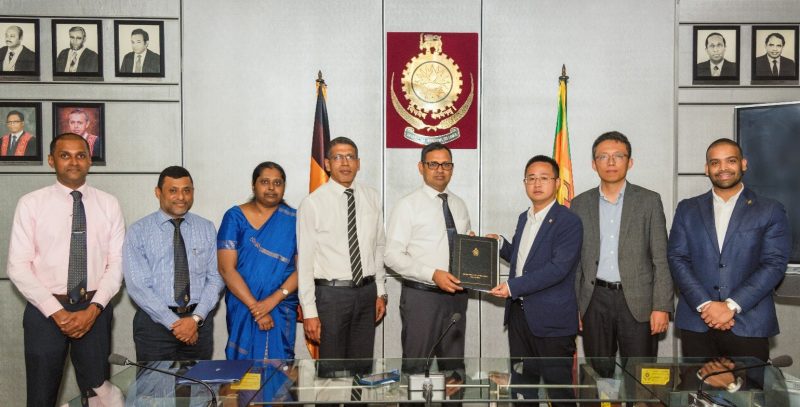
CHEC Port City Colombo (Pvt) Ltd. and the Department of Town and Country Planning at the University of Moratuwa have entered into a Memorandum of Understanding (MoU) to strengthen industry-academia collaboration in urban development, urban informatics, research, innovation and talent development.
Signed on 29 September 2026 at the University of Moratuwa, the agreement aims to create opportunities for students and academics to engage more closely with Port City Colombo and gain practical insights into its planning and development processes.
A central focus of the partnership is student development. The MoU establishes opportunities for structured internships, industry exposure, academic projects and skills development. It also provides scope for longer-term engagement through initiatives such as career fairs involving entities registered with Port City Colombo.
“As a master developer, we see value in working closely with universities because urban development is not something that happens in isolation. We see this as a partnership where both sides have something to gain. Students and academics gain closer access to a major urban development and the practical aspects that come with it, while Port City Colombo gets the benefit of working with people who are researching and thinking about the future of cities. That kind of exchange is something we want to develop further with the University of Moratuwa across all disciplines, as we build Port City Colombo as a platform to further expose Sri Lankan talent to the world,” said Mr Xiong Hongfeng, Managing Director of CHEC Port City Colombo (Pvt) Ltd.
The agreement builds on the existing relationship between Port City Colombo and the Department of Town and Country Planning, including previous student engagement through initiatives such as the successful Smart City Ideathon. The programme provided students with an opportunity to explore urban development challenges associated with Port City Colombo.
The new MoU expands this relationship into a more structured framework for research, academic exchange, innovation and industry engagement.
Building on this foundation, the two parties will also explore opportunities for applied research and innovation in areas such as urban informatics and smart city development. Student and faculty projects may be aligned with emerging urban challenges and development priorities relevant to Port City Colombo, creating opportunities to connect academic knowledge with practical industry needs.
Empowering Leaders with Global Sustainability Insights to Drive Lasting Impact