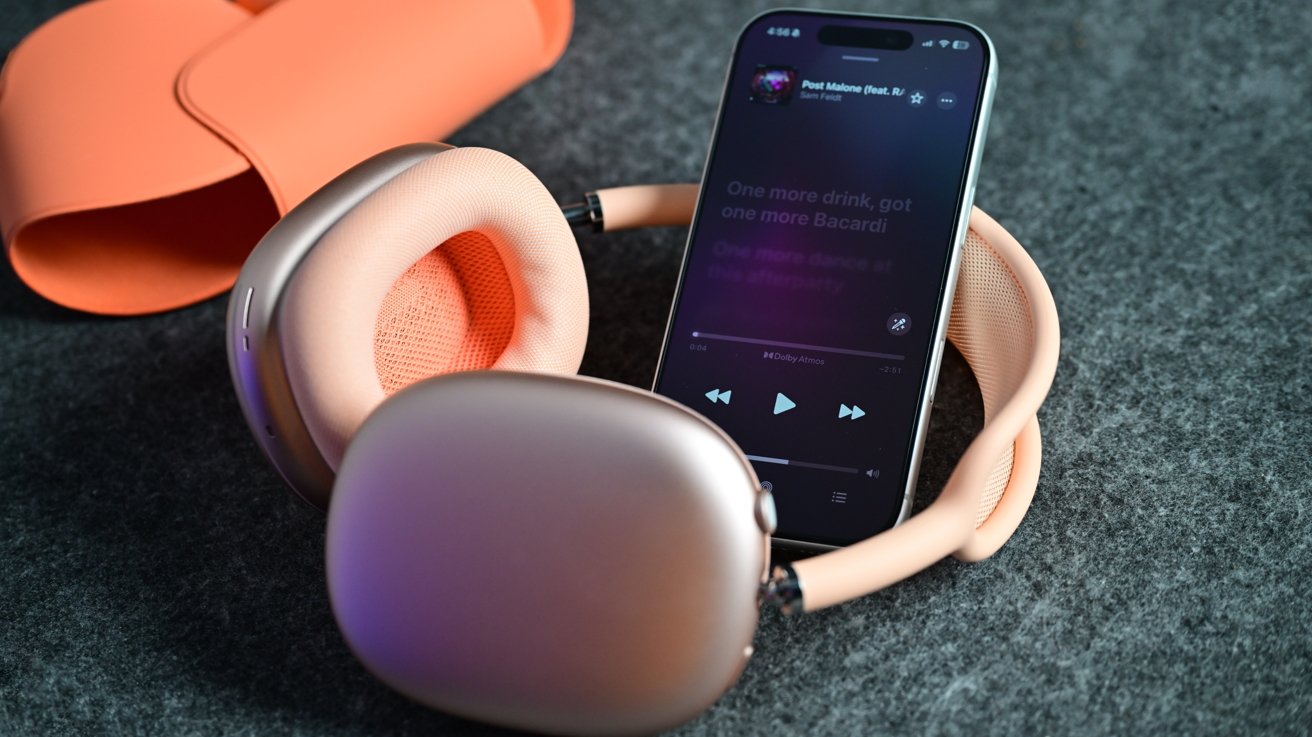





Apple has released a new firmware update for its latest AirPods models, arriving alongside iOS 27 and introducing greater control over audio customization.
The update, released Monday, is available for the AirPods Pro 2, AirPods Pro 3, AirPods 4, and AirPods Max 2. The new firmware carries build number 9A350.
The firmware rollout coincides with iOS 27, which introduces expanded audio customization features for compatible AirPods. One of the key additions is a new customizable equalizer that gives users more control over their listening experience.
With the new EQ feature, owners of the AirPods Max 2, AirPods Pro 3, and AirPods 4 can manually adjust low, mid, and high-frequency levels rather than using Apple's standard audio profile.
The customized EQ settings are saved directly to the AirPods, meaning users can retain their preferred sound profile when switching between compatible devices. Apple also displays a real-time audio waveform while users fine-tune the different frequency ranges.
As with previous AirPods firmware releases, the update is installed automatically. Users simply need to place their AirPods in their charging case, where applicable, and keep them connected to an iPhone or other compatible iOS device. Apple does not provide a manual option for installing the firmware.
Apple Pushes Back Against Epic in Ongoing App Store Fee Battle

Apple is preparing to take its ongoing legal battle with Epic Games to the U.S. Supreme Court, where it will argue that a lower court wrongly found the company in violation of an injunction involving its App Store policies.
The Supreme Court is scheduled to resume hearing cases in October, giving Apple an opportunity to challenge the ruling and present its case for overturning the injunction violation.
Apple and Epic have been locked in a legal dispute for more than six years over the way Apple operates the App Store and collects commissions from developers. Although Apple largely prevailed in the original lawsuit, the case resulted in an injunction targeting the company's anti-steering rules.
A District Court later ruled that Apple had violated that injunction, concluding that the company had not provided a sufficiently competitive alternative to its previous anti-steering restrictions. Apple is now arguing that the finding was based on an interpretation that went beyond the actual wording of the court's order.
In its latest filing, Apple focuses on one of the two arguments it originally presented to the Supreme Court. The company maintains that the Ninth Circuit should rely on the specific language of the injunction rather than its broader "spirit" when determining whether Apple violated the order.
Apple also points out that the original mandate did not specifically require changes to App Store commission rates. While the company introduced lower commission rates of 12% and 27%, it argues that adjusting commissions was not part of what the court explicitly ordered.
Apple had previously raised a separate argument concerning the scope of the injunction, claiming that the District Court went too far by issuing a universal injunction. The company cited the Supreme Court's CASA decision as precedent for limiting the injunction specifically to Epic.
However, that argument is no longer before the Supreme Court. When the Court agreed to hear Apple's case, it limited its review to the question of whether the lower court improperly relied on the broader "spirit" of the injunction rather than its precise wording.
Apple Enhances AirPods with Customizable EQ Arriving Alongside iOS 27