




AOD Launches Young Creatives Programme to Empower Students with Special Learning Needs
AOD has launched the Young Creatives Program for Students with Special Needs, a two-year supported creative education programme designed for young people aged 13 and above who have additional learning and support needs.
The programme opens AOD’s creative classrooms, studios and wider community to students who demonstrate an interest in art, making or design. Participants attend the AOD campus three days a week, engaging in practical art, craft and design activities under the guidance of a dedicated team and following an individualised learning pace.
Alongside the creative curriculum, students may also receive support in English and Mathematics, with the opportunity to work towards London O-Level examinations where appropriate.
A key feature of the programme is its individual approach to learning and achievement. Rather than defining students by their diagnoses, AOD develops a personal learning plan based on each student’s strengths, interests and needs. For some participants, the programme may provide a pathway to AOD’s Foundation programme and eventually a BA (Hons) degree. For others, the focus may be on developing practical creative skills, building a portfolio, and gaining greater confidence and independence.
“Inclusion has always been part of AOD’s belief in the transformative power of creativity,” said Linda Speldewinde, Founder and Chairperson of AOD. She noted that creative education can recognise individual differences as strengths and opportunities, adding that the programme aims to help every young person discover their abilities, express themselves and progress according to their potential.
Students will explore a broad range of creative disciplines, including drawing, painting, craft, sculpture, textiles and digital creativity, while gaining exposure to areas such as fashion, graphic design, photography and spatial design. Throughout the programme, participants will develop portfolios and learn how to present and discuss their work.
The programme will also involve current AOD BA (Hons) students as Young Creatives mentors. Working alongside teachers, learning support staff and counsellors, the mentors will provide participants with relatable creative role models while helping make inclusion an integral part of the academy’s everyday community.
“Our starting point is always the individual, never the label,” said Maria Perez, Creative Lead for the Young Creatives Program. She added that when learning is centred around a young person’s abilities and interests, it can create opportunities for significant personal growth and discovery.
Sri Lanka Needs More Than a Craft Revival — It Needs a Thriving Creative Economy
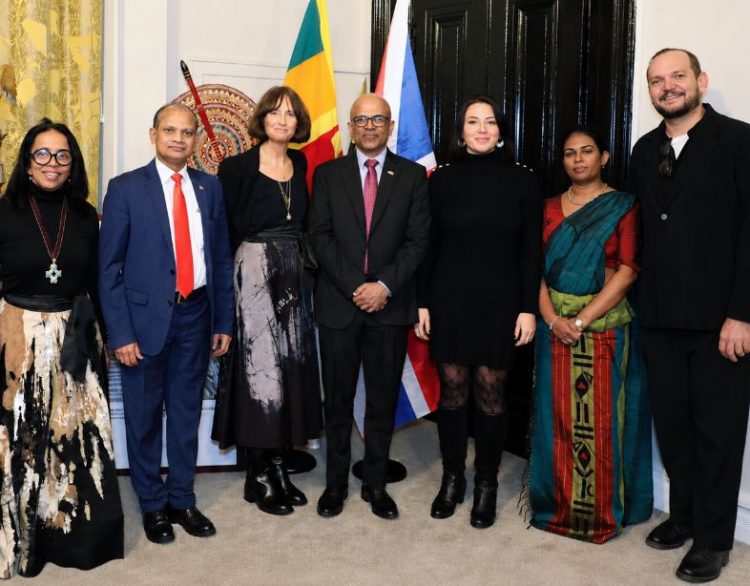
Sri Lanka’s most impactful craft campaign this year may not have emerged from a trade fair, export pavilion or government initiative. In recent weeks, Miss World Sri Lanka Prathibha Liyanarachchi, a technical designer and graduate of the University of Moratuwa, has brought a distinctly Sri Lankan visual identity to the international stage. While the commercial impact of that exposure is difficult to quantify, it demonstrates the potential of heritage when it is presented in a contemporary, visible and relevant way. With the right platforms and opportunities, hundreds of young creatives could be creating similar impact.
Against this backdrop, the Government’s renewed focus on handloom comes at an important time. Speaking recently at The Art of Weaving, the Minister of Industry and Entrepreneurship Development positioned handloom not as a declining traditional sector, but as an “industry of the future”. He also called for the development of product categories beyond sarees and set an ambitious export target of US$100 million or more. The direction is promising, but it also raises a more fundamental question: after decades of preservation efforts and development programmes, what needs to change to unlock the sector’s true potential?
For Selyna Peiris and Robert Meeder, co-founders of The Institute for Future Creations (TIFC), the answer lies in building a stronger creative economy in Sri Lanka. The term itself has been used frequently enough to risk becoming another piece of development terminology — broad enough to attract widespread support, yet vague enough to lack clear ownership. Five years after Sri Lanka co-sponsored a United Nations resolution on the creative economy, the more pressing challenge is to define what that concept means in practical economic terms.
“Craft gives us something very tangible around which to start building that economy,” says Peiris. “We already have makers, materials, knowledge and businesses producing products. The opportunity is to stop viewing them purely through the lens of heritage preservation and start recognising them as participants in a modern, productive economy.”
Sri Lanka’s handloom, batik, jewellery, ceramics, wood, fibre and other material-based traditions have the potential to generate employment, intellectual property, innovation and export revenue. However, that potential will not be realised simply by increasing production. As Meeder explains, “The answer isn’t necessarily more handloom stations or more looms. It is about connecting the capabilities we already have to markets and partners prepared to pay a better price for a better product.”
AOD Introduces Young Creatives Programme to Empower Students with Special Needs