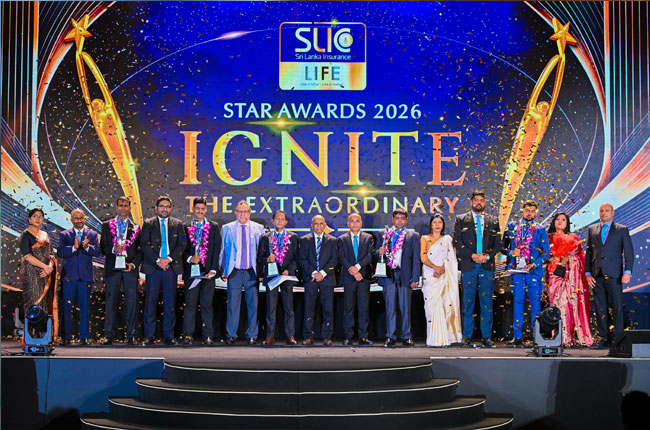





Sri Lanka Insurance Life (SLIC Life), the country’s most trusted life insurance provider, recently held its prestigious Star Awards 2026 at Shangri-La Colombo, celebrating outstanding sales achievements and recognising the dedication of its high-performing team members. Centred on the theme “Ignite the Extraordinary,” the event honoured individuals whose exceptional results, perseverance and commitment played a significant role in driving another year of growth and success for the organisation.
The theme, “Ignite the Extraordinary,” embodies the determination of SLIC Life’s sales force to push beyond conventional limits, turn aspirations into tangible results and continually raise the bar for performance. The awards ceremony recognised individuals who exceeded expectations, highlighting how passion, resilience and a strong commitment to excellence can deliver remarkable achievements.
More than 390 outstanding performers received recognition across multiple categories, including Best Insurance Advisors, Best Group Leaders, Best Team Leaders, Best Branch Managers and Best Regional Managers. Exceptional contributions from the Bancassurance channel were also celebrated, with awards presented to Relationship Officers, Relationship Managers, Area Managers, Cluster Managers and Channel Managers. In addition, Special Awards were presented within each category to acknowledge remarkable individual accomplishments.
The ceremony’s highest honours went to several distinguished performers from across the country. They included Mr. A. Supesan of the Northern Region, named All Island Best of the Best Regional Manager; Mr. T. Gobinath of the Jaffna Branch, named All Island Best of the Best Branch Manager; Mr. B. J. Jude of the Jaffna Branch, recognised as All Island Best of the Best Group Leader; Mr. W. S. Lakmal of the Gampaha Branch, awarded All Island Best of the Best Team Leader; Mr. M. M. S. K. Nawaratne of the Kandy Main Branch, named All Island Best of the Best Advisor; and Ms. S. Shobitha, recognised as All Island Best of the Best Relationship Manager – Bancassurance. Their achievements underscored the depth of talent within SLIC Life and the strength of its nationwide sales network.
Reflecting on the team’s accomplishments, Dr. Sameera Dharmasena, Chief Executive Officer of Sri Lanka Insurance Life, highlighted the capabilities and dedication of the organisation’s sales force.
“Our sales team has consistently proven its ability, resilience and determination to overcome challenges and achieve ambitious goals. I believe we have one of the strongest sales teams in the industry, with tremendous potential to lead SLIC Life to the number one position. What stands out most is their deep commitment to the organisation, demonstrated through personal sacrifices and their willingness to go above and beyond to serve our customers and support Sri Lanka Insurance Life. We sincerely value this dedication, and it is our responsibility to empower our people, provide the right support and create opportunities for them to reach their full potential,” he said.
BOI Accelerates Development of Investment Zones in Northern Province
The Board of Investment of Sri Lanka (BOI) is fast-tracking plans to establish two Export Processing Zones in the Northern Province, at Paranthan and Kankesanthurai (KKS), with work on internal infrastructure expected to commence in early January 2027.
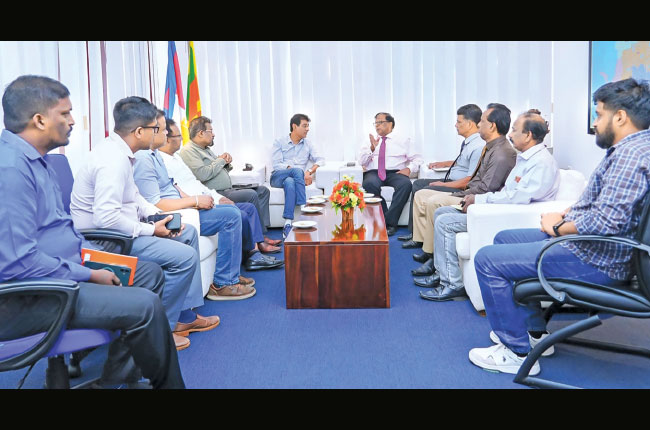
BOI Chairman Duminda Hulangamuwa and Director General Dr. Sulakshana Jayawardena recently visited the province to explore its investment opportunities and engage with relevant stakeholders on facilitating new projects, attracting investors and promoting export-oriented industries.
During discussions with regional government officials and relevant agencies regarding the proposed Paranthan Export Processing Zone, the BOI committed to opening land reservations for investors by the end of November 2026. Internal infrastructure development is scheduled to begin in early January 2027. The KKS zone is expected to follow a similar timeline, with both projects progressing concurrently towards operational readiness.
As part of its investment promotion efforts, the BOI also plans to organise a familiarisation visit to the Northern Province in November 2026, bringing together leading investors and investor associations to showcase the region’s investment potential and encourage new business ventures.
Discussions with existing and prospective investors highlighted several challenges affecting investment facilitation, including delays in land valuation and allocation, obtaining approvals and clearances from relevant government agencies, and coordination among public institutions. In response, BOI Chairman Hulangamuwa proposed introducing a Single-Point Coordination Mechanism to streamline these processes and ensure that investor concerns are addressed efficiently.
The BOI has also requested the support of Northern Province Governor Nagalingam Vethanayahan to establish a Single-Point Investor Facilitation Centre. The proposed centre would serve as a central access point for investors seeking approvals, assistance and services from regional and national government institutions, helping to improve coordination and create a more investor-friendly environment in the province.
SLIC Life Honours Top Performers at Star Awards 2026 for Sales Excellence