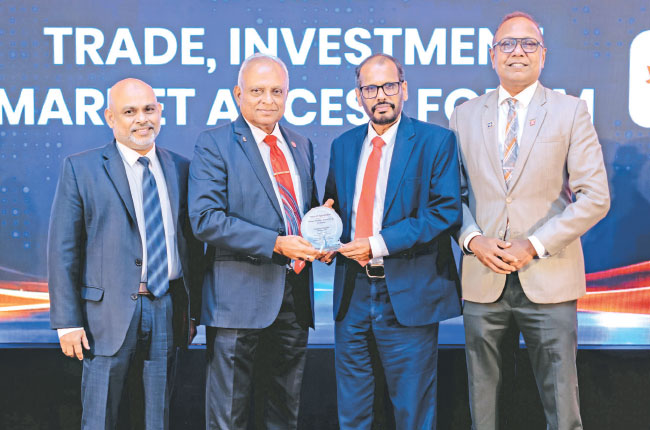





The National Chamber of Exporters of Sri Lanka (NCE), in partnership with the Canadian Chamber of Commerce in Sri Lanka (CanCham), hosted the Sri Lanka–Canada Trade, Investment & Market Access Forum on September 21 at Cinnamon Grand Colombo. The event brought together exporters, policymakers, diplomatic representatives and business leaders to explore opportunities and challenges in strengthening bilateral trade, improving market access and attracting Canadian investment to Sri Lanka.
The forum examined several key areas, including Sri Lanka’s current share of Canada’s apparel market, the competitiveness of non-apparel exports and strategies to accelerate their growth, as well as the significant investment opportunities available to Canadian investors in Sri Lanka. Through detailed trade statistics, market intelligence and direct engagement with policymakers and private sector representatives, the programme provided participants with valuable insights into the potential for expanding bilateral economic ties.
Delivering the opening address, the NCE President said the forum aimed to move beyond conventional discussions about trade volumes and focus on building the business relationships needed to strengthen trade and investment between the two countries.
“International trade is ultimately not about statistics alone. It is about people, companies, partnerships, investment, innovation, and long-term relationships,” the NCE President said.
He noted that Sri Lanka had established a diverse export base spanning apparel, tea, rubber products, coconut and coconut-based products, spices, food and beverages, gems and jewellery, electronics, logistics, ICT and professional services. The next phase of export development, he said, should focus on product diversification, greater value addition and innovation to expand market reach amid growing trade opportunities with Canada.
Canada is Sri Lanka’s eighth-largest export destination, with exports reaching more than USD 317.08 million in 2025.
Delivering the keynote address, Export Development Board (EDB) Chairman Mangala Wijesinghe outlined the current position of Sri Lanka’s export sector, the opportunities available in the Canadian market and the potential to build a deeper and more diversified economic partnership between the two countries.
He emphasised the need for Sri Lanka to move towards value-added exports and strengthen its participation in global value chains. He also highlighted opportunities in coconut-based products, spices, specialised rubber products, food and beverages, electrical and electronic products, and ICT services.
Sri Lankan Consumer Spending Reaches Record Rs. 9 Trillion
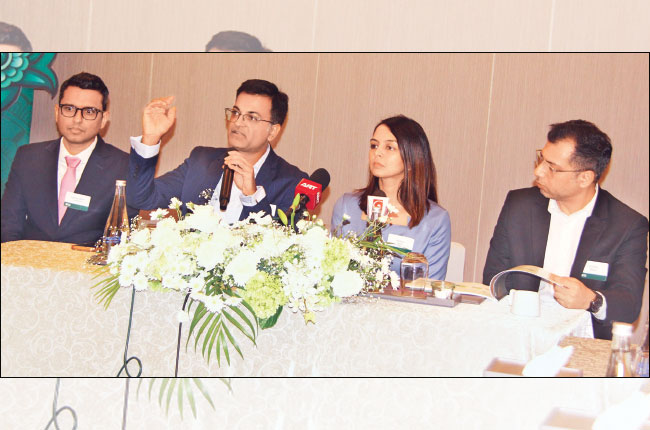
Six years after its inaugural assessment of the Sri Lankan market in 2020, Boston Consulting Group (BCG), in collaboration with The Ceylon Chamber of Commerce, yesterday released a comprehensive new report titled The Changing Path to Purchase in Sri Lanka.
The study finds that Sri Lanka’s household consumption has rebounded to a record real value of Rs. 9 trillion, reaffirming private spending as a key driver of the country’s macroeconomic recovery. However, the economic turbulence of the past five years has fundamentally reshaped consumer behaviour, with greater purchasing intentionality, changing geographical patterns of spending power and growing reliance on digital platforms and artificial intelligence (AI) channels.
Despite the overall market recovery, corporate strategies developed before the economic crisis are becoming increasingly outdated. Household budgets are under greater scrutiny, as consumer spending intentions outpace expected income growth. While 77% of consumers expect their expenditure to increase over the next six months, only 38% anticipate a corresponding rise in income.
As a result, households are prioritising essential goods and services, maintaining relatively stable spending on everyday necessities while postponing or reducing expenditure on discretionary purchases and high-value items.
“Consumption has recovered to a record level, but the household behind that number is not the one companies planned for before the crisis. Essentials take a larger share of the wallet, and families are making more deliberate choices, category by category,” said Nishant Gupta, Managing Director and Senior Partner at BCG.
“Broad recovery now masks finer differences in spending power and demand across income groups and geography. Companies will need to build their portfolios and their route-to-market around where demand actually lies,” he added.
The report also highlights significant shifts in the distribution of purchasing power across Sri Lanka. The middle class remains the principal driver of domestic commerce, accounting for approximately 70% of total national spending. Rural Sri Lanka is home to the majority of this demographic, representing 56% of all middle-class households.
Meanwhile, affluent households account for just 4% of the population and remain heavily concentrated in the Urban-West region. Despite their relatively small numbers, they contribute 11% of total consumption, underscoring their disproportionate influence on the market.
Consumer information and product discovery patterns are also changing. Word of mouth remains the most influential source of information, reaching 66% of consumers. However, digital influence has expanded significantly, increasing from 32% in 2020 to 51%.
Digital touchpoints are particularly influential in high-value, considered purchases, including leisure and travel, with YouTube and social media platforms playing prominent roles.
Generative artificial intelligence (GenAI) is also gaining ground in product discovery and search. The report finds that 55% of consumers are aware of GenAI, while 18% have actively used it. Among those who have used these tools, approximately one in three now explicitly relies on GenAI to research brands and products.
NCE–CanCham Forum Strengthens Trade and Business Ties Between Sri Lanka and Canada