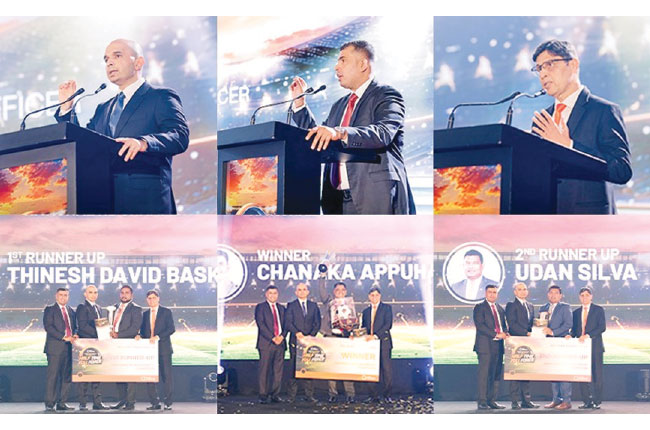





Union Assurance, one of Sri Lanka’s longest-standing private life insurers, recently celebrated the achievements of its Agency Force at the Mid-Year Rewards and Recognition ceremony, honouring its top-performing advisers and leaders for their contributions during the first half of 2026.
Held under the theme ‘Half Time – Full Force’, the event brought together nearly 150 award-winning advisers and leaders from across the country. It recognised individuals and teams who demonstrated excellence in customer service, business growth, leadership and their commitment to helping Sri Lankans protect what matters most.
Marking the halfway point of the year, the ceremony celebrated the dedication and resilience of Union Assurance’s Agency Force while building momentum for the months ahead. The team’s continued efforts play a key role in driving the Company’s growth and delivering meaningful life protection solutions to customers nationwide.
Several regions, zones and clusters received recognition for their outstanding performance. Pettah Region was named Best Large Region, while Matara 02 Region secured the Best Medium Region award. Northern 01 Zone was recognised as Best Zone, and North and East received the Best Cluster accolade.
The ceremony also honoured the country’s leading new business producers under the National New Business Champion category. Chanaka Appuhamy was named the winner, with Thinesh David Baskaran and Udan Silva securing the First Runner-Up and Second Runner-Up positions, respectively, in recognition of their outstanding contributions during the period.
Commenting on the occasion, Union Assurance Chief Agency Officer Imtiyaz Aniff said the Agency Force remains central to the Company’s success. He noted that the recognition celebrated not only strong business results but also the dedication, professionalism and customer-focused approach demonstrated by advisers and leaders across the country.
He further highlighted that the strong performance achieved during the first half of the year provides a solid foundation for continued progress, expressing his appreciation to all the winners and members of the Agency Force for their contributions to the Company’s shared success.
Citypak Partners with PickMe to Introduce New ‘PickMe Courier’ Delivery Service
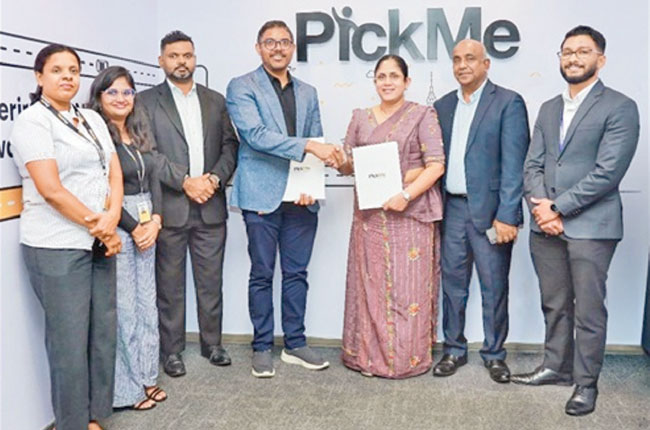
Citypak by Advantis, the domestic courier arm of Advantis Group, the transportation and logistics sector of Hayleys PLC, has partnered with PickMe to introduce PickMe Courier, a new island-wide parcel delivery service integrated into the PickMe app.
The collaboration combines Citypak’s growing logistics capabilities with PickMe’s established digital mobility platform, allowing users across Sri Lanka to send parcels conveniently through the app.
As one of Sri Lanka’s rapidly growing courier service providers, Citypak continues to expand its presence through reliable, customer-focused logistics solutions and an extensive delivery network. Under the partnership, Citypak will manage the end-to-end operational requirements of PickMe Courier, including parcel collection, sorting, line-haul transportation and last-mile delivery.
To use the service, customers can select the courier option in the PickMe app, enter the collection and delivery locations, and confirm their shipment details in a few simple steps. Once a request is placed, Citypak takes responsibility for managing the delivery process from collection to the final destination.
The launch of PickMe Courier expands the platform’s parcel delivery options by introducing scheduled deliveries for longer distances alongside its existing instant delivery services. While PickMe Flash caters to urgent, short-distance deliveries, PickMe Courier is designed for scheduled parcel shipments between cities and regions, making it suitable for personal packages and everyday delivery needs.
Commenting on the partnership, Vaseeharan Thiagarajah, CEO of Citypak, said the collaboration would extend the company’s logistics expertise to a broader customer base through the convenience and accessibility of the PickMe app.
He added that combining PickMe’s digital platform with Citypak’s established courier network would make island-wide parcel delivery simpler, more efficient and more accessible to customers throughout Sri Lanka.
Union Assurance Honours Agency Force Excellence at Mid-Year Rewards and Recognition Ceremony