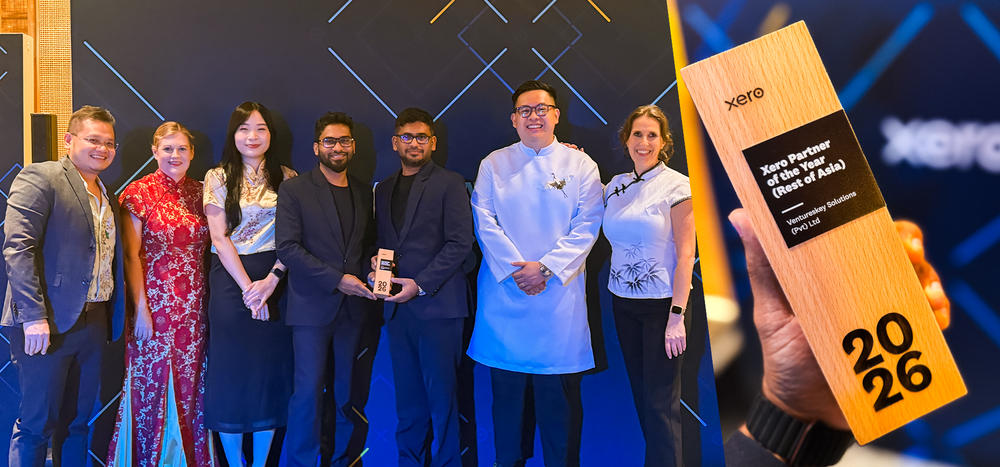





Ventureskey, a Sri Lankan business solutions, accounting and financial services firm serving clients across Sri Lanka and the United Kingdom, has won the prestigious ‘Xero Partner of the Year – Rest of Asia’ award at the Xero Awards Asia 2026, marking a significant international milestone for the company.
The awards ceremony was held in Singapore in August 2026, bringing together leading Xero partners from across the region.
The achievement builds on Ventureskey’s success in 2025, when it became the first Sri Lankan company to be recognised as a finalist at the Xero Awards Asia, in the Digital Innovators category.
The Xero Awards celebrate excellence among the platform’s partners worldwide. The Xero Awards Asia recognises leading partners across the region for their achievements in customer success, innovation, digital transformation and contributions to the growth of the Xero ecosystem.
Winning the ‘Xero Partner of the Year – Rest of Asia’ award places Ventureskey among the region’s recognised Xero partners and accounting service providers. The achievement also highlights the growing international recognition of Sri Lankan expertise in cloud accounting, digital finance and technology-driven business solutions.
From Finalist to Regional Winner
Ventureskey’s progression from finalist in 2025 to regional award winner in 2026 reflects its continued focus on delivering technology-driven financial solutions and measurable value to clients.
As a Xero Champion Partner and an experienced Xero specialist in Sri Lanka, Ventureskey provides a range of services, including Xero implementation and setup, system migration, third-party application integration, financial process automation, Xero training and support, bookkeeping, financial reporting, and ongoing financial and business advisory services.
By combining accounting and finance expertise with cloud technology, the company helps businesses streamline operations, strengthen financial controls, improve reporting and make better-informed decisions.
The award also recognises Ventureskey’s broader commitment to helping businesses embrace digital transformation, extending beyond the adoption of accounting software to improving financial processes and the way organisations manage their operations.
Swiss Embassy Hosts APIIT Sri Lanka’s First Hospitality Cohort for an Immersive Swiss Experience
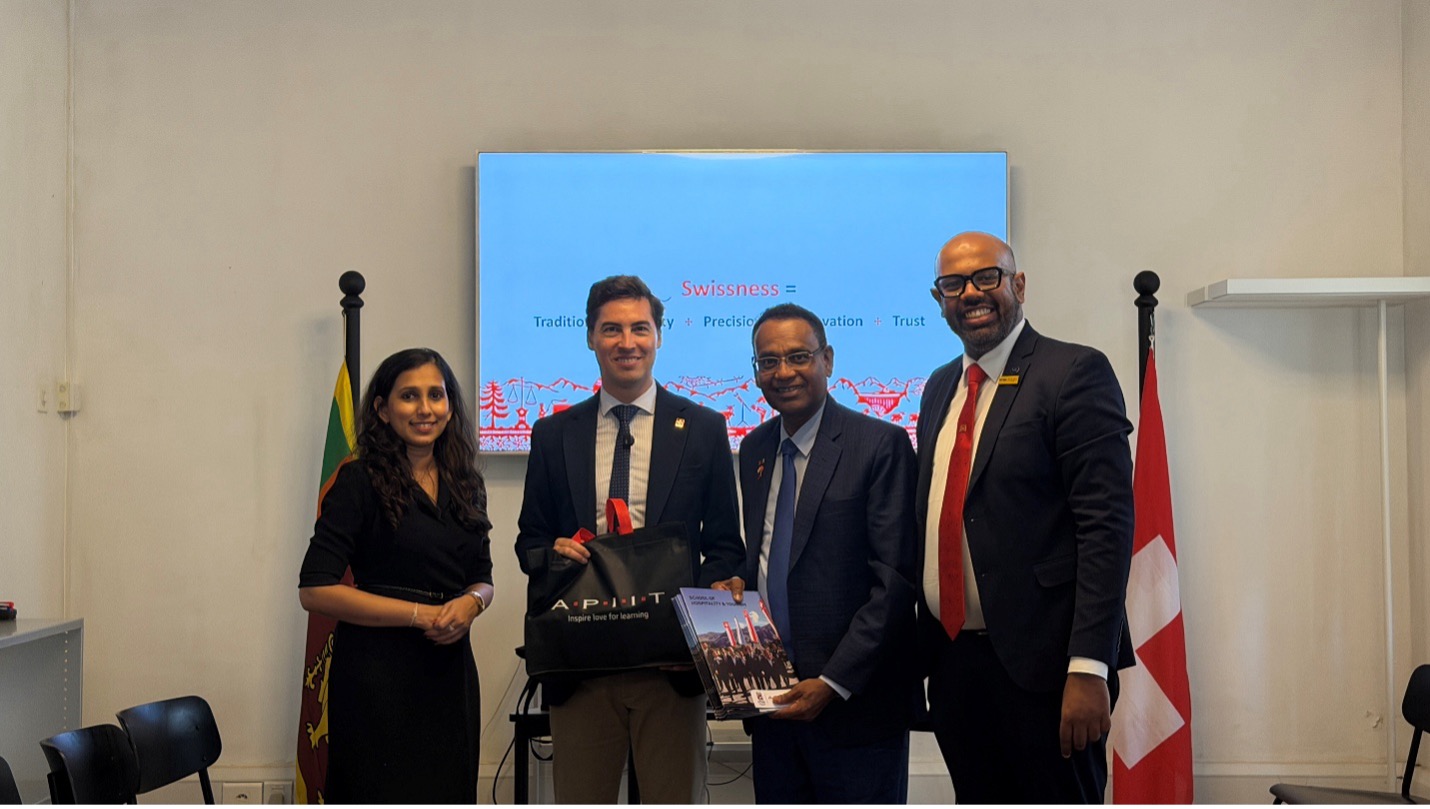
The Embassy of Switzerland in Colombo welcomed students from the inaugural cohort of the APIIT School of Hospitality and Tourism in July 2026 for an exclusive immersion session exploring Swiss culture, values and hospitality traditions.
The visit formed a key highlight of APIIT Sri Lanka’s ‘Week of Serendipity’ orientation programme and celebrated the institution’s academic partnership with Switzerland’s internationally recognised Hotel and Tourism Management Institute (HTMi). The collaboration aims to bring internationally recognised Swiss hospitality standards to aspiring professionals in Sri Lanka, emphasising operational precision, service excellence and leadership development.
The student delegation was warmly welcomed by Olivier Praz, Chargé d’Affaires at the Embassy of Switzerland. The session provided an opportunity for students to explore Switzerland’s heritage, societal values and the distinctive principles of precision and innovation associated with the concept of ‘Swissness’.
A key feature of the visit was an interactive forum in which students explored different aspects of Swiss identity. Discussions covered the cultural values cherished by Swiss communities, the country’s iconic landscapes and historic regions, and its longstanding customs, festivals and traditions. Students also learned about the operational discipline, professional strengths and service-oriented approach that characterise Swiss hospitality.
Beyond Switzerland’s renowned chocolate-making and winemaking traditions, the programme offered insights into the country’s diplomatic approach, sustainable tourism practices, punctuality and meticulous attention to detail. These discussions highlighted the principles that have helped establish Switzerland’s reputation in hospitality and tourism.
The event was attended by representatives of APIIT Sri Lanka’s leadership, including Bandula Egodage, Chairman of APIIT Sri Lanka, alongside the Head of the School of Hospitality and Tourism and the Head of Marketing at APIIT Sri Lanka.
Ventureskey Makes History with Second Win of Xero Partner of the Year – Rest of Asia at Xero Awards Asia 2026