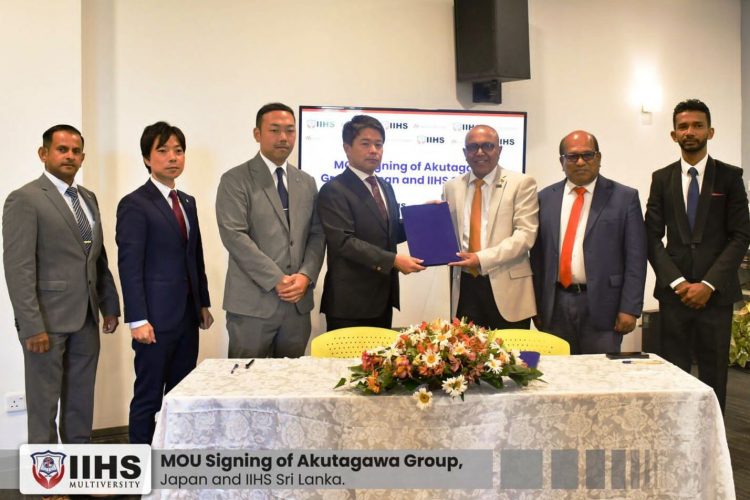





IIHS, in partnership with Akutagawa HRM Company, has introduced a structured, employment-driven programme designed to help Sri Lankan youth access career opportunities in Japan’s healthcare industry. The initiative comes at a time when global migration pathways are becoming more competitive and restrictive, particularly in traditional destinations.
The Japanese Care Professional Programme offers a clear education-to-employment pathway, addressing Japan’s growing demand for caregivers amid its ageing population and workforce shortages. Japan is currently estimated to face a shortfall of over 430,000 caregivers, creating long-term demand for skilled international professionals.
Structured pathway under Japan’s SSW framework
Unlike conventional migration routes to countries such as the UK, Australia, and Canada, this programme operates under Japan’s Specified Skilled Worker (SSW) visa framework. This system prioritises practical skills, language proficiency, and job readiness.
The programme combines healthcare education, structured Japanese language training, and cultural preparation into a unified career development pathway. Participants follow a four-year progression model, with opportunities to advance within Japan’s healthcare system, including potential progression into higher-skilled roles such as professional nursing.
Earning potential and financial support
A key feature of the programme is its structured earning model. Starting salaries are estimated at around LKR 450,000 per month, with candidates expected to earn over LKR 5.4 million annually within five years. Income levels can increase further with experience and specialization.
The programme also highlights a relatively fast return on investment, with participants potentially recovering initial training costs within months of employment. To support accessibility, financing options are available through institutions such as the National Savings Bank, allowing students to pursue the programme through structured repayment plans.
Additional benefits and long-term pathways
Beyond salary and employment, candidates receive employer-supported assistance including accommodation, travel arrangements, and long-term visa opportunities. The pathway also opens possibilities for permanent residency and family migration in Japan.
Dr. Kithsiri Edirisinghe stated that the initiative represents a shift toward skills-based, employment-oriented global mobility. Meanwhile, Yuma Akutagawa emphasised the importance of international collaboration in addressing Japan’s healthcare workforce shortages.
With limited intake and rising demand, the programme positions itself as a strategic opportunity for Sri Lankan youth seeking stable, long-term careers in the global healthcare sector.
360 Skin Clinic & 360 Aesthetics Earn ISO 9001:2015 Certification
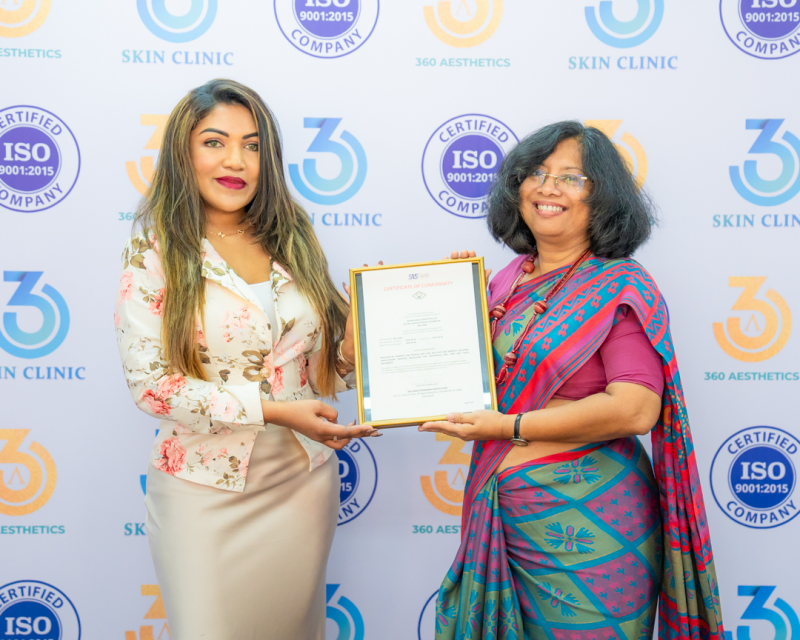
360 Skin Clinic & 360 Aesthetics Achieves ISO 9001:2015 Certification, Strengthening Commitment to Quality Care
360 Skin Clinic & 360 Aesthetics
has reached a significant milestone in its journey of clinical excellence and service innovation by securing the prestigious ISO 9001:2015 / SLS ISO 9001:2015 certification. The achievement reinforces its position as one of Sri Lanka’s leading providers of cosmetic, aesthetic, and wellness care.
The certification, issued by the Sri Lanka Standards Institution (SLSI), confirms that 360 Wellness Centre (Pvt) Ltd has successfully implemented a Quality Management System aligned with internationally recognised ISO 9001:2015 standards. This framework is widely regarded as a global benchmark for quality assurance, consistency, and continuous improvement.
Founded by cosmetic and aesthetic physician Dr Sarah Fazy, also known as Dr Cherry, the 360 brand has developed a strong reputation for combining medical expertise with personalised patient care, advanced technology, and a focus on client wellbeing. Over the years, the clinic has expanded its service offerings while maintaining a strong commitment to ethical practice and innovation.
Commenting on the achievement, Dr. Sarah Fazy described the certification as a proud milestone for the entire team, emphasising that quality care, patient safety, and professional excellence remain central to the organisation’s vision. She noted that ISO 9001:2015 recognition validates their ongoing commitment to delivering world-class services to every client.
The certification ensures that all treatments, consultations, and customer interactions are guided by structured international processes that prioritise consistency, safety, efficiency, and patient satisfaction. ISO 9001:2015, developed by the International Organization for Standardization (ISO), provides organisations with a framework to enhance operational efficiency and continuously improve service quality.
IIHS and Akutagawa HRM Launch Career Pathway for Sri Lankan Youth to Enter Japan’s Healthcare Sector