





Google has avoided a potentially significant breakup of its advertising technology business after a federal judge rejected the US Department of Justice’s request to force the company to sell major parts of its ad-tech operations.
The ruling spares Google from the most severe remedy proposed after the company was found to have illegally maintained a monopoly in the digital advertising market. However, the decision does not mean Google will face no corrective action.
The court has accepted most of the proposed behavioural remedies aimed at addressing Google’s alleged anticompetitive practices. Details of those measures, however, remain undisclosed as they are contained in a sealed Memorandum Opinion.
Google and the Department of Justice have 15 days to request redactions to the Memorandum Opinion, while the parties have 30 days to meet and confer before jointly filing a proposed Final Judgment.
Breaking Up Is Hard to Do
The legal battle dates back to January 2023, when the Department of Justice, joined by eight US states, filed a lawsuit accusing Google of monopolising key areas of the digital advertising market.
The government argued that Google used acquisitions and the scale of its advertising technology stack to strengthen its market position and disadvantage competitors.
The latest ruling allows Google to retain its core ad-tech business, although the behavioural remedies imposed by the court could still have a significant impact on how the company operates across the digital advertising ecosystem.
Save $200 on Apple’s M5 MacBook Air with 32GB RAM and 2TB SSD
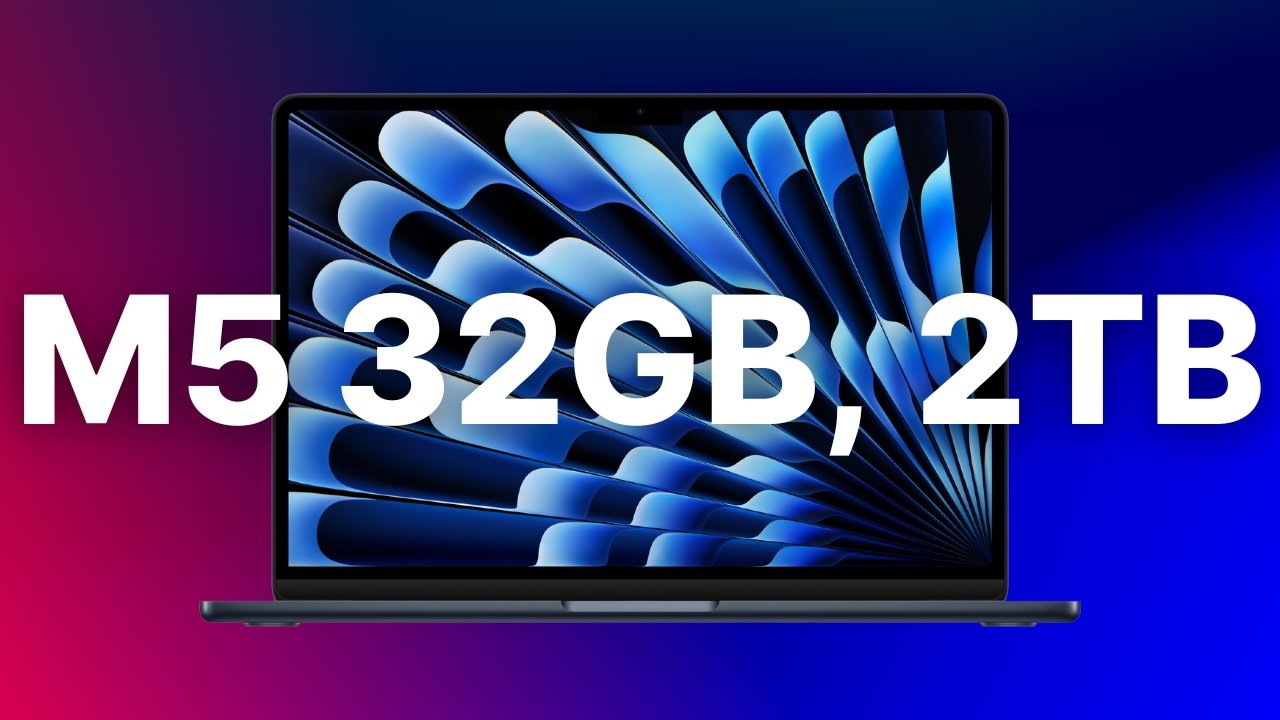
B&H is offering a limited-time $200 discount on Apple’s M5 MacBook Air with 32GB of unified memory and a 2TB SSD, making it one of the biggest price cuts currently available across the 13-inch lineup.
The discounted configuration is available in Midnight for $2,299, down $200 from its regular price. It features Apple’s 10-core M5 chip, 32GB of unified memory and a 2TB SSD, making it a particularly well-equipped option for users who need additional performance and storage.
According to the M5 13-inch MacBook Air Price Guide, the $200 reduction is the steepest discount currently available across the lineup.
The flash sale is scheduled to run through September 5, although B&H notes that supplies are limited at the reduced price. Orders shipped within the contiguous United States also qualify for free two-day shipping.
For buyers who don’t need the upgraded memory and storage, other MacBook Air configurations are also available at discounted prices, including options across the 13-inch and 15-inch models.
Judge Rejects DOJ Bid to Break Up Google’s Advertising Business