




Vietjet has entered into a strategic partnership with Starlink to provide passengers with free, high-speed Wi-Fi on board its flights, marking a significant step forward in the airline’s in-flight connectivity offering.
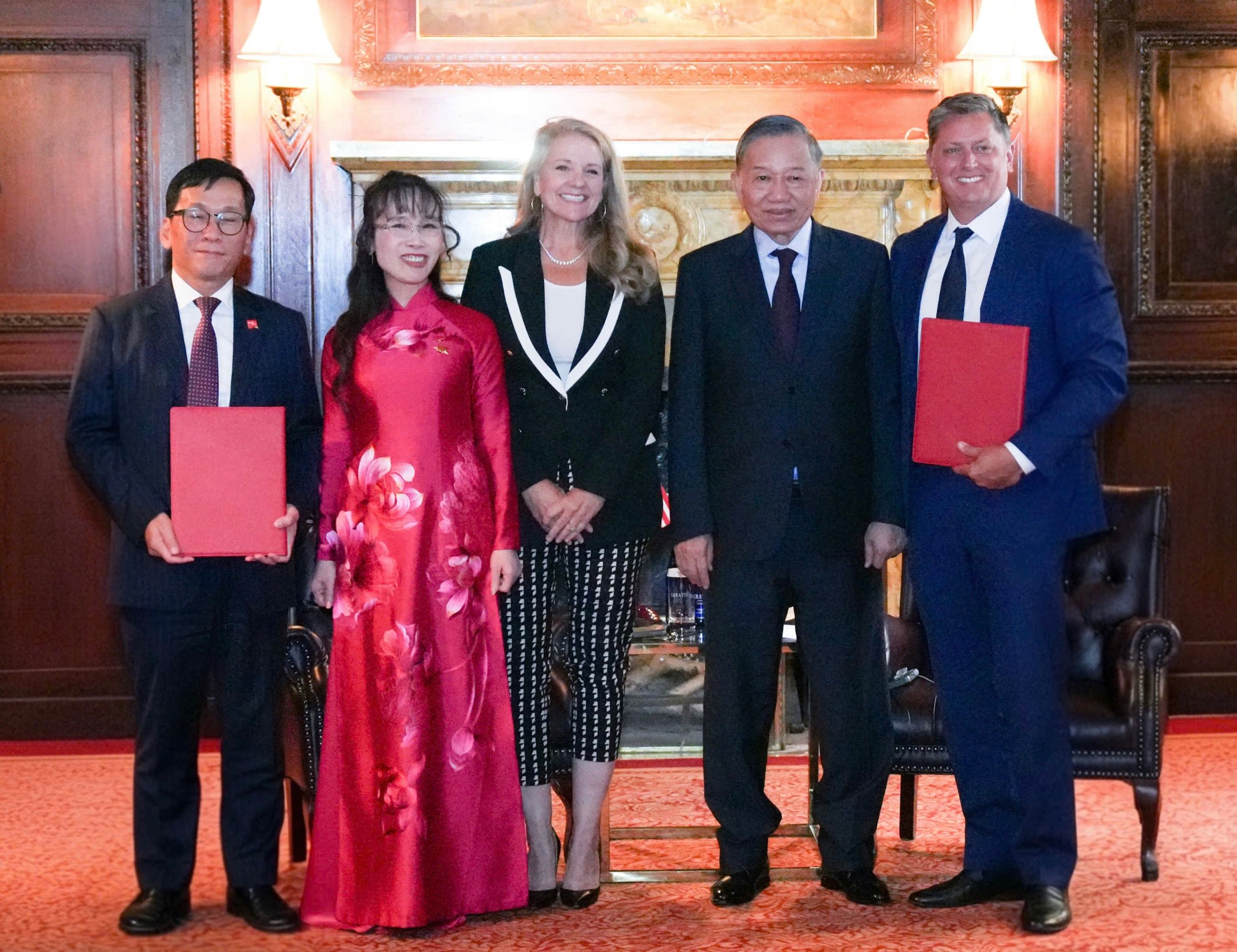
The agreement was signed during the working visit to the United States by Vietnam’s General Secretary and President To Lam. Vietjet, together with its group companies Galaxy Holdings and Galaxy Telecom, signed the agreement with Starlink, the satellite internet service engineered and operated by SpaceX.
The agreement exchange took place in the presence of To Lam, along with senior government officials and business representatives from Vietnam and the United States, highlighting growing cooperation between the two countries in aviation technology.
Under the initial rollout, Starlink connectivity will be installed across 120 Vietjet aircraft. The deployment will cover 100 Airbus A321 and Boeing 737 aircraft, together with 20 Airbus A330 aircraft.
Vietjet also plans to equip all aircraft delivered to the airline in the future with high-speed internet connectivity. The service is expected to extend across Vietjet’s domestic and international network, including its Colombo–Ho Chi Minh City route.
Powered by Starlink’s high-speed, low-latency satellite network, passengers will be able to remain connected during flights, including while travelling over oceans, polar regions and other remote areas. The connectivity will support activities such as working online, communicating with family and friends, streaming entertainment and accessing digital content throughout the journey.
Through the initiative, Vietjet aims to position high-speed in-flight Wi-Fi as an accessible everyday service rather than a premium travel feature.
Vietjet Chairwoman Dr. Nguyen Thi Phuong Thao said the partnership would allow passengers to remain connected throughout their time in the air.
“With Starlink, time in the air no longer has to mean time offline. Vietjet passengers will be able to stay connected throughout their journey, whether working, staying entertained, or keeping in touch with family and friends. This reflects Vietjet’s longstanding commitment to innovation and our ambition to bring leading technologies closer to more people,” she said.
Tim Hughes, Senior Vice President of Global Business and Government Affairs at SpaceX, said the new service would build on Starlink’s existing connectivity offering for homes and businesses in Vietnam.
SLEIS 2026 to Spotlight Emerging Opportunities in Sri Lanka’s Health Economy

As Sri Lanka seeks to broaden its economic growth drivers, healthcare is emerging as a sector with significance beyond its social role, offering opportunities for investment, innovation and wider economic development.
These opportunities will be examined at the Sri Lanka Economic & Investment Summit 2026 (SLEIS 2026), organised by The Ceylon Chamber of Commerce and scheduled for 12–13 October 2026.
A key session titled “Reimagining Healthcare for a Modern Health Economy” will explore how Sri Lanka can develop a stronger healthcare ecosystem while creating new opportunities across healthcare services, pharmaceuticals, medical technology and related industries.
The discussion will also examine how private-sector investment and innovation can contribute to improving healthcare delivery and outcomes, while supporting broader economic activity.
The session will feature a keynote address by Tushar Shroff, Chief Financial Officer of Zydus Lifesciences Limited. He will be joined on the panel by Vidyani Hettigoda, Director of Hettigoda Group of Companies; Raveen Wickramasinghe, President of the Association of Private Hospitals and Nursing Homes and Chief Executive Officer of Ruhunu Hospital; Murtaza Esufally, Deputy Chairman / Non-Executive Director of Hemas Holdings PLC; and Prof. Ravi Rannan Eliya, Director of the Institute for Health Policy.
The discussion will be moderated by Shyam Sathasivam, Group Chief Executive Officer of Sunshine Holdings PLC.
The session will consider the potential contribution of healthcare-sector development to productivity, investment and economic growth, while also addressing the opportunities and challenges associated with establishing a modern health economy in Sri Lanka.
Vietjet Partners with Starlink to Introduce Free High-Speed Wi-Fi Across Its Global Network