In his memoirs, Lee Kuan Yew described Ceylon as Britain’s model Commonwealth country, highlighting its considerable advantages in resources, infrastructure and institutions compared with the Singapore he inherited and its regional neighbours, Malaysia and Indonesia.
Singapore responded to its limited natural resources by strategically expanding its services sector, while Malaysia and Indonesia leveraged their natural wealth to accelerate economic development.
Sri Lanka, despite possessing the potential to pursue both approaches, has struggled to maintain a consistent economic strategy. Time and again, the country has identified commercial opportunities early, established a credible foothold and then hesitated at the point when expansion was needed to realise their full potential. When decisive action eventually comes, it has too often taken the form of restrictions and bans rather than policies designed to build industries and strengthen their competitiveness.
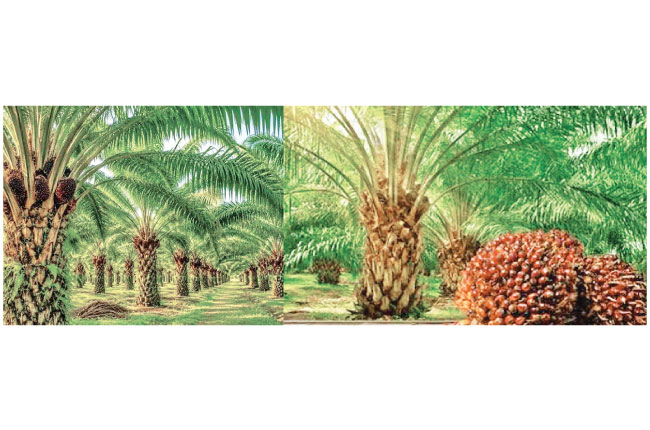
The history of oil palm cultivation in Sri Lanka offers a particularly clear illustration of this pattern.
Charting the Rise of Asian Oil Palm
India’s Cabinet approved the National Mission on Edible Oils–Oil Palm, committing Rs. 11,040 crore to expand cultivation by an additional 6.5 lakh hectares by 2025–26. Malaysia and India, both facing pressure from edible oil imports and foreign exchange requirements, recognised the economic potential of the same crop, market and body of international evidence.
Malaysia’s entry into oil palm cultivation was driven by the declining fortunes of its natural rubber industry. By the early 1960s, the country was heavily exposed to falling global rubber prices and increasing competition from synthetic alternatives. A World Bank mission had recommended economic diversification as early as 1955, prompting the government to pursue new agricultural opportunities.
A central instrument in this transformation was the Federal Land Development Authority (FELDA), established in 1956 with a mandate to reduce rural poverty. In 1961, FELDA launched its first oil palm scheme across 375 hectares. Land selection was guided by soil mapping, helping settlements avoid steep terrain and deep peat areas.
The government also addressed one of the principal barriers to participation in tree-crop agriculture: the substantial upfront investment required before a harvest could generate income. Through the provision of planting material and guaranteed purchasing arrangements for fresh fruit bunches through central mills, the programme helped smallholders enter an industry that might otherwise have remained beyond their financial reach.
The results accumulated over time. Malaysia overtook Nigeria as the world’s leading exporter of crude palm oil in 1966, and oil palm surpassed rubber as the country’s principal economic crop in 1989. Cultivated area expanded from approximately 55,000 hectares to 5.74 million hectares, while national poverty declined from 49.3 per cent in 1970 to 5.6 per cent in 2019.
Inland Revenue and Excise Departments Team Up to Expand Tax Compliance and Strengthen Revenue Collection

Sri Lanka’s Department of Inland Revenue and Department of Excise have entered into a new agreement to intensify efforts to combat tax evasion and money laundering, strengthen tax compliance and support the Government’s revenue collection targets.
A Memorandum of Understanding (MoU) between the two departments was signed at the Ministry of Finance on the 21st, establishing a framework for intelligence sharing and coordinated investigations into suspected offences.
The agreement was signed by Commissioner General of Inland Revenue Rukdevi Fernando and Commissioner General of Excise M. B. N. A. Pemaratne, in the presence of Deputy Secretary to the Treasury A. N. Hapugala.
The initiative comes as Sri Lanka places greater emphasis on broadening its tax base, preventing illicit financial flows and strengthening public finances. Improved cooperation among revenue authorities is expected to help identify tax evasion, enhance enforcement and ensure that individuals and businesses meet their tax obligations.
Stronger information-sharing mechanisms, more effective implementation of tax laws and wider audit coverage are essential to detecting non-compliance and reducing revenue losses. Expanding the tax net could also help promote a fairer business environment by ensuring that compliant taxpayers are not disproportionately burdened.
The agreement further supports Sri Lanka’s efforts to strengthen its legal and institutional framework for combating money laundering, terrorist financing and the financing of the proliferation of weapons of mass destruction, ahead of the country’s third mutual evaluation.
The Prevention of Money Laundering (Amendment) Act No. 16 of 2026, which came into effect on 4 August 2026, identifies tax evasion offences under Section 189 of the Inland Revenue Act and offences under the Excise Ordinance as unlawful activities in the context of money laundering.
Through the new MoU, the two departments are expected to improve coordination in investigating relevant offences, make more effective use of government resources and expand audits targeting tax evasion.
The partnership marks a further step in the Government’s efforts to minimise revenue leakages, strengthen tax compliance and improve the efficiency of revenue collection, supporting broader fiscal stability and sustainable public finances.
What Sri Lanka Can Learn from Asian Countries’ National Oil Palm Strategies