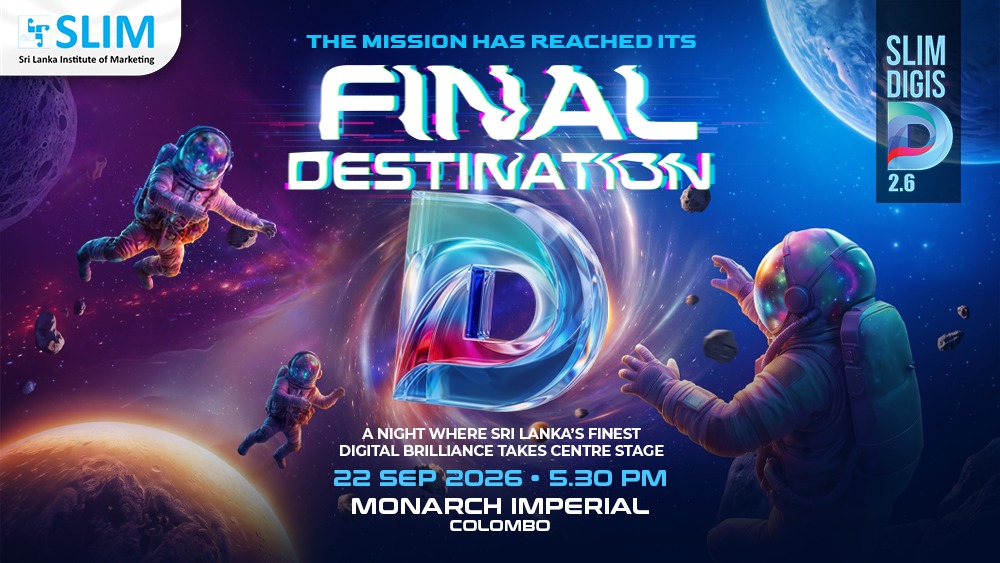
SLIM DIGIS 2.6, themed ‘Mission to Extraordinary’, is marking a new chapter in Sri Lanka’s digital marketing landscape by expanding its reach beyond national borders for the first time. The latest edition has welcomed international participants, establishing a new milestone for SLIM DIGIS while creating a platform for Sri Lankan digital talent to compete alongside global standards.
With more than 550 entries received, this year’s competition highlights the growing creativity, ambition and sophistication of Sri Lanka’s digital marketing ecosystem. The combination of strong local participation and international involvement signals the continued evolution of SLIM DIGIS from a platform celebrating local achievements into one with aspirations of creating a wider global impact from Sri Lanka.
Judging has been completed by a panel of more than 70 industry experts, headed by Head of Jury Shalendra Mendis. The awards will recognise campaigns, brands and professionals demonstrating innovation, creativity and measurable results in the digital space.
The next milestone will be the grand finale of SLIM DIGIS 2.6, scheduled for September 22, 2026, at 5.30 PM at Monarch Imperial, Colombo. The event will bring together members of Sri Lanka’s digital marketing community for an evening dedicated to recognising and celebrating the ideas, campaigns and individuals contributing to the future of the industry.
Commenting on the occasion, Enoch Perera, President of SLIM 2026/27, said that SLIM DIGIS 2.6 reflects the creativity, resilience and ambition demonstrated by Sri Lanka’s digital marketing fraternity amid rapid changes in the digital landscape.
He noted that the edition celebrates not only successful campaigns, but also the strategic thinking, innovation and determination behind them. According to Perera, the participation of more than 550 entries and international competitors represents an important step towards benchmarking Sri Lankan digital marketing capabilities against global standards.
He further highlighted the industry’s growing adoption of emerging technologies, new ideas and opportunities, while noting the potential for Sri Lankan digital marketing talent to gain greater recognition on the international stage.
SLIIT Marks Milestone with Its Largest-Ever Graduating Cohort of Over 3,500
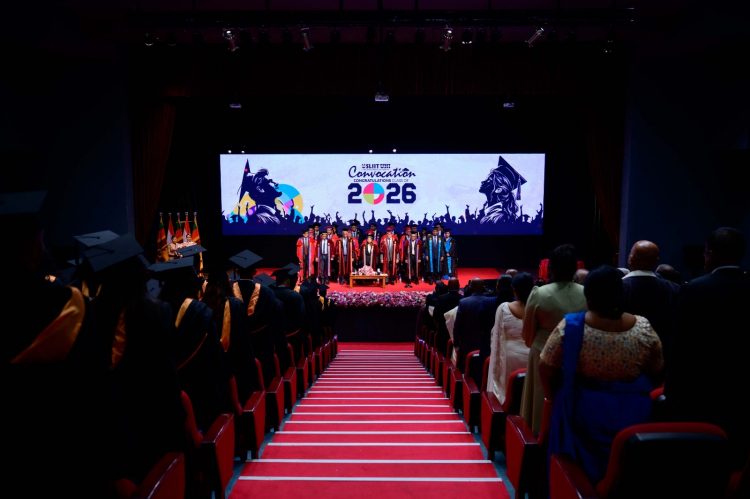
SLIIT has marked a major milestone with the successful conclusion of its September 2026 Convocation, celebrating the graduation of more than 3,500 students—the largest graduating cohort in the institution’s history.
Held from September 14 to 19, 2026, at the SLIIT Malabe Campus, the six-day convocation recognised undergraduate and postgraduate graduates from the faculties and academic areas of Computing, Business, Engineering and Architecture, and Humanities and Sciences.
The record number of graduates represents more than an institutional achievement, with over 3,500 industry-ready professionals now entering employment, entrepreneurship, research and postgraduate education. Their entry into the workforce comes as Sri Lanka continues to focus on developing the skilled human capital needed to support economic transformation.
Under the country’s Public Investment Programme 2026–2030, Sri Lanka has set targets including annual ICT exports of USD 5 billion, a USD 15 billion digital economy and a digitally skilled workforce of 200,000 by 2030. The programme also identifies areas such as innovation, entrepreneurship and cybersecurity as priorities, highlighting the importance of stronger connections between higher education and evolving industry requirements.
SLIIT’s focus on graduate employability forms an important part of its contribution to this workforce development. The institution reports a 98% graduate employment rate within six months of graduation. This outcome is supported by an education model that incorporates regular engagement with industry, with academic departments consulting industry stakeholders and incorporating emerging skills and sector requirements into curriculum development.
Students also gain exposure to internships, industrial training, career guidance and employer engagement programmes designed to complement academic knowledge with practical capabilities, including communication, adaptability, teamwork and problem-solving.
Research also remains an important component of SLIIT’s academic environment. Six SLIIT academics were recognised among the world’s top 2% of scientists in the 2025 Stanford–Elsevier Global Rankings. This provides students with opportunities to engage with research-informed teaching, internationally recognised academic expertise and research mentorship.
Alongside traditional career pathways, SLIIT continues to promote entrepreneurship through its innovation and entrepreneurship ecosystem. Students and researchers receive support in areas including startup development, industry collaboration, intellectual property and commercialisation.
SLIM DIGIS 2.6 Celebrates Digital Innovation, Creativity and Impact