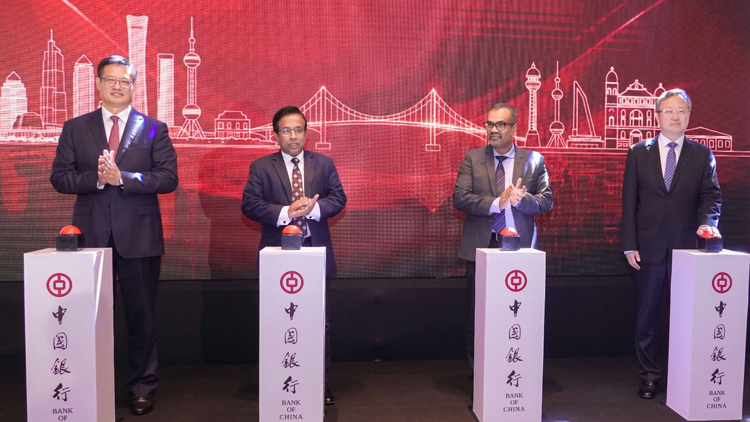
Bank of China’s Colombo branch has commenced operations as Sri Lanka’s first renminbi (RMB) clearing bank, enabling businesses to settle trade and investment transactions with China directly in Chinese currency rather than routing payments through the US dollar.
The branch received authorisation from the People’s Bank of China (PBOC), China’s central bank, to provide RMB clearing services. Speaking at the launch, Central Bank of Sri Lanka (CBSL) Deputy Governor K. G. P. Sirikumara said the initiative would strengthen financial connectivity between Sri Lanka and China, while emphasising that its long-term success would depend on widespread adoption by banks and businesses.
“The success of this initiative will depend not only on establishing the facility, but also on how widely it is used,” Sirikumara said.
An RMB clearing bank is a financial institution designated by the PBOC to facilitate the processing, clearing and settlement of renminbi transactions outside mainland China.
Previously, Sri Lankan banks handling RMB payments generally relied on correspondent banking arrangements in China to process domestic interbank transfers involving the currency. According to Sirikumara, this system could result in additional processing time and greater reliance on intermediaries.
With the new facility, banks and businesses can maintain RMB accounts with the clearing bank, conduct cross-border payments with China and settle RMB transactions locally. The arrangement is expected to improve payment efficiency, reduce transaction costs and make transfers more convenient.
The facility could also benefit Sri Lankan importers by reducing the need to convert Sri Lankan rupees into US dollars before purchasing Chinese yuan. Such conversions can increase transaction expenses and expose businesses to fluctuations in multiple exchange rates, a concern previously highlighted by CBSL Governor Dr. Nandalal Weerasinghe.
The initiative comes amid substantial trade between Sri Lanka and China, which remains Sri Lanka’s largest source of imports. Data from the Export Development Board indicate that imports from China reached USD 5.15 billion in 2025, representing a 16% year-on-year increase, while Sri Lankan exports to China rose 10% to USD 279 million.
Sirikumara noted that settling transactions in RMB could simplify payment arrangements and provide Sri Lankan businesses with access to a broader range of yuan-denominated banking and financing services. Over time, the facility could also contribute to expanding bilateral trade and investment.
The clearing arrangement may additionally create opportunities for Sri Lankan financial institutions to explore connections with China’s Cross-Border Interbank Payment System (CIPS), which facilitates international RMB payments through standardised messaging and settlement arrangements.
Former Chinese Ambassador to Sri Lanka Qi Zhenhong previously stated at an RMB Internationalisation Forum in Colombo that CIPS had 1,729 participants, covering more than 5,000 licensed banking institutions across 189 countries and regions. Sirikumara noted that the concept of establishing an RMB payment facility between Sri Lanka and China was first discussed at the same forum.
Colombo Hosts Global Regulators for High-Level IOSCO Talks on Enforcement and International Cooperation
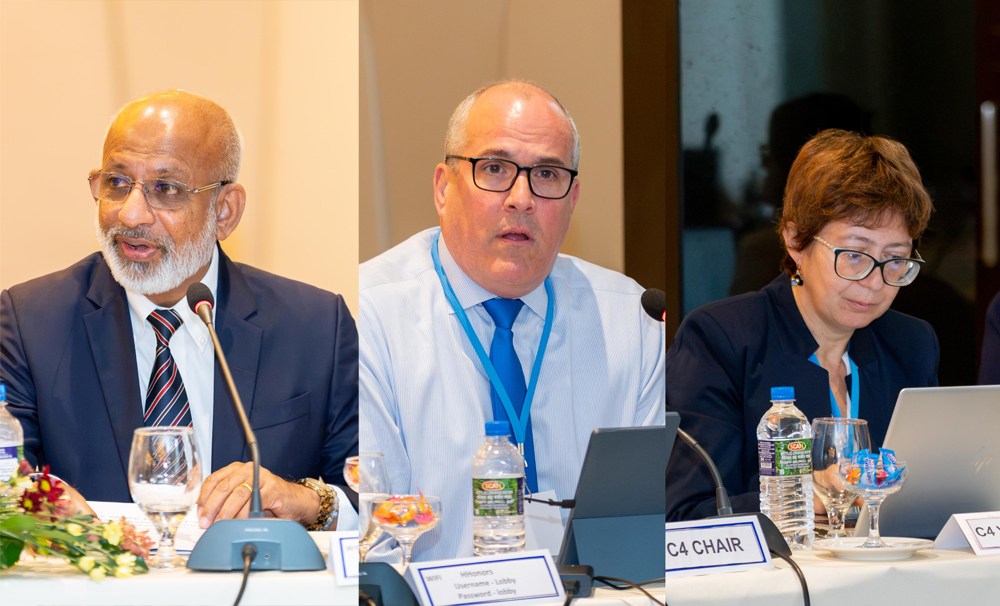
The Securities and Exchange Commission of Sri Lanka (SEC) has hosted a series of high-level meetings of the International Organization of Securities Commissions (IOSCO) in Colombo, bringing together senior securities regulators and enforcement officials from across the world to address emerging regulatory challenges and strengthen international cooperation in combating cross-border securities market misconduct.
Held at the Hilton Colombo from 13 to 16 October 2026, the meetings brought together the IOSCO Enforcement and Cooperation Committee and its Screening Group (Committee 4/SG), alongside the Monitoring Group and the Steering Committee. Approximately 50 senior representatives from securities regulatory authorities and exchanges participated in the discussions, representing jurisdictions including Australia, Japan, the United States, the United Kingdom, France, Italy, Canada, New Zealand, India, Germany, Belgium, Singapore, China and Spain.
Welcoming the international delegates, Senior Professor D. B. P. H. Dissabandara, Chairman of the SEC, underscored the importance of cross-border regulatory collaboration in protecting market integrity and maintaining investor confidence amid an increasingly interconnected global financial environment.
He emphasised that regulators could not effectively address cross-border misconduct independently, noting that the rapid movement of information, transactions and illicit activities across national boundaries requires coordinated and timely responses. He also highlighted the importance of information sharing and mutual trust among regulatory authorities in maintaining fair, transparent and resilient capital markets.
The meetings focused on strengthening mechanisms for cross-border information exchange, enhancing investigative cooperation between regulatory authorities and addressing increasingly sophisticated forms of securities fraud and market abuse. Participants also discussed ways to promote the effective implementation of international regulatory standards and best practices.
In addition, delegates shared experiences and insights into emerging enforcement challenges associated with technological advancements, the digitalisation of financial services and the growing interconnectedness of global financial markets.
The gathering highlighted the importance of sustained international collaboration in addressing complex securities market violations and strengthening regulatory effectiveness. By bringing leading enforcement authorities together in Colombo, the meetings provided a platform to exchange expertise, develop cooperative approaches and reinforce collective efforts to protect investors and uphold confidence in global capital markets.
Sri Lanka Establishes First RMB Hub to Reduce Trade Costs and Enable Direct Yuan Settlements