The World Bank Group mobilized a record $112 billion in private capital during fiscal year 2026, the highest amount in its history, while also issuing a record volume of guarantees. The milestone reflects the Group’s continued efforts to bring more private investment into developing economies alongside its own financing and expertise.
Private capital mobilized by the World Bank Group has more than tripled over the past four years, increasing from $35 billion in FY22 to $112 billion in FY26. When combined with the Group’s own financing, total financing and mobilization in developing economies exceeded $200 billion during FY26.
The increase was recorded across different income groups. Private capital mobilization in lower-middle-income countries climbed from $14 billion in FY22 to $37 billion in FY26, nearly tripling over the period. In upper-middle-income countries, mobilization rose from $12 billion to $50 billion, more than quadrupling.
In low-income countries, where attracting private investment remains particularly challenging, private capital mobilization was maintained at around $3 billion. Across Africa, meanwhile, private capital mobilization increased from approximately $9 billion in FY22 to $22 billion in FY26, representing growth of nearly 150 percent.
The results follow three years of changes across the World Bank Group aimed at strengthening engagement with the private sector. These efforts have focused on making operations faster and simpler, bringing the institution’s public and private sector arms closer together, and expanding the range of financial tools available to investors.
HIP Workshop Enhances Preparedness for Marine Oil Spill Response
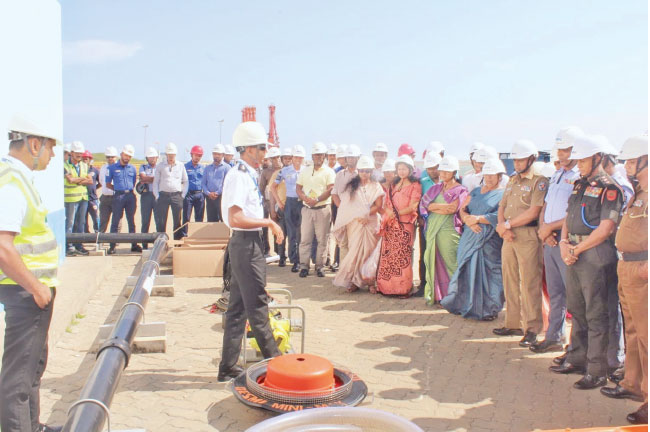
Hambantota International Port (HIP) recently hosted a National Oil Spill Contingency Plan Workshop conducted by the Marine Environment Protection Authority (MEPA), bringing together nearly 100 representatives to enhance Sri Lanka’s preparedness and coordination in responding to marine oil spill incidents.
The workshop provided a platform for government institutions, emergency services, regulatory authorities and private sector stakeholders to gain a clearer understanding of their respective responsibilities and improve coordination during marine pollution emergencies.
Representatives from the Sri Lanka Ports Authority, Sri Lanka Navy, Sri Lanka Coast Guard, Police, Air Force, disaster management authorities, environmental agencies, fisheries institutions, local administration and other key organizations participated in the programme.
Hambantota International Port Services (HIPS) CEO Wilson Qu highlighted the importance of having not only the necessary equipment but also trained personnel, clearly defined responsibilities and effective coordination among all stakeholders to ensure an efficient emergency response.
The technical sessions covered the Hambantota District Oil Spill Contingency Plan, operational response procedures and mechanisms for mobilizing resources during an emergency. Participants also took part in a practical demonstration of oil spill response equipment available at HIP.
The training is expected to contribute to strengthening Sri Lanka’s capacity to respond rapidly to marine pollution incidents, helping minimize environmental impacts while protecting coastal communities and marine ecosystems. The programme also helped strengthen coordination between district-level response mechanisms and the country’s broader national oil spill contingency framework.
World Bank Group Mobilizes Record Private Investment to Support Jobs in Developing Countries