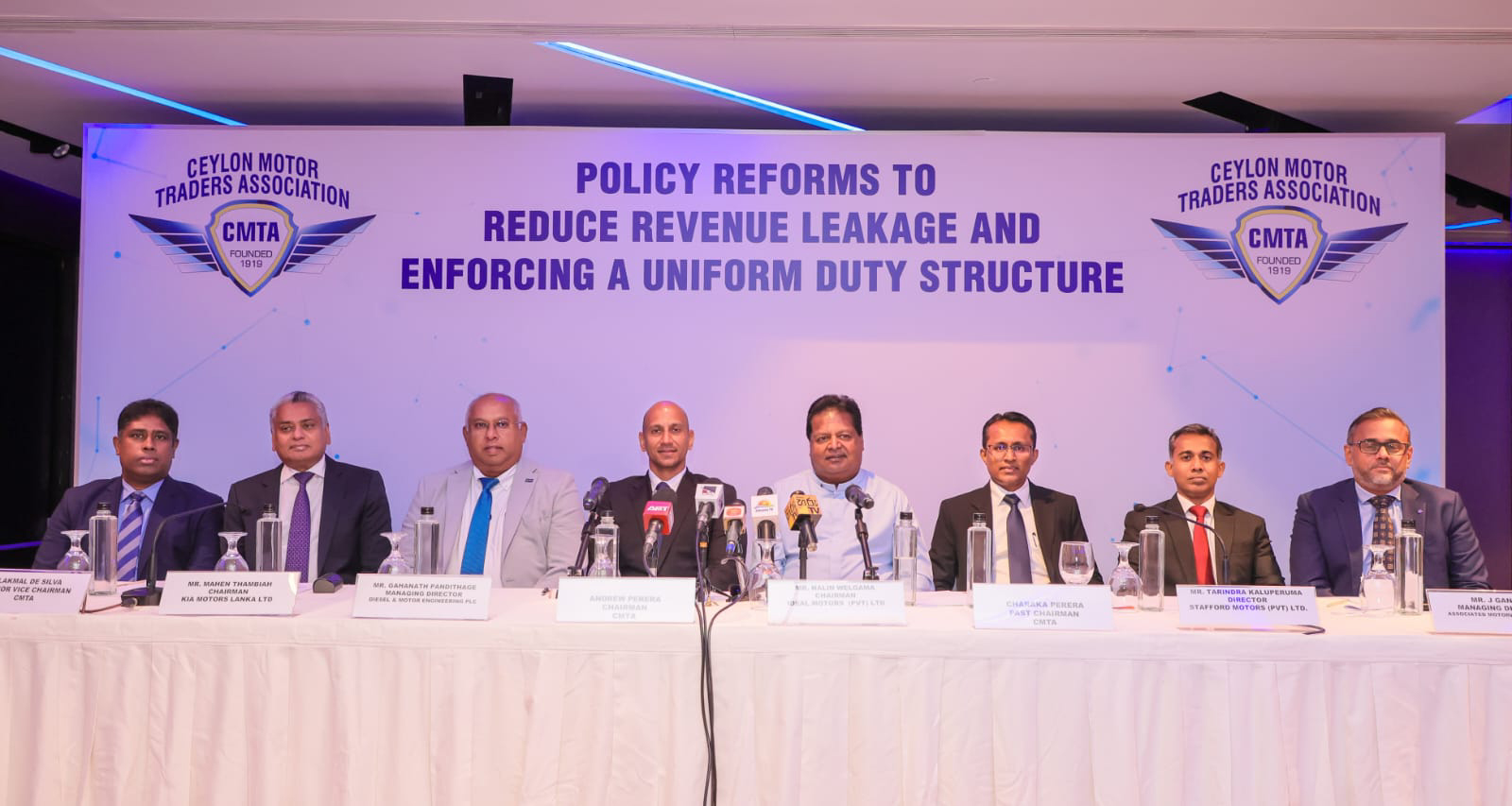
The Ceylon Motor Traders’ Association (CMTA), established in 1919 and affiliated with the Ceylon Chamber of Commerce, has called for greater consistency, transparency and fairness in Sri Lanka’s automotive sector, highlighting the need for a vehicle import framework that provides a level playing field for businesses across the industry.
The Association’s concerns come amid continued fiscal and regulatory pressures on the automotive sector. Recent measures, including the introduction of a 50% surcharge on vehicles, have added further complexity to an already challenging operating environment.
While acknowledging the Government’s objectives of managing foreign exchange, generating revenue and regulating vehicle imports, the CMTA said such policies should be structured to avoid disproportionately affecting legitimate businesses or creating distortions between different segments of the market.
A key concern raised by the Association is the continued application of a blanket 15% depreciation on the Cost, Insurance and Freight (CIF) value of used vehicle imports when calculating duties.
According to the CMTA, this mechanism can create an advantage for certain used vehicle imports, particularly in cases where vehicles imported as used units are substantially similar to brand-new vehicles in terms of model, specifications and, in many instances, mileage.
The Association estimates that the existing depreciation mechanism resulted in approximately Rs. 40 billion in government revenue losses during 2025. It has warned that without changes to the current system, a comparable level of revenue leakage could occur in 2026, at a time when government revenue remains important for strengthening public finances and supporting national development.
The CMTA stressed that its position is not aimed at restricting consumer choice or opposing the used vehicle market. Instead, it is calling for vehicles entering Sri Lanka to be assessed through a fair and consistent valuation mechanism that takes their actual value and circumstances into account.
The Association argues that when substantially similar vehicles can face different levels of taxation primarily because one had previously been registered overseas, the resulting difference in tax treatment warrants further policy consideration.
The CMTA is therefore calling for greater consistency in the application of import duties across the automotive industry, with the objective of promoting fair competition, protecting government revenue and establishing a more transparent and sustainable vehicle import framework.
Sri Lanka–Indonesia Business Council Convenes for 3rd Annual General Meeting
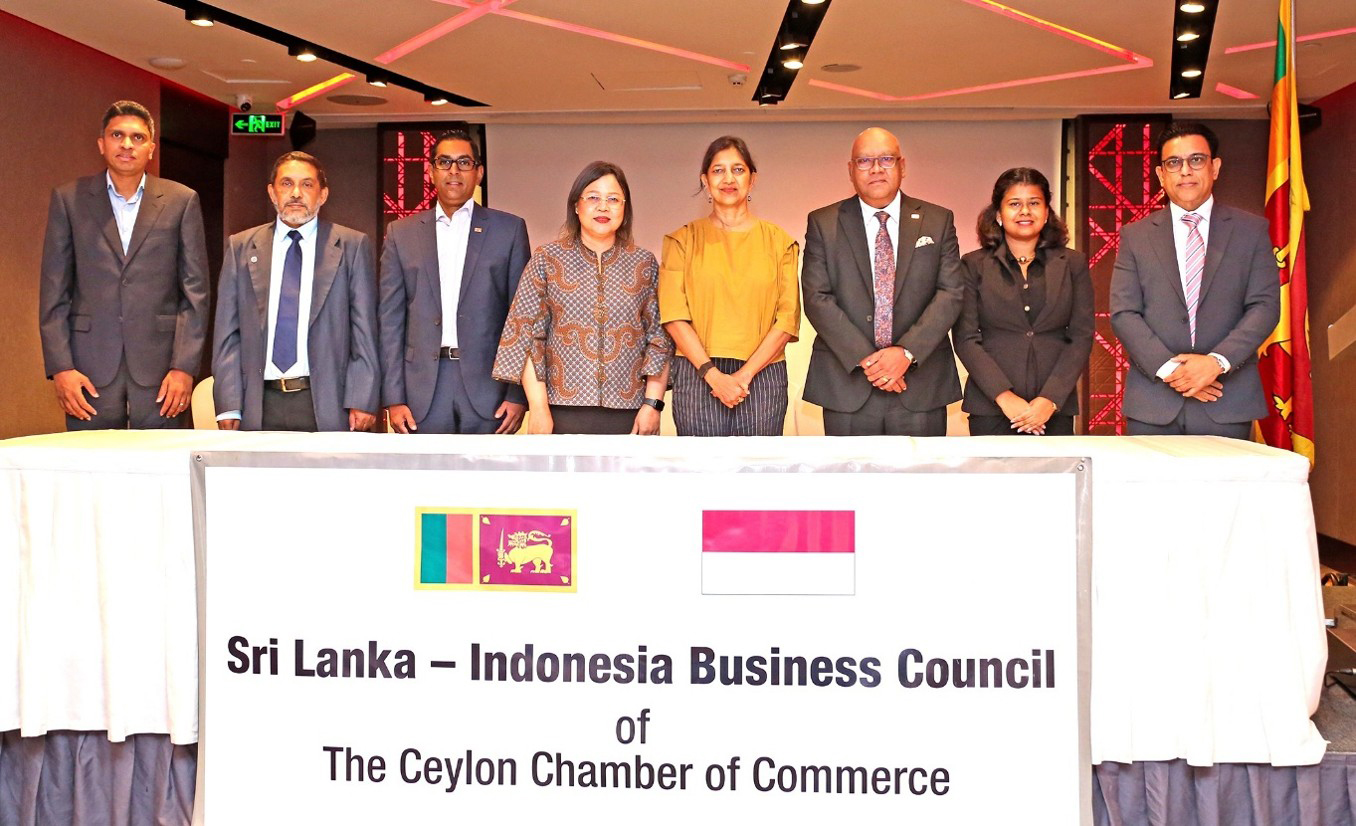
The Sri Lanka–Indonesia Business Council of The Ceylon Chamber of Commerce recently held its 3rd Annual General Meeting (AGM), bringing together Council members and key stakeholders to review its activities and outline priorities for the year ahead.
The AGM was attended by Her Excellency Dewi Gustina Tobing, Ambassador of Indonesia to Sri Lanka and Patron of the Council, who delivered an address on Indonesia’s current political and economic landscape.
In her remarks, Ambassador Tobing highlighted Indonesia’s focus on strengthening economic independence, building sectoral resilience, improving public welfare and encouraging both inbound and outbound investment.
Sheamalee Wickramasingha, Chairman / Group Managing Director of Ceylon Biscuits Ltd., was re-elected as President of the Council for the 2026/27 term. She acknowledged the Ambassador’s contribution to the re-establishment of the Council and reflected on key developments and achievements during the past year.
Among the highlights was the successful Sri Lanka–Indonesia Business Delegation to Indonesia, which provided Sri Lankan businesses with opportunities to connect with Indonesian counterparts and explore potential areas for trade and commercial cooperation.
The Council’s office bearers for 2026/27 include Gerard Victoria, Director / CEO of North South Lines (Pvt) Ltd., as Senior Vice President; Ehantha Sirisena, Founder/Director of OMAK Technologies (Pvt) Ltd., as Vice President; and Marshad Barry, Deputy Head of Orphan Care & Institutional Marketing at Amana Bank, as Treasurer.
The Executive Committee also includes representatives from Aitken Spence Cargo (Pvt) Ltd., hSenid Business Solutions PLC, Solarray Energy (Pvt) Ltd., Haycarb PLC and MAS Intimates (Pvt) Ltd., together with Immediate Past President Vish Govindasamy of Sunshine Holdings PLC.
The Sri Lanka–Indonesia Business Council continues to focus on strengthening bilateral business ties while creating opportunities for greater trade, investment, partnerships and commercial collaboration between the business communities of the two countries.
CMTA Calls for Measures to Address Rs. 40 Billion Government Revenue Leakage and Ensure Uniform Import Duties in the Automotive Sector