




Sri Lanka Customs has recorded a strong start to July, collecting Rs. 125.2 billion in revenue during the first 14 days of the month, achieving more than 65% of its monthly revenue target.
The Customs Department’s July revenue target has been set at Rs. 192.4 billion, and the latest figures indicate that the institution is on track to exceed its monthly goal for the seventh consecutive month.
Official data shows that Customs has already achieved 68.2% of its annual revenue target by July 14, following a consistent performance that saw the department surpass its monthly targets over the past six months.
The strong revenue performance has been supported by improved enforcement measures, enhanced valuation practices and the gradual recovery of import activity following years of economic restrictions.
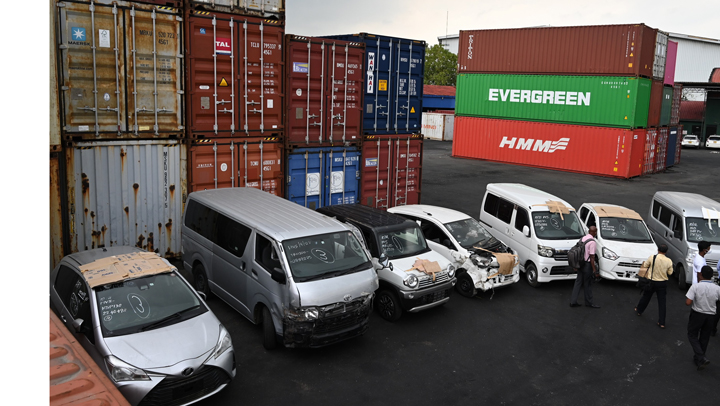
Sri Lanka Customs has also accelerated the container clearance process through the use of digital scanning technology, aimed at reducing delays, improving transparency and strengthening controls against irregularities.
In 2025, Customs recorded its highest-ever annual revenue collection of Rs. 2.551 trillion, exceeding the revised target of Rs. 2.241 trillion. This represented a significant increase compared to the previous year’s collection of Rs. 1.553 trillion.
For 2026, Sri Lanka Customs has set a revenue target of Rs. 2.207 trillion, which is lower than the previous year’s figure due to expectations of reduced vehicle import volumes.
The recent growth in Customs revenue comes amid a recovery in Sri Lanka’s import sector following the 2022 economic crisis, when import restrictions were introduced to preserve foreign exchange reserves. With improved economic stability, stronger reserves and the gradual easing of import controls, revenue from import duties, excise taxes and other levies has increased.
Authorities have also highlighted stricter monitoring of undervaluation, under-invoicing and misdeclaration of goods as key factors contributing to improved revenue collection.
Sri Lanka Remittances Decline to Seven-Month Low in June, Remain 9.3% Higher Year-on-Year

Sri Lanka’s official worker remittances declined to a seven-month low of US$695 million in June 2026, although inflows remained 9.3% higher compared to the same month last year, according to data released by the Central Bank of Sri Lanka.
The June remittance figure was the lowest recorded since November 2025, reflecting a slowdown in foreign currency inflows from Sri Lankan workers abroad.
Analysts attributed the decline partly to recent rupee depreciation and increased uncertainty in the Middle East, which remains one of the largest employment destinations for Sri Lankan migrant workers. During periods of exchange rate uncertainty, some expatriates tend to shift towards informal transfer methods such as Hawala and Undiyal, affecting official remittance channels.
Despite the monthly decline, cumulative remittance inflows continued to show strong growth. Sri Lankan workers abroad sent home US$4.6 billion during the first six months of 2026, marking a 23.2% increase compared to the corresponding period in the previous year.
Sri Lanka recorded its highest-ever monthly remittance inflow of US$879.1 million in December 2025, while total annual worker remittances reached a record US$8.07 billion in 2025.
The continued growth in remittance earnings has been supported by an increase in the number of Sri Lankans seeking overseas employment as the country recovers from the economic crisis of 2022. Authorities have also focused on expanding foreign employment opportunities, particularly for skilled professionals, to strengthen foreign exchange inflows.
Official remittance channels have improved following the Central Bank’s move away from a parallel exchange rate system, which had previously encouraged many expatriates to use informal transfer networks offering more attractive exchange rates.
Worker remittances through formal channels had declined significantly in 2021 as many overseas Sri Lankans shifted towards informal methods amid exchange rate distortions. The recovery of official inflows in recent years reflects improved exchange rate stability, stronger confidence in formal banking channels and increased overseas employment opportunities.
Sri Lanka Customs Achieves 65% of July Revenue Goal in First 14 Days