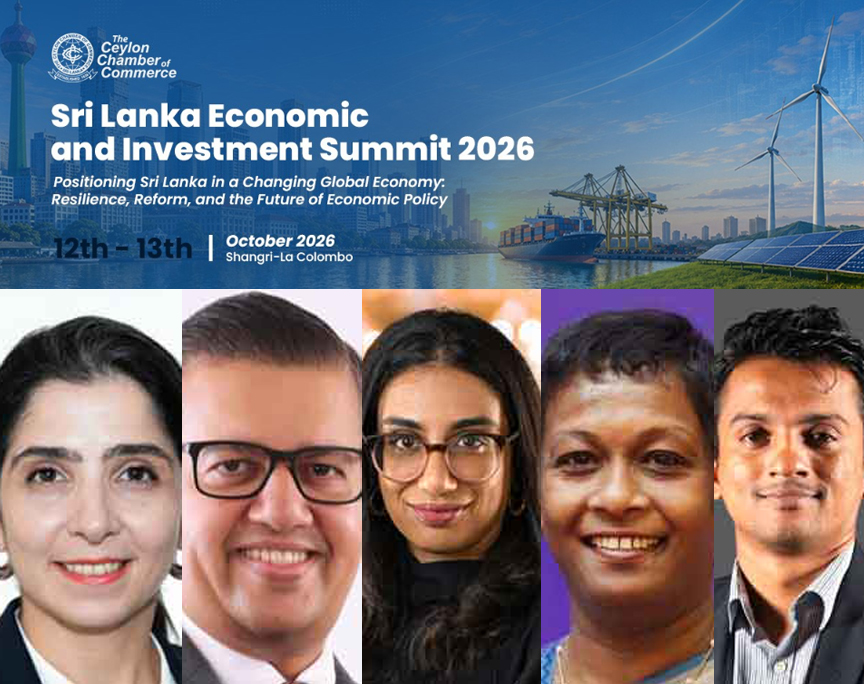



As Sri Lanka moves beyond the immediate phase of economic stabilisation, the focus is shifting towards sustaining growth while strengthening the country’s ability to withstand future challenges. This will be a key area of discussion at the Sri Lanka Economic & Investment Summit 2026 (SLEIS 2026), organised by The Ceylon Chamber of Commerce on 12 and 13 October.
The summit will bring together policymakers, business leaders and international experts to explore how Sri Lanka can strengthen economic resilience while continuing to attract investment and support long-term growth.
Moving Beyond Crisis Management
One of the key sessions, titled “Beyond Crisis Management: Building a Shock-Resilient Sri Lankan Economy,” will examine vulnerabilities exposed by recent economic and global disruptions.
The discussion will look beyond short-term crisis responses and consider how Sri Lanka can strengthen the foundations needed to prevent future shocks from repeatedly disrupting economic progress. Areas of focus will include macroeconomic stability, institutional strength, business resilience and the ability to respond effectively to changing domestic and international conditions.
The keynote address will be delivered by Lilia Aleksanyan, Senior Country Economist for Sri Lanka at the Asian Development Bank.
She will be joined on the panel by Dr. Chandranath Amarasekara, Senior Deputy Governor of the Central Bank of Sri Lanka; Sabrina Esufally, Executive Director of Hemas Holdings PLC; and Dr. Roshan Perera, Consultant at the Centre for Poverty Analysis and former Director of the Central Bank of Sri Lanka.
The discussion will be moderated by Dhananath Fernando, Chief Executive Officer of the Advocata Institute.
Strengthening the Foundations for Future Growth
The session will explore ways to reinforce macroeconomic stability while protecting livelihoods and improving the resilience of businesses and key economic institutions.
It will also consider how international partnerships, investment, innovation and private-sector leadership can contribute to an economy that is better equipped to adapt to changing conditions while maintaining its longer-term development objectives.
Rather than concentrating solely on how Sri Lanka should respond once another crisis emerges, the discussion will focus on measures that can be established in advance. These include stronger institutions, sound economic policies, greater economic diversification, resilient businesses and the ability to respond quickly to emerging domestic and external pressures.
CVCD Conference 2026 in Colombo Highlights National Push for Responsible AI and Digital Transformation in Universities
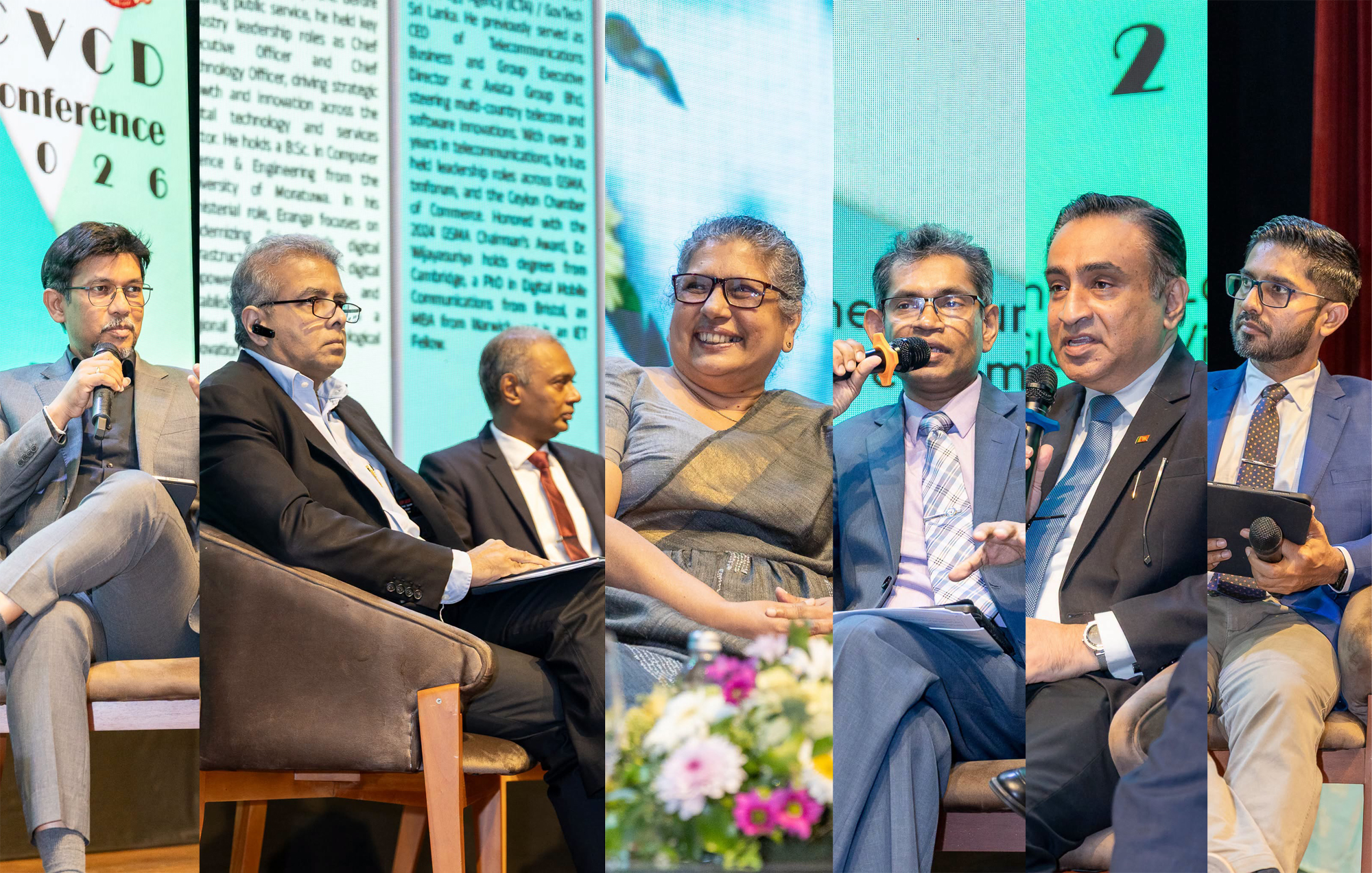
A leadership dialogue focused on the strategic and responsible adoption of Artificial Intelligence (AI) and digital transformation across Sri Lanka’s state university sector was held on 4 September at the Faculty of Medicine, University of Colombo.
The programme was conducted alongside the Committee of Vice-Chancellors and Directors (CVCD) Conference 2026, held under the theme “Artificial Intelligence and Digital Transformation in Higher Education.” Deputy Minister of Digital Economy Eng. Eranga Weeraratne and Deputy Minister of Education and Higher Education Hon. Madhura Seneviratne attended the event as chief guests.
Universities and the National AI Agenda
The session brought together Vice-Chancellors and senior university administrators to discuss the implementation of the National AI Policy Framework approved by the University Grants Commission (UGC), while exploring how the higher education sector can contribute to Sri Lanka’s wider digital economy.
Addressing participants, the Deputy Minister highlighted the need for universities to move beyond simply adopting technologies developed overseas. He emphasised the potential for universities to become active contributors to the digital economy by developing locally relevant technological solutions to address national challenges.
The forum also provided an overview of the UGC-approved National AI Policy Framework, adopted on 24 June 2026, together with its three-year implementation plan covering 2026 to 2029.
Institutional AI Policies by End of 2026
A key proposal discussed at the session was for all state universities to develop their own institutional AI policies and Standard Operating Procedures (SOPs) by 31 December 2026.
Other areas addressed during the dialogue included compliance with Sri Lanka’s Personal Data Protection Act, cybersecurity requirements and mechanisms for tracking progress through the AI Maturity Index (AIMI).
The discussions also highlighted the importance of ensuring equitable access to digital infrastructure across the university system. Proposals included providing shared digital infrastructure and Learning Management System (LMS) facilities to universities with limited resources.
The initiative reflects a broader effort to establish a coordinated approach to AI adoption within Sri Lanka’s state university sector while aligning higher education institutions with the country’s emerging digital economy priorities.
Sri Lanka Economic and Investment Summit 2026 to Focus on Building a Stronger, More Resilient Future Economy