HNB FINANCE PLC, one of Sri Lanka’s leading financial services providers, celebrated World Children’s Day 2026 by hosting a special programme for nearly 4,000 students at Debarawewa President’s College in Tissamaharama.
The initiative was organised as part of the company’s corporate social responsibility (CSR) efforts, highlighting its commitment to children’s wellbeing, community engagement and the development of positive financial habits from an early age.
Aligned with this year’s World Children’s Day theme, ‘Strong Minds – Enriched Children’, the programme brought together students, teachers and HNB FINANCE representatives for a range of educational, creative and recreational activities. The celebrations aimed to nurture self-confidence, stimulate creativity and promote emotional wellbeing among young participants.
The event was attended by Debarawewa President’s College Principal R.A.S. Keerthirathne and HNB FINANCE Head of Microfinance Savings and Talent Development Anura Udawatta as chief guests. HNB FINANCE Tissamaharama Branch Manager Kithsiri Malaviarachchige, representatives from the company’s Head Office and Tissamaharama branch, and members of the school’s teaching staff were also present.
Supported by ‘Yalu’, HNB FINANCE’s children’s savings account, the programme featured interactive competitions, creative sessions and educational entertainment. Special performances by teachers added to the festive atmosphere, while students enjoyed ice cream during the celebrations. Prizes sponsored by the Yalu Children’s Savings Account were also awarded to students who took part in the competitions.
Alumex Secures Bronze at National AI Awards for Manufacturing and Industry 5.0 Innovation
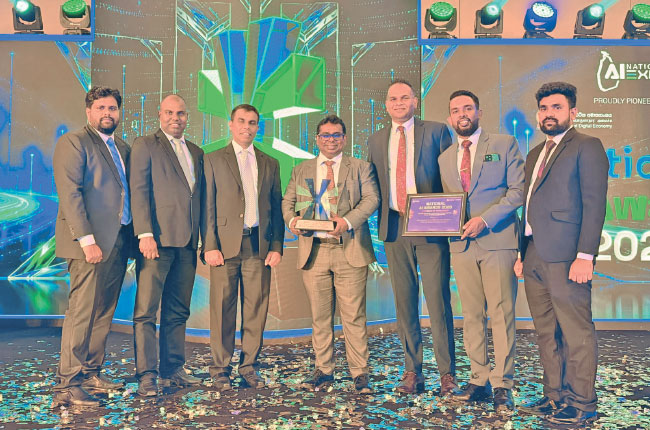
Alumex PLC, a member of the Hayleys Group and one of Sri Lanka’s leading aluminium extrusion manufacturers, has secured a Bronze Award in the ‘Best AI Solution in Manufacturing & Industry 5.0’ category at the National AI Awards 2026, held on September 30 under the auspices of the Ministry of Digital Economy.
The award recognises the company’s innovative Extruder Production Monitoring System and Smart Real-Time Energy Monitoring & Analytics System, incorporating an AI-powered Golden Batch solution to advance digitalisation in extrusion manufacturing.
The achievement highlights Alumex’s strategic application of artificial intelligence (AI) and data analytics to strengthen production monitoring, enhance process consistency and improve energy management across its manufacturing operations.
The integrated solution provides real-time visibility into extrusion processes and production performance. Through its AI-powered Golden Batch capability, production data is analysed to identify process variations, improve batch-to-batch consistency and facilitate faster, data-driven decision-making. Meanwhile, the Smart Real-Time Energy Monitoring & Analytics System tracks energy consumption throughout the manufacturing process, helping identify opportunities to optimise energy usage and enhance operational efficiency.
The Bronze Award represents a significant milestone in Alumex’s ongoing transition towards smart manufacturing. It underscores the company’s commitment to integrating advanced digital technologies into its operations to develop more connected, responsive and technology-driven manufacturing processes.
Alumex PLC continues to explore innovative technological applications to strengthen operational performance and support the future of manufacturing in Sri Lanka.
HNB FINANCE Celebrates World Children’s Day Through a Meaningful CSR Initiative