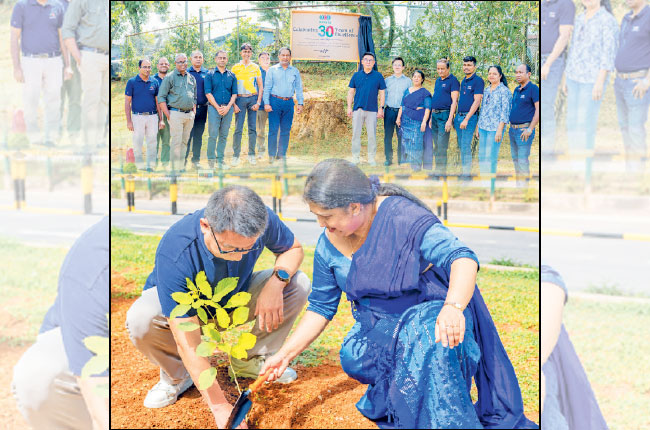
Ocean Lanka (Pvt) Ltd is celebrating its 30th anniversary this year, marking three decades of manufacturing excellence, innovation and responsible growth while preparing for its next phase of development focused on advanced manufacturing, sustainability and high-value fabric solutions.
Established in 1996, Ocean Lanka has grown alongside Sri Lanka’s apparel industry, continually expanding its manufacturing capabilities and developing enduring relationships with customers, business partners and other stakeholders.
Over the past three decades, the company has adapted to changing global market conditions, technological developments and evolving customer demands while maintaining a strong emphasis on quality, reliability and continuous improvement.
Innovation has been central to Ocean Lanka’s growth. Through sustained investment in research and development, product innovation, technology and operational excellence, the company has enhanced its capacity to create functional and performance-oriented fabric solutions that meet increasingly sophisticated global market requirements.
The company’s contributions to textile research and the commercialisation of innovative solutions have also earned national recognition, supporting its ambition to compete through innovation, differentiation and greater value creation.
Alongside innovation, sustainability has become an increasingly important element of Ocean Lanka’s long-term strategy. The company has progressively strengthened its practices in areas including energy and resource efficiency, responsible chemical management, waste reduction and environmentally responsible manufacturing.
These efforts are supported by internationally recognised standards and industry initiatives, reflecting Ocean Lanka’s continued commitment to responsible manufacturing as it enters its next chapter of growth.
HNB Life Marks 25 Years with Special Staff Conference
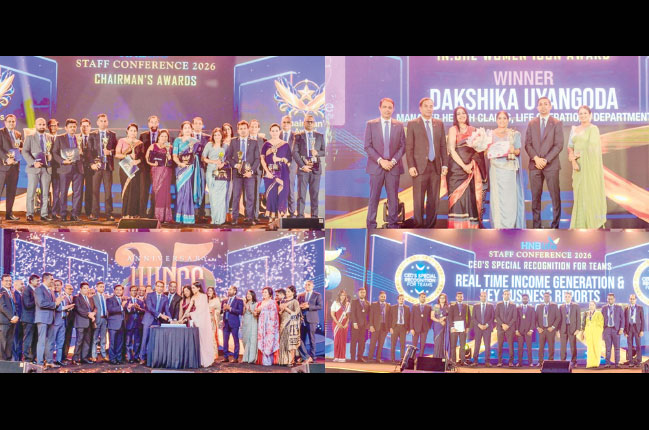
HNB Life brought together employees from across Sri Lanka for its 2026 Staff Conference, held as part of the company’s 25th anniversary celebrations.
The event marked a significant milestone in the company’s journey while also recognising what has been described as one of the most successful years in HNB Life’s history. The gathering celebrated the employees and teams whose dedication and contribution have continued to drive the organisation’s growth.
The evening highlighted the progress achieved over the past year across business performance, customer engagement and industry recognition. While the company’s accomplishments took centre stage, the event placed particular emphasis on the people behind those achievements, acknowledging the commitment, dedication and belief in the organisation’s purpose demonstrated by its employees.
Executive Director/CEO Lasitha Wimalaratne said the company’s people remained its greatest strength as it celebrated 25 years.
“As we celebrate 25 years of our journey, it is important to remember that our greatest achievement has always been our people. Every milestone we have reached and every success we celebrate today has been made possible by the passion, dedication and resilience of our team,” he said.
He added that the past year had been among the strongest in the company’s history and that the anniversary provided an opportunity to recognise both the organisation’s achievements and the individuals responsible for them.
“The transition to HNB Life represents the next chapter of our story, and I am excited about what lies ahead,” Wimalaratne said.
EVP/Chief People Officer Navin Rupasinghe also highlighted the role of employees in shaping the organisation’s culture and success.
“This evening is about celebrating the people who make HNB Life what it is. Over the past 25 years, we have built a culture where individuals are empowered to grow and excel,” he said.
Ocean Lanka Celebrates 30 Years, Embarks on a New Era of Innovation and Sustainable Growth