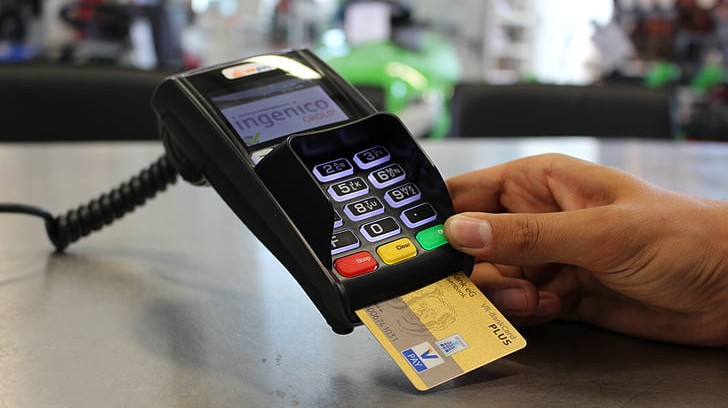





The expansion in new active credit cards in Sri Lanka slowed in April compared to the previous month, according to Central Bank data, amid growing uncertainty following tensions in the Middle East and fuel rationing measures.
New active credit cards increased by 12,999 in April, down from an increase of 22,473 in March, the data showed.
As a result, the total number of active credit cards rose to 2,228,852 at the end of April, compared to 2,215,853 at the end of March, reflecting a monthly growth of 0.6 percent.
Overall, active credit cards increased by 2.9 percent during the first four months of 2026.
In comparison, credit card usage grew by 7.8 percent (157,730 cards) in 2025 and 4.8 percent (91,371 cards) in 2024, supported by Sri Lanka’s post-crisis economic recovery and strong promotional campaigns as interest rates declined.
Analysts say many banks partnered with supermarkets and other retailers to encourage credit card usage during the low-interest-rate environment, as economic activity improved more than expected.
However, they warn that growth in active cards may slow further after the Central Bank shifted away from its accommodative monetary policy in May, raising the policy rate by 100 basis points. Combined with tighter monetary conditions and fuel rationing since March, consumer spending is expected to weaken.
Sri Lanka’s gradual economic recovery has supported higher credit usage since 2023, but higher penalty interest rates in the past also led some users to cancel their cards during the crisis period.
The Sri Lanka Economic Summit will focus on key national priorities
.jpg)
The Sri Lanka Economic and Investment Summit will serve as a platform for dialogue on the country’s economic future, with a focus on a range of pressing national priorities, according to the Ceylon Chamber of Commerce.
The chamber said the 2026 summit will address key issues including economic growth, competitiveness, investment, trade, productivity, fiscal and structural reforms, sustainability, and the evolving global economic environment.
The 26th edition of the forum is scheduled to take place on October 12 and 13, bringing together local and international speakers, development partners, diplomatic missions, and private sector representatives.
Discussions will focus on how Sri Lanka can build a more shock-resilient economy, strengthen integration with Asia’s growth networks through trade and regional value chains, and reimagine healthcare as a driver of economic and social progress. The agenda will also cover balancing energy security, sustainability, and growth, as well as leveraging digital transformation for national development in an increasingly connected global economy.
In addition, the programme will explore the future of education and skills development, along with opportunities and challenges posed by artificial intelligence and emerging technologies for economies, businesses, and society.
The chamber noted that interest from regional business communities has been strong, following recent international outreach and business promotion efforts.
New active credit cards in Sri Lanka slowed in April compared to the previous month