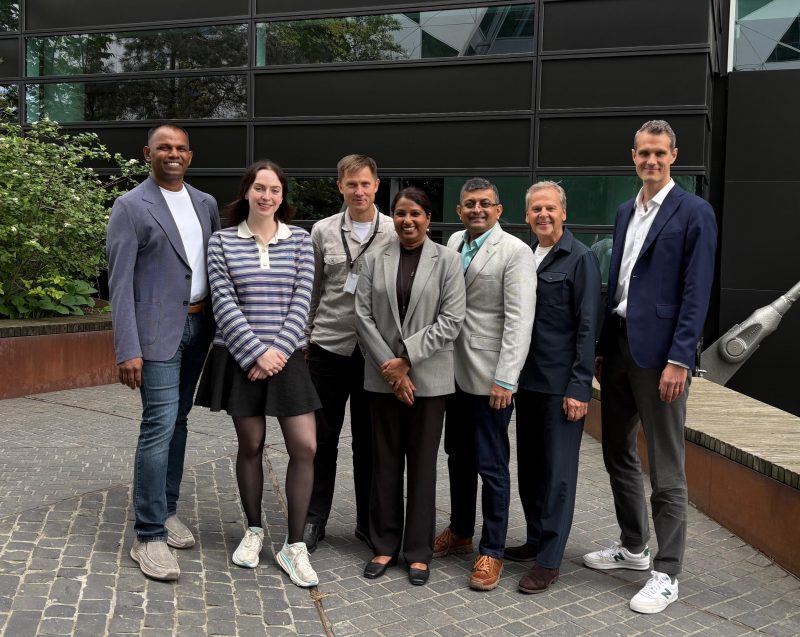
99x has officially launched xianix.ai, its open-source AI platform designed to help organisations unlock the full potential of artificial intelligence across the software delivery lifecycle. The launch took place in Oslo, Norway, during 99x’s Breakfast Seminar titled “The 10X Productivity Promise: Can AI Deliver?”, which brought together technology leaders to discuss how AI is reshaping productivity in software engineering.
For decades, software delivery has been guided by traditional Software Development Life Cycles (SDLC), structured around human effort, sequential development phases, manual handovers, and engineering capacity constraints. However, as artificial intelligence increasingly transforms software engineering, organisations are now challenged to move beyond individual AI tools toward achieving true transformational productivity outcomes.
Developed by engineering teams at 99x, Xianix enables a shift toward the AI-Driven Development Life Cycle (AI-DLC)—a modern software delivery approach built for an AI-native operating environment. Rather than functioning as a standalone assistant, Xianix creates an ecosystem of coordinated AI agents working collaboratively, while keeping human expertise at the centre. In this model, AI handles speed, scale, and repetitive execution, while humans focus on decision-making, accountability, customer understanding, and creativity.
Commenting on the launch, Hasith Yaggahavita, CEO of 99x, said the Oslo seminar sparked meaningful discussions on how software teams are approaching AI adoption and how its potential can be translated into measurable business outcomes. He noted that transitioning from SDLC to AI-DLC is not about retrofitting existing processes, but rethinking how software is planned, built, and operated in an AI-enabled era. He added that Xianix was created to support this transformation.
Molly Vassbotn, Architect/Project Manager at Gture Norway, a 99x Group company, said most AI adoption efforts today focus on helping individuals work faster. However, Xianix addresses how organisations can rethink delivery processes and standard tooling for the AI era. She added that the platform enables intelligent automation and provides comprehensive quality coverage across delivery pipelines, helping teams evolve from traditional development models toward AI-native operating systems.
LOLC Finance Expands Footprint with Gelioya Branch Opening and Galenbidunuwewa Relocation

LOLC Finance PLC continues to strengthen its presence across Sri Lanka, reaffirming its commitment to enhancing financial accessibility and delivering innovative, customer-centric financial solutions to communities nationwide.
Through its expanding branch network, the company remains focused on supporting individuals, entrepreneurs, and businesses while contributing to regional economic development.
Further expanding its islandwide footprint, LOLC Finance PLC inaugurated its new Gelioya Branch on May 21 at Karamada, Gelioya. Strategically located in an area experiencing growing commercial and community activity, the new branch is expected to enhance access to a comprehensive range of financial services for individuals, entrepreneurs, and small and medium-scale enterprises (SMEs).
The opening ceremony was attended by Nishantha Jayasekara, Head of Gold Loan, and Shiraz Refai, Head of Alternate Financial Services, along with members of the LOLC Finance team, customers, and distinguished invitees from the area.
In a further step towards improving customer convenience, LOLC Finance PLC also relocated its Galenbidunuwewa Branch to a new location on Seeppukulama Road, Galenbidunuwewa, on May 22. The relocation aims to provide improved accessibility while continuing to deliver a wide range of financial solutions tailored to the needs of individuals, entrepreneurs, and businesses in the region.
The opening ceremony of the relocated branch was attended by Upul Samarasinghe, Head of Credit, and Hasala Thilekaratne, Chief Digital Officer of LOLC Finance PLC, together with members of the LOLC Finance team, customers, and well-wishers from the area.
99x Launches Xianix in Oslo, Ushering in a New Era of AI-Native Software Delivery