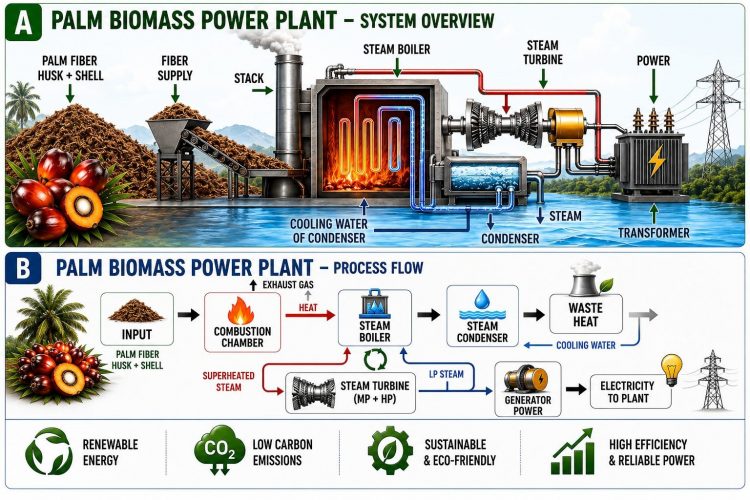
Researchers at the Sri Lanka Institute of Information Technology (SLIIT) have developed an advanced artificial intelligence (AI) framework designed to improve power forecasting in biomass-fuelled steam turbines, helping industries reduce energy waste, lower operating costs and enhance sustainable energy management.
Published in Energy Conversion and Management, a leading Elsevier journal, the study examines biomass energy utilisation in palm oil production, where agricultural by-products can be converted into renewable energy to support industrial operations.
In palm oil manufacturing, materials such as fibres, shells and husks are commonly used as biomass fuel to generate steam and produce electricity through turbines. However, accurately matching energy generation with industrial demand remains a challenge. Overestimating demand can lead to unnecessary biomass consumption, while underestimating it may force factories to rely more heavily on electricity from the national grid, increasing operating expenses and reducing the benefits of renewable energy.
To address these challenges, the SLIIT research team developed an AI-powered forecasting system that learns from industrial operating patterns to predict future energy requirements more accurately. Using an extensive eight-year industrial dataset, the model achieved approximately 25% higher forecasting accuracy than benchmark methods, demonstrating strong predictive performance under real-world operating conditions.
The improved forecasting capability could help factories plan biomass consumption more effectively, align steam turbine output with actual energy demand and maximise the use of available renewable resources. For energy-intensive industries, more accurate predictions can contribute to better fuel utilisation, improved cost management and more reliable production planning.
The framework also provides plant operators with valuable insights to support daily operational decisions, helping them balance production requirements with energy efficiency and sustainability objectives.
The research was led by Himaya Perera, an Electrical and Electronic Engineering graduate of SLIIT who is currently pursuing a Master of Engineering in Electronics at La Trobe University in Australia on a full scholarship.
The study was conducted in collaboration with Professor Eranga Wijesinghe of SLIIT’s Department of Electrical and Electronic Engineering and Professor Bhagya Nathali Silva of the university’s Department of Information Technology.
Softlogic Life Strengthens Data Protection with ISO/IEC 27001:2022 Certification as Regional Operations Expand
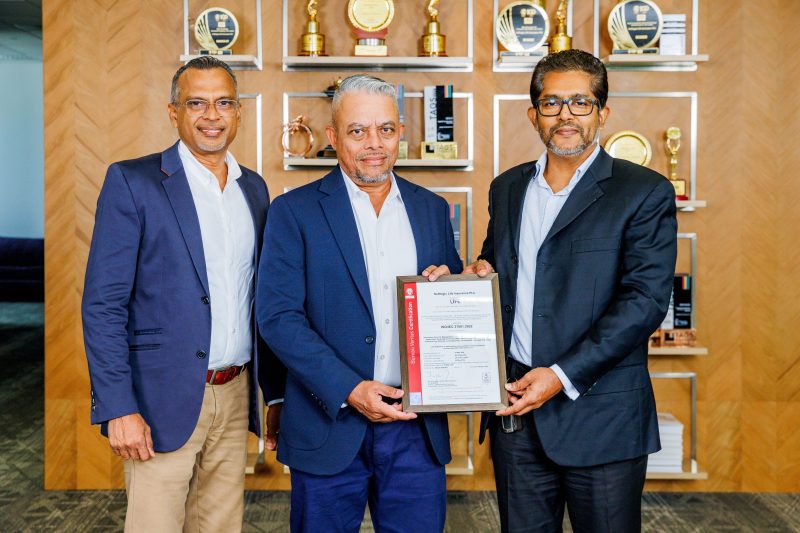
Softlogic Life has become the first insurance company in Sri Lanka to achieve ISO/IEC 27001:2022 certification, strengthening its commitment to information security, cybersecurity resilience and digital trust as the company expands its regional presence. The certification was achieved through the implementation and management of an Information Security Management System (ISMS) on its IO digital platform.
As insurers increasingly rely on digital platforms to deliver products and services, protecting sensitive information has become a critical component of customer trust. For Softlogic Life, this milestone represents a significant advancement in strengthening information security governance and embedding robust cybersecurity practices across the technology infrastructure supporting its insurance operations and digital services.
ISO/IEC 27001:2022 is an internationally recognised standard that provides a structured framework for establishing, implementing, maintaining and continually improving an Information Security Management System. It helps organisations identify, assess and manage risks associated with the confidentiality, integrity and availability of information.
A key area of focus in Softlogic Life’s implementation has been the enhancement of application security, with information security principles integrated throughout the application development and management lifecycle. These practices are increasingly important as digital platforms support a growing range of customer interactions, including onboarding, claims processing and policy servicing.
The certification also reflects the adoption of structured controls covering risk management, access management, vulnerability management, incident response, business continuity, supplier security and continuous security monitoring. Together, these measures support a more resilient digital environment and strengthen the company’s ability to safeguard information across its operations.
Commenting on the achievement, Softlogic Life Managing Director Iftikar Ahamed said trust remains fundamental to the insurance industry, extending beyond products and services to the secure management of information and the delivery of digital experiences to 1.8 million Sri Lankans.
He noted that achieving ISO/IEC 27001:2022 certification represents an important milestone in reinforcing that trust, demonstrating the company’s commitment to protecting customer information, enhancing operational resilience and ensuring that its digital transformation is supported by internationally recognised information security practices.
Ahamed also highlighted the importance of these measures as Softlogic Life continues to serve a large customer base in Sri Lanka while expanding its presence across the region, with the aim of extending its life protection services to more people.
SLIIT Drives Industrial Energy Efficiency Through AI-Powered Management Solutions