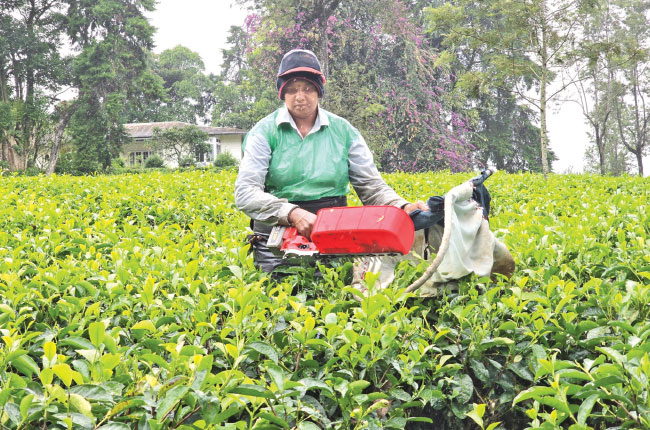
In the misty highlands of Nuwara Eliya, where generations of estate workers have bent over tea bushes from dawn to dusk, a quiet transformation is taking place. A simple machine placed in the hands of a tea plucker is challenging decades-old practices, changing what a day’s labour can achieve and creating new opportunities for those who depend on tea harvesting for their livelihoods.
Berendina Development Services (Guarantee) Limited (BDS), a Sri Lankan non-profit community development organisation focused on poverty alleviation, financial inclusion and sustainable livelihood development, has spent years working closely with estate communities. Its latest intervention—a drive to mechanise tea plucking—is delivering benefits that extend beyond the tea fields, including increased earning potential, reduced physical strain and greater opportunities for women who have traditionally carried a significant share of the sector’s workload.
The plantation sector remains one of Sri Lanka’s most labour-intensive industries, with thousands of families depending heavily on daily tea plucking for their livelihoods. For generations, manual plucking has involved long hours of repetitive bending and reaching, often under challenging weather conditions and on steep terrain. Since earnings are directly linked to the quantity of tea harvested each day, limitations in productivity can translate immediately into reduced income.
For communities facing structural marginalisation and limited access to alternative employment, this dependence can reinforce a cycle of economic vulnerability that is difficult to overcome.
It is within this context that BDS has sought to introduce a new approach. The organisation’s mechanised tea-plucking initiative is designed as a strategic livelihood intervention to strengthen income security, improve labour efficiency and build long-term resilience among estate communities, supporting BDS’s wider mission of creating economic opportunities for marginalised groups.
Since 2022, BDS has placed tea-plucking machines in the hands of 179 estate workers across nine estates in the Nuwara Eliya District—Clarendon, Desford, Fordyce, Great Western, Ingestre, Mount Vernon, Palmaston, Drayton and Somerset. Each machine is valued at approximately Rs. 58,000.
The machines remain the property of BDS and are provided through a tripartite agreement. Estate management is responsible for their safe custody, security and operational monitoring, while beneficiaries, as the end users, are responsible for proper operation, routine maintenance and timely reporting of any issues. This arrangement is intended to ensure the accountable, safe and efficient use of the equipment while supporting its long-term impact on estate livelihoods.
Universal Gateway Holdings Unveils New Dual-Dining Concept, ‘Thai Fusion and Global Kitchen’
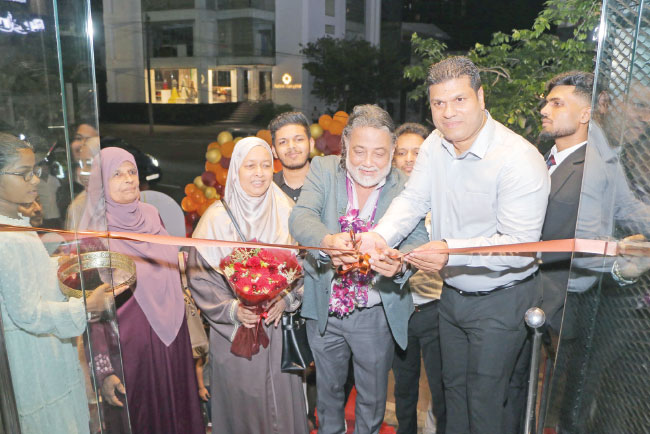
Universal Gateway Holdings (Pvt) Ltd has expanded its presence in Sri Lanka’s hospitality sector with the launch of a new dual-dining concept, Thai Fusion and Global Kitchen, operating under one roof on Davidson Road, Colombo 4.
Chairman and Managing Director of Universal Gateway Holdings, Mohamed Afthab, outlined an ambitious regional expansion strategy aimed at increasing the group’s restaurant portfolio from its current 11 branches to between 30 and 40 outlets across Sri Lanka and the region over the next three to four years.
“The food and beverage sector under Universal Gateway Holdings is growing rapidly,” Afthab said. “Our vision is not simply to increase the number of restaurants, but to introduce distinctive concepts and cuisines to the Sri Lankan market while maintaining high standards across our brands.”
The newly launched five-storey establishment in Bambalapitiya caters to corporate diners, families and international visitors. “Our objective is to develop strong restaurant concepts that offer premium quality food, consistency and memorable dining experiences,” he added.
Located across the ground and mezzanine levels, Thai Fusion offers an authentic fine-dining experience led by a specialised team of gourmet chefs from Thailand. With seating for 70 guests, the restaurant features a carefully curated menu comprising traditional Thai salads, soups, aromatic curries, fresh seafood specialities and signature desserts.
“With Thai Fusion, we are particularly focused on maintaining authenticity and, following its establishment, we intend to expand the brand to other key locations around Sri Lanka,” Afthab explained.
On the upper floor, Global Kitchen operates as an 80-seat multi-cuisine restaurant catering to a wide range of tastes. The menu places particular emphasis on imported premium steaks and gourmet burgers, complemented by an extensive selection of Pakistani, Chinese, Indian and other international dishes.
Innovative Technology Transforms Traditional Tea Plucking and Eases the Burden on Workers