When most people think about real estate in Sri Lanka, they often associate it with rising land values, premium apartment developments and the construction cranes that define Colombo’s skyline. However, the sector’s economic significance extends well beyond buildings and property values. By 2030, real estate could play an increasingly important role in shaping how Sri Lankans live, work, invest and build businesses.
Real estate provides the physical foundation for economic activity. Well-planned developments can attract foreign direct investment, create skilled employment and contribute to the transformation of communities. Conversely, poorly planned urban expansion can increase congestion, raise living costs, place additional pressure on public infrastructure and limit access to economic opportunities.
The key question for 2030 is therefore not simply whether Sri Lanka is building more structures, but whether it is creating a sustainable foundation for long-term economic growth.
Real estate already has a significant footprint in Sri Lanka’s economy. According to the Department of Census and Statistics, construction activity grew by 9.2% in 2025. Behind this growth is a broad ecosystem that includes contractors, engineers, architects, surveyors, logistics providers, financial institutions, insurers and legal professionals, all of whom contribute to the development process.
For this momentum to translate into sustained productivity, businesses need access to suitable spaces in the right locations. Modern office facilities, logistics centres and regional industrial hubs can help businesses reduce operating costs, improve efficiency and create opportunities for expansion.
Investment confidence is equally important. Clear approval processes, reliable digital land records and consistent regulatory frameworks can be just as critical as access to financing. Real estate projects often require years of planning, approvals and investment, meaning policy uncertainty and administrative delays can discourage development and ultimately constrain broader economic growth.
Janashakthi Life Named Among Sri Lanka’s Top 20 Women-Friendly Workplaces
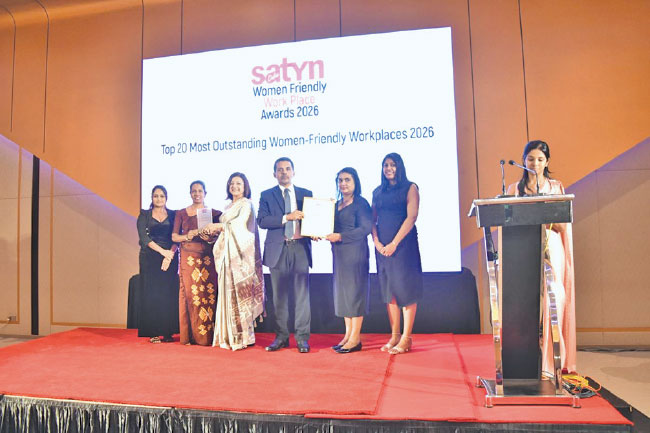
Janashakthi Life, the flagship life insurance company of JXG (Janashakthi Group), has been recognised among Sri Lanka’s Top 20 Women-Friendly Workplaces 2026 at the Satynmag Women Friendly Workplace Awards.
The recognition highlights the company’s continued commitment to fostering an inclusive workplace where women are encouraged to build meaningful careers, develop their capabilities and progress into leadership positions across the organisation.
Women make up a significant proportion of Janashakthi Life’s workforce and continue to assume leadership responsibilities across various areas of the business. Their growing representation is particularly evident in life insurance sales management, a field traditionally dominated by men, as well as in senior roles spanning business operations and corporate functions.
Janashakthi Life continues to focus on creating opportunities that enable women to strengthen their skills, gain broader professional experience and advance their careers. Initiatives including leadership development, mentoring, cross-functional exposure and career development programmes are aimed at creating an environment where women can build sustainable and rewarding professional journeys.
Commenting on the recognition, Ravi Liyanage, Director/CEO of Janashakthi Insurance PLC, said the company remains committed to creating opportunities for its female workforce to develop professionally while making meaningful contributions to the organisation.
Beyond the Skyline: How Real Estate Could Shape Sri Lanka’s Economy by 2030