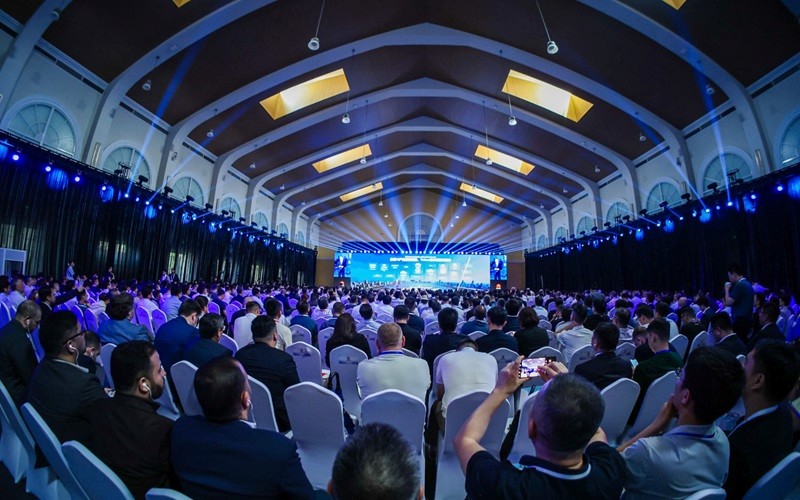





Huawei unveiled its groundbreaking Grid-Interactive Artificial Intelligence Data Center (AIDC) Strategy at the 2026 Global AIDC Industry Summit and Huawei AIDC Strategy and Product Launch held in Dongguan, China, under the theme “Power the AI Era Forward.”
The event brought together nearly 1,000 global industry leaders, technical experts, and ecosystem partners from the energy, intelligent computing, and telecommunications sectors to explore the future of AI infrastructure, next-generation data center architecture, and emerging technological innovations. Attendees also witnessed the launch of Huawei’s latest strategy designed to address the rapidly evolving demands of the AI era.
Delivering the keynote address, Hou Jinlong, Director of the Board of Huawei and President of Huawei Digital Power, highlighted the unprecedented growth of artificial intelligence, driven by the widespread adoption of large AI models and intelligent agents. He emphasized that energy will serve as the foundation for the sustainable development of AI, with computing power and electricity increasingly becoming interconnected.
According to Hou, future AI data centers will require closer integration between advanced power systems and AI infrastructure. He noted that grid-friendly operations, high-voltage and direct-current (DC) architectures, as well as power-electronics technologies, will be critical in supporting ultra-high-density computing environments. He also stressed that liquid cooling has become an essential requirement for modern AI data centers, while intelligent lifecycle operations and maintenance (O&M) will play a crucial role in ensuring reliability and efficiency.
Huawei Digital Power’s Grid-Interactive AIDC Strategy leverages the company’s expertise across four key technology domains—bit, watt, heat, and battery—to create a more efficient and sustainable AI infrastructure ecosystem. The strategy focuses on areas including renewable energy generation, grid-forming technologies, high-density computing power supply, liquid cooling systems, and computing-electricity synergy to support the growing energy needs of AI applications.
Huawei stated that the initiative is designed to help the industry achieve greener energy consumption, greater computing efficiency, and lower operational costs, while supporting the large-scale deployment of AI technologies worldwide.
Further elaborating on the strategy, Bob He, Vice President of Huawei Digital Power, delivered a keynote presentation titled “Building Grid-Interactive AIDC, Maximizing Tokens Per Watt.” He pointed out that the rapid expansion of the global AI industry has led to an unprecedented increase in demand for computing resources, placing significant pressure on AI data center infrastructure.
He noted that high-density and diverse computing workloads are creating new challenges related to power density, scalability, and load fluctuations. At the same time, the increasing adoption of renewable energy sources is contributing to greater grid variability, while fluctuating AI workloads are placing additional demands on data center reliability and stability.
Through its Grid-Interactive AIDC Strategy, Huawei aims to address these challenges by enabling closer coordination between power systems and computing infrastructure, helping organizations build resilient, energy-efficient, and future-ready AI data centers capable of supporting the next wave of digital transformation.
Finagle Lanka Honors Top Performers at Annual Sales Awards Ceremony
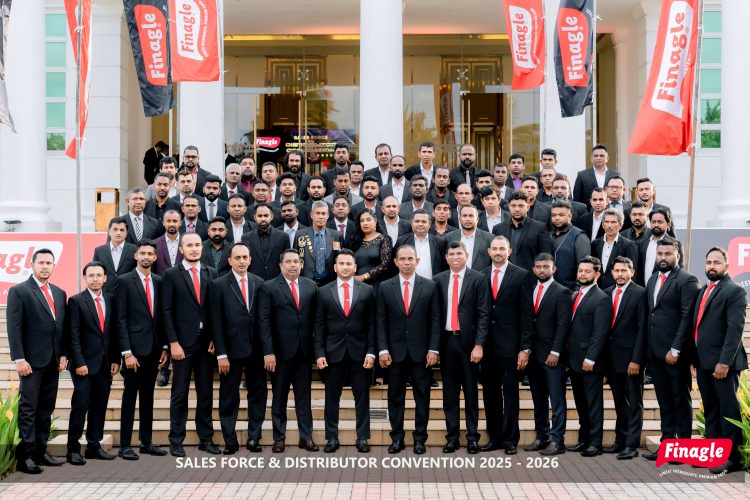
The Annual Sales Awards Ceremony of Finagle Lanka (Pvt) Ltd, one of Sri Lanka’s leading bakery food manufacturers and an established brand recognized both locally and internationally, was held on 29 May at Hotel Grandeeza under the patronage of the company’s Chairperson, Anoma Ranasinghe. The event was organized to recognize and reward the exceptional contributions made by the company’s sales and distribution teams, whose efforts continue to play a vital role in the organization’s growth and success. Based on their performance and achievement of sales targets during the previous financial year, 26 sales executives and 45 distribution representatives were selected from a pool of nearly 150 sales and distribution personnel to receive awards and recognition. The recipients were presented with awards, certificates, cash prizes, as well as opportunities for local and overseas travel. The awards programme was designed to encourage excellence, commitment, and professionalism among employees and business partners while fostering a culture of high performance across the organization.
At the ceremony, K. R. K. Rajapaksha was recognized as the Best Sales Executive in the Sales Executive category, while Daham Udukumbura received the award for Best Manager in the Sales Management category. Meanwhile, R & T Distributors was honoured as the Best Distribution Agent Company of the Year in recognition of its outstanding contribution to the efficient distribution of Finagle products across the market. Addressing the gathering, Chairperson Anoma Ranasinghe highlighted that the company’s sales and distribution teams remain the driving force behind Finagle’s continued success. She emphasized that their dedication, professionalism, and hard work have enabled the Finagle brand to strengthen its presence not only in Sri Lanka but also in international markets. The event was attended by the Managing Director of Finagle Lanka, Mahinda Ranasinghe, Chief Executive Officer Kushan Amarasinghe, Director Sales & Marketing Buddhi Ratnayake, together with representatives from all divisions of the company. The ceremony served as a celebration of excellence and achievement, reflecting the unity, commitment, and forward-looking vision that continue to drive Finagle Lanka toward greater success.
Huawei Introduces Grid-Interactive AIDC Strategy to Drive Next-Generation AI Infrastructure