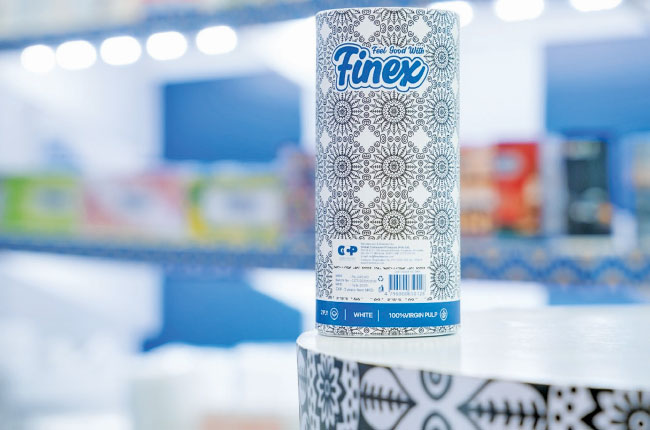





FINEX Tissues, owned by Global Consumer Products (Pvt) Ltd., marked its third consecutive participation at Hotel Show Colombo 2026 by introducing what it describes as Sri Lanka’s first locally launched facial tissue canister, offering a practical and versatile solution for homes, offices, vehicles, hotels and other commercial environments.
The FINEX Facial Tissue Canister Holder was the highlight of the company’s three-day showcase at BMICH, where the 18th edition of Hotel Show Colombo was held from 24 to 26 July. The exhibition attracted more than 200 exhibitors and thousands of hospitality professionals, hotel owners and purchasing managers from Sri Lanka and overseas.
The newly introduced canister drew significant attention from visitors, with hospitality and business representatives exploring how the product could be incorporated into hotel rooms, restaurants, offices and vehicles. FINEX Tissues recorded more than 150 customer inquiries during the exhibition, highlighting strong commercial interest in the new product.
Commenting on the launch, I.L. Dawood, Managing Director of Global Consumer Products (Pvt) Ltd., said, “We didn’t want to bring another version of what already exists in the market. We wanted to give hospitality buyers and our end consumers something genuinely new, and the number of conversations we had over three days told us that’s exactly what they were looking for.”
The canister was showcased alongside FINEX Tissues’ broader hygiene portfolio, including the FINEX, ECO, Guardian and Flexee product lines. The range reflects the company’s focus on quality, sustainability and practical product design tailored to the evolving needs of hospitality and commercial environments.
FINEX Tissues’ third consecutive presence at Hotel Show Colombo further highlights the importance of the exhibition as a platform for engaging directly with industry professionals and identifying emerging opportunities within Sri Lanka’s hospitality sector.
The successful launch of the Facial Tissue Canister Holder at the event also reinforces FINEX Tissues’ focus on product innovation and its efforts to introduce practical, locally relevant solutions to the Sri Lankan market.
EDB Steps Up Drive to Expand Sri Lanka’s Graphite Exports Through Value Addition
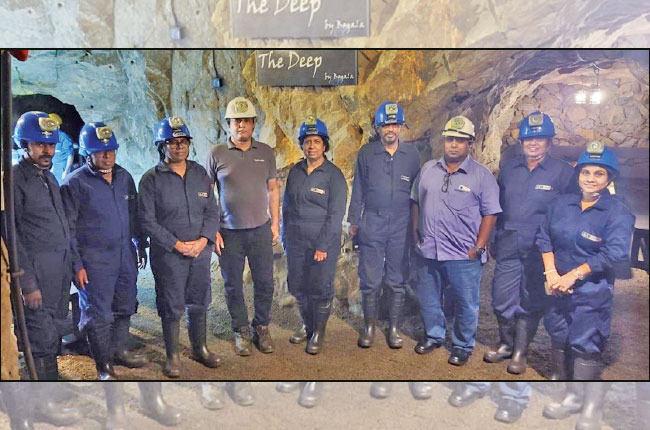
The Sri Lanka Export Development Board (EDB) is stepping up efforts to unlock the country’s graphite export potential by promoting value addition, strengthening industry collaboration and expanding access to international markets as part of a broader strategy to increase mineral export earnings.
As part of this initiative, a team of EDB officials recently visited Bogala Graphite Lanka PLC, one of the world’s leading producers of premium natural vein graphite, to gain first-hand insights into Sri Lanka’s graphite mining, processing and export operations.
During the visit, officials observed the full graphite value chain, covering underground mining and ore extraction through to processing, grading, purification and export preparation. The EDB said the knowledge gained would contribute to the development of strategies aimed at enhancing Sri Lanka’s mineral exports and strengthening the country’s position as a global supplier of high-value graphite products.
The initiative supports the objectives of the National Export Development Plan (NEDP), which identifies minerals and mineral-based products as a priority export sector for Sri Lanka. The plan highlights the country’s distinctive mineral resources, particularly its globally recognised vein graphite, as an opportunity to diversify exports, attract investment and generate greater foreign exchange earnings through value-added production.
Sri Lanka is the only country known to commercially produce natural crystalline vein graphite, which is recognised for its exceptionally high carbon purity and distinctive crystalline structure. These properties have created demand for Sri Lankan graphite across a range of advanced industrial applications, including lubricants, carbon brushes, brake pads, refractories and emerging graphene-related technologies.
With more than 160 years of mining experience, Bogala Graphite Lanka PLC has established a strong international reputation for supplying premium-quality graphite to global markets. The company’s continued investment in modern processing technologies and sustainable mining practices demonstrates the potential for Sri Lanka’s graphite industry to move beyond the export of raw minerals towards higher-value, technology-driven products.
The EDB’s renewed focus on graphite value addition reflects a broader effort to leverage Sri Lanka’s unique mineral resources to create greater export value, attract new investment and strengthen the country’s position within global advanced-material supply chains.
FINEX Tissues Launches Sri Lanka’s First Facial Tissue Canister at Hotel Show Colombo