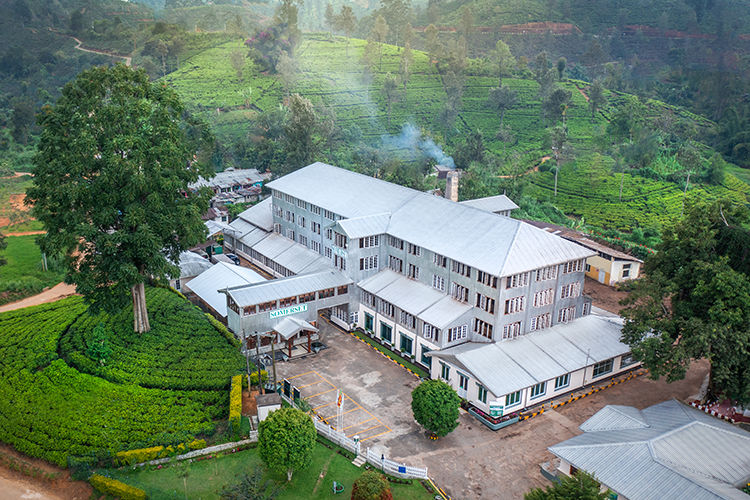





Perched beside the historic Nanu Oya railway station, built in 1885 to transport Dimbula tea to Colombo, Somerset remains one of the most accessible and storied high-grown tea estates in the region. Its enduring heritage is built around three defining threads: machinery and families that have outlasted generations of planters, a willingness to embrace new technology, and an unwavering commitment to quality.
Yet Somerset is far from a relic of the past. It remains a working estate, continually adapting while carrying forward a story that began nearly a century and a half ago.
A Tea Garden That Keeps Reinventing Its Landscape
Approximately half of Somerset’s tea bushes are mature seedling China Jat varieties, descendants of some of the earliest tea plants introduced to Ceylon during the 19th century. These traditional bushes perform particularly well during the Western quality season from January to March, producing teas with a distinctive character that echoes the earliest days of tea cultivation in Sri Lanka.
But Somerset’s approach to heritage is not about preserving the past unchanged. The remaining fields comprise newer varieties planted at closer spacing to achieve faster maturity, reflecting the estate’s efforts to improve productivity while adapting to changing agricultural conditions.
The estate has also introduced biochar, a soil amendment produced from slow-burnt organic matter, to improve water retention and reduce dependence on synthetic inputs.
Somerset has also redefined how it views land that is unsuitable for tea cultivation. Rather than treating steep or less productive terrain as unused land, native trees are being established in areas where tea cannot thrive, creating forest-like habitats. Fast-growing timber species are also cultivated on land unsuitable for tea, turning previously underutilised areas into productive assets.
This philosophy extends beyond the estate’s cultivated fields. A 13-kilometre biodiversity corridor along the Nanu Oya and Agra Oya river basins has been developed in partnership with the Wildlife and Nature Protection Society of Sri Lanka. The initiative aims to restore approximately 80 hectares of forest, with more than 50,000 native trees planned for future planting.
Together, these initiatives reflect an estate that has learned to grow more than tea, transforming its entire landscape into a productive and living ecosystem.
Optimising Work Through Technology
Some of Somerset’s most visible changes can be observed in the way everyday estate operations are managed.
A digital weighing system has replaced manual scales at field level, providing pluckers with accurate records of the quantities they harvest while giving management real-time visibility into daily production volumes. The system also supports greater transparency in calculating earnings.
A cloud-based monitoring platform tracks plucking rounds, fertiliser schedules and pest activity in real time. Within the factory, a similar digital system monitors key stages of production, including withering, rolling, fermentation, drying and grading.
This real-time visibility enables supervisors to make timely adjustments, particularly during the demanding Western quality season, when maintaining consistency is critical.
The technology forms part of a wider factory automation initiative implemented by TTE PLC across its portfolio of 15 estates, bringing greater precision and efficiency to traditional tea manufacturing processes.
Global Sri Lankan Kumara Kumariya 2026 Grand Finale Set for July 31 at Ramadia Grande, Moratuwa
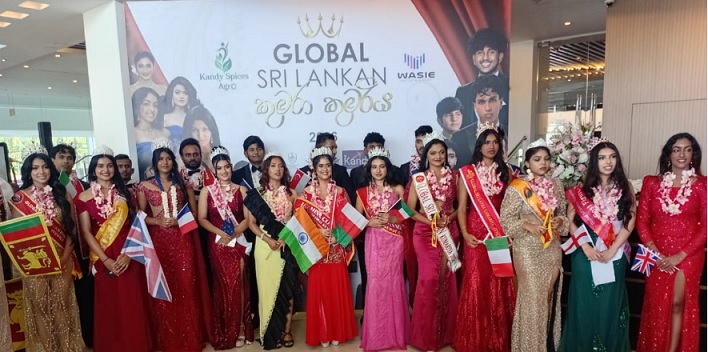
The grand finale of Global Sri Lankan Kumara Kumariya, an international beauty pageant dedicated to showcasing Sri Lanka’s heritage, culture and tourism potential, will be held on July 31 at Ramadia Grande Hotel in Moratuwa.
The unique pageant is open to Sri Lankan-origin youth between the ages of 16 and 32, regardless of where they live around the world. This year’s competition has attracted participants from 13 countries, including the United Kingdom, Northern Ireland, Scotland, France, Italy, Australia, Singapore, Oman, Kuwait, India and Sri Lanka.
The initiative is led by Sri Lankan actress, teledrama producer, writer and businesswoman Wasanthi Gunarathna, who serves as the mentor behind the project. Known for her work in productions including Hima Tharaka (2017) and Nohadan Amme (2004), Gunarathna said the pageant was established primarily as a platform to introduce Sri Lanka’s rich cultural heritage and tourism attractions to international audiences through its participants.
According to Gunarathna, Sri Lanka Tourism has endorsed the initiative, further strengthening its potential as a platform for promoting the country as a global tourism destination.
“The pageant is expected to play a significant role in promoting Sri Lanka as a tourist destination,” she said.
Preliminary rounds are currently being held in several cities across Sri Lanka, with the leading contestants progressing towards the grand finale on July 31.
The competition will feature separate boys’ and girls’ categories, with the top three winners in each category receiving prizes and gifts worth more than Rs. 1 million. In addition, the top three contestants in both categories will receive return air tickets to Thailand, along with two nights of full-board accommodation.
The winners will be selected through a combination of public voting and evaluations by a panel of judges, bringing together audience participation and professional assessment.
Kandy Spices Agro (Pvt) Ltd is the main sponsor of the event. The company is led by Dr. Ruwan Herath, Chairman and Managing Director of the Kandy Group of Companies, and focuses on the production and export of premium agricultural and spice products.
Gunarathna said the newly constructed wing of Ramadia Grande Hotel was selected as the venue due to its spacious pillarless ballroom, advanced lighting systems and modern facilities, which are expected to provide an appropriate setting for the grand finale.
Beyond the competition itself, Global Sri Lankan Kumara Kumariya aims to create a platform through which young Sri Lankan-origin participants from around the world can reconnect with their heritage while contributing to the international promotion of Sri Lanka’s culture, tourism and identity.
Somerset Estate: A Legacy of Continuity That Endures