




Sri Lanka’s government saw its bilateral and multilateral debt increase during the first half of 2026, while commercial debt declined, according to the latest official debt statistics.
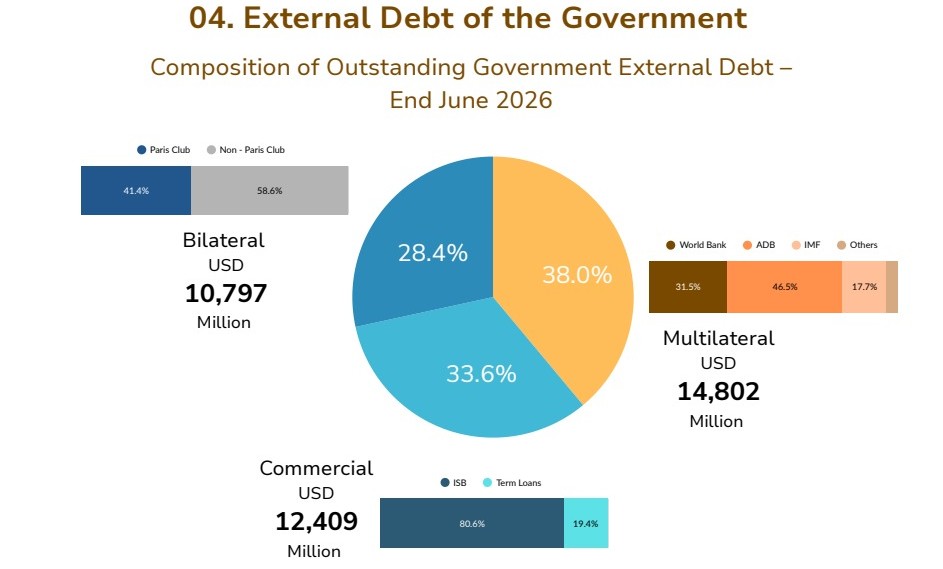
Bilateral debt, led by loans from China, increased by 1.1% or US$119 million to US$10.797 billion by the end of June, compared with US$10.678 billion at the end of December 2025.
Multilateral debt recorded a stronger increase, rising 3.4% or US$488 million during the first six months to US$14.802 billion.
In contrast, the government’s commercial debt declined by 2.1% or US$262 million during the same period, falling to US$12.409 billion.
Overall, Sri Lanka’s government external debt stood at US$38.008 billion at the end of June 2026, up US$345 million from the US$37.663 billion recorded at the end of 2025.
The data also showed that government external debt increased by US$540 million during the second quarter of 2026, following a nominal decline of US$195 million in the first quarter.
Breakdown of Sri Lanka’s External Debt
Multilateral loans accounted for the largest share of government external debt at 38%, followed by commercial debt at 34% and bilateral debt at 28%.
International Sovereign Bonds (ISBs) make up approximately 81% of Sri Lanka’s commercial debt, with the remaining portion consisting mainly of foreign-currency term financing facilities.
The Asian Development Bank (ADB) and the World Bank remain the country's largest multilateral creditors, together accounting for more than 78% of total multilateral debt.
Within bilateral debt, approximately 59% is owed to non-Paris Club countries, while around 41% is owed to Paris Club creditors.
Hambantota Port Welcomes New-Generation NYK Car Carrier
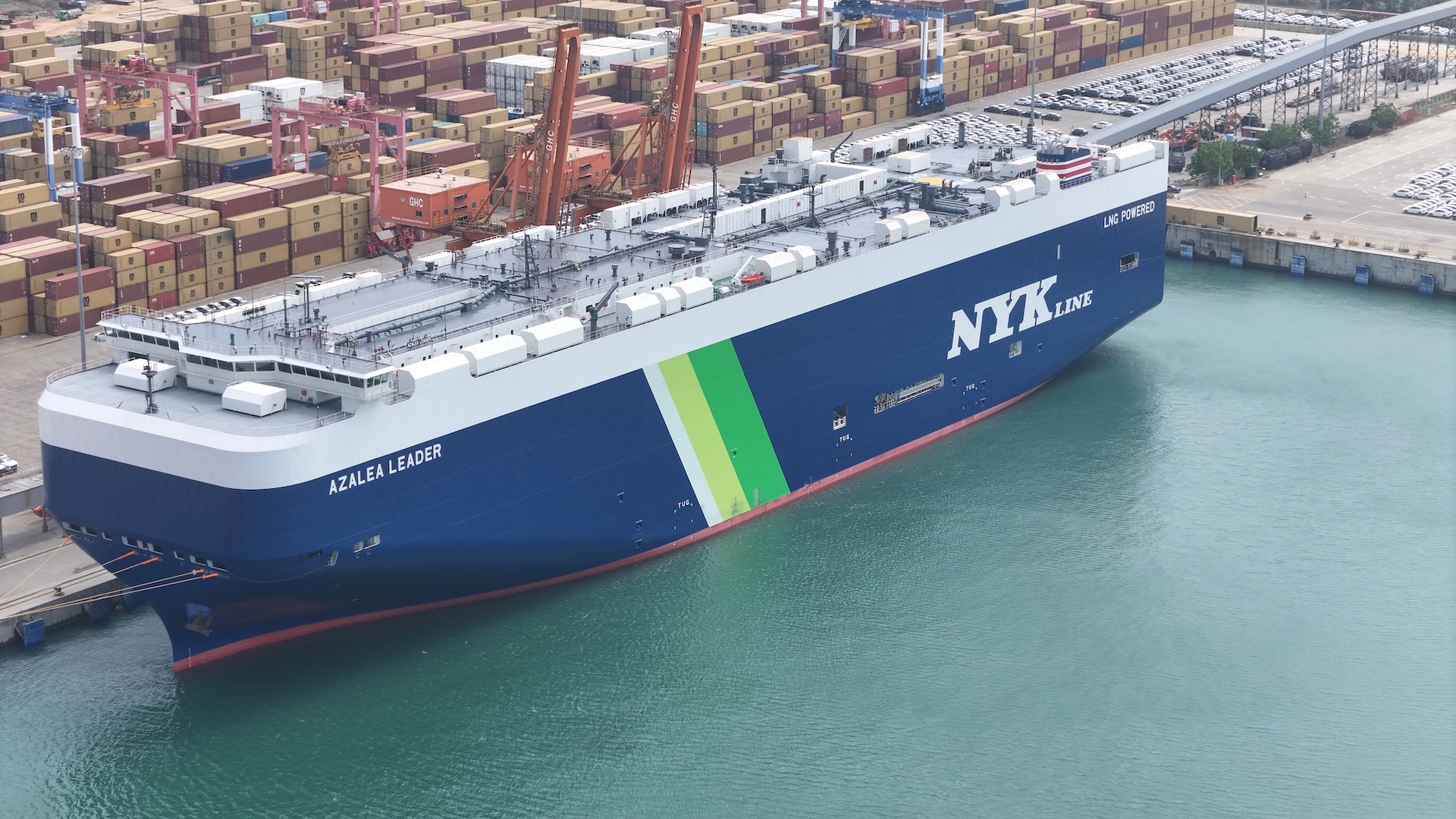
Sri Lanka’s Hambantota International Port (HIP) has welcomed NYK’s Azalea Leader, a new-generation vehicle carrier that made its maiden call at the port in August.
The 200-metre-long Azalea Leader is a next-generation LNG dual-fuel Pure Car and Truck Carrier (PCTC). Built in 2026 and operating under the Liberian flag, the vessel can transport 4,810 vehicles, along with an additional 47 units for local discharge. Its maximum capacity stands at approximately 7,000 vehicles.
The vessel is also equipped with Exhaust Gas Recirculation (EGR) technology on its main engine, helping reduce nitrogen oxide emissions and improve its environmental performance.
Hambantota International Port has been gaining importance as a regional logistics hub, with increasing vehicle volumes being routed through the port toward markets in the Middle East. The Azalea Leader arrived in Hambantota from Singapore as part of its regional operations.
“The maiden call of Azalea Leader is significant because we are increasingly seeing shipping lines deploy their newest and most sophisticated vessels through Hambantota,” said Wilson Qu, CEO of HIPG, in a press release.
He added that the vessel's arrival highlights the growing role of HIP in the regional RoRo (Roll-on/Roll-off) sector and demonstrates the port's potential as automotive volumes moving through Hambantota continue to increase.
Sri Lanka’s Bilateral and Multilateral Debt Rises in H1 2026, Commercial Debt Declines