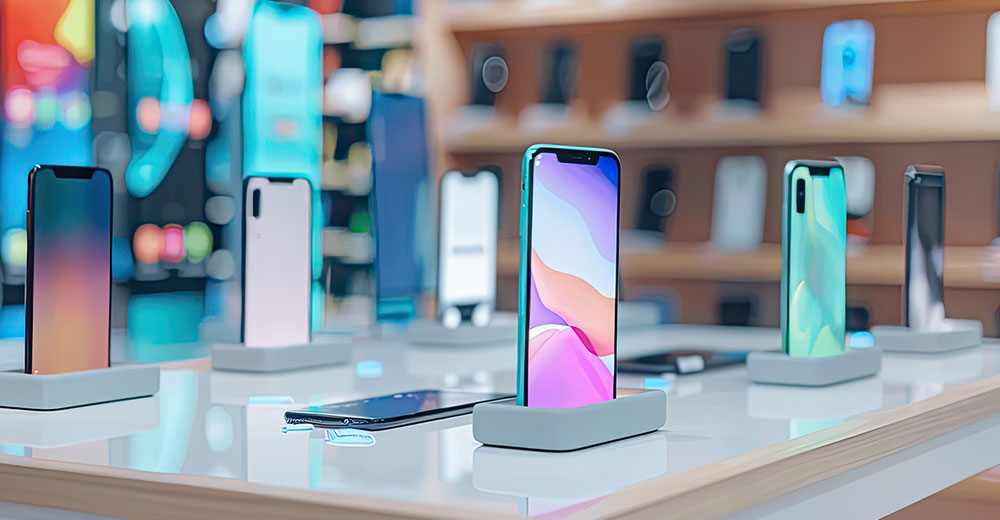
Promotional offers featuring free smartphones are gradually losing some of their appeal among consumers, as more shoppers place greater importance on reducing their regular mobile service expenses.
A survey involving more than 1,000 adults in the United States found that 28% of respondents considered a Black Friday promotion offering a lower monthly mobile plan price more attractive than receiving a free smartphone with a new plan or obtaining a substantial discount on a new device. Both of the latter offers attracted 14% of respondents.
Jennifer Kyriakakis, chief marketing officer of OXIO, the telecommunications-as-a-service provider behind the survey, said that although free smartphones continue to attract buyers, they are not necessarily the most appealing incentive for every customer.
She explained that twice as many consumers preferred lower monthly service charges compared with those who favoured receiving a free phone with a new subscription. While this does not necessarily mean that smartphone promotions have lost their effectiveness, it highlights the growing importance of long-term savings.
Kyriakakis added that customers who are satisfied with their existing smartphones may find reducing their recurring bills more valuable than receiving a replacement device. She suggested that mobile operators should tailor their promotional strategies to different customer needs, offering device discounts to those planning upgrades while providing competitive monthly packages to customers who prefer to retain their existing phones.
Why Free Smartphone Deals Are Losing Their Appeal
Ross Rubin, principal analyst at New York-based consumer technology advisory firm Reticle Research, observed that free smartphone promotions have become less distinctive during the holiday shopping period because similar offers are available throughout the year, particularly during the autumn launch seasons for new Apple and Samsung devices.
He also pointed out that consumers are keeping their smartphones for longer periods, reducing their enthusiasm for upgrading to newer models.
Rob Enderle, president and principal analyst at Oregon-based Enderle Group, argued that consumers have increasingly recognised that supposedly free smartphones often come with additional financial commitments.
According to Enderle, such promotions commonly require customers to sign up for expensive, long-term contracts, with the device cost covered through monthly bill credits. Against a backdrop of rising living expenses and economic uncertainty, consumers are becoming more interested in lowering their ongoing household costs rather than accepting subsidised devices that tie them to a particular mobile operator for as long as three years.
John Strand, CEO of Denmark-based telecommunications consultancy Strand Consult, said the survey findings reflect broader international consumer trends, although the United States remains among the relatively few major markets where mobile operators continue to subsidise new smartphones.
Strand also highlighted the growing popularity of second-hand smartphones and the tendency among consumers to extend the lifespan of their existing devices. He noted that these developments are occurring across global markets.
With smartphones becoming increasingly expensive and the differences between successive model generations becoming less noticeable to many buyers, more consumers are choosing to continue using their current devices rather than purchasing the latest releases.
He concluded that shoppers have become more financially aware and increasingly understand that the cost of a supposedly free smartphone is ultimately covered through the payments they make to mobile service providers.
Lenovo Qira Aims to Make Personal AI Assistants More Useful in Everyday Life
For almost 30 years, technology companies have been trying to develop the ideal personal digital assistant. From animated desktop companions and smartphone voice assistants to modern generative AI tools, the central ambition has remained largely unchanged: to create a reliable digital companion capable of simplifying everyday tasks, reducing mental workload and helping users stay organised. However, many of these efforts have failed to deliver the seamless experience originally promised.
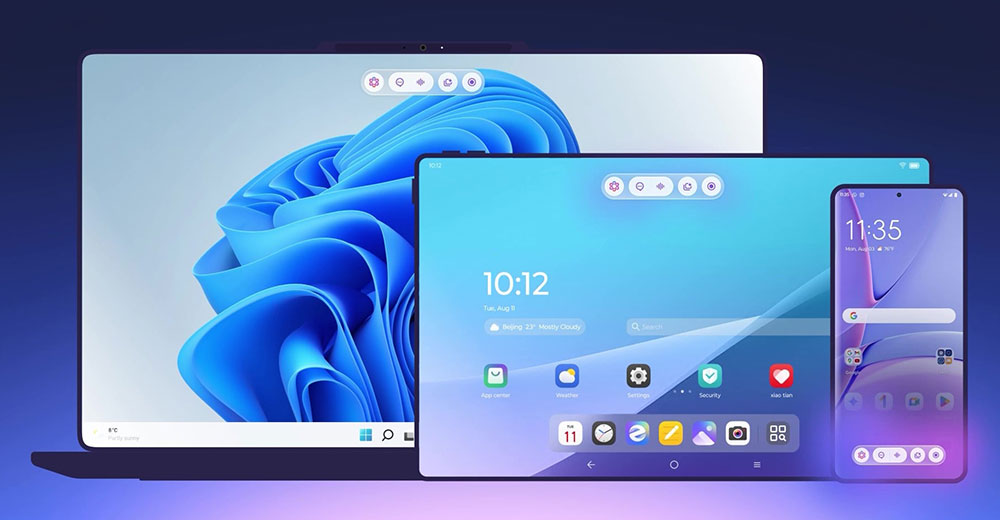
Lenovo is now looking to change that with its Qira platform, a new AI system designed to provide personalised, context-aware assistance across compatible PCs, tablets and Motorola smartphones. The company's announcement introduces an approach that brings AI capabilities together across multiple devices rather than limiting them to individual applications. <Cite refs={["turn852585search0","turn852585search3"]}/>
To understand the potential significance of Qira, it is important to examine why previous digital assistants struggled to meet expectations, where Microsoft's AI PC strategy encountered challenges, and what users should realistically expect from a genuinely useful digital companion.
The column also features a Lenovo ThinkPad designed to handle AI-related workloads as its Product of the Week.
Why Previous Digital Assistants Failed to Deliver
Looking at the history of digital assistants, one of the biggest shortcomings was not necessarily a lack of computing power, but the failure to develop experiences around users' actual needs. Many technology companies introduced assistants that primarily supported their own software ecosystems or attempted to address weaknesses in existing interfaces rather than providing genuinely meaningful assistance.
A well-known example is Microsoft's Office Assistant, particularly the animated character Clippy, which first appeared in Office 97. The feature was designed to help users discover software functions that were often overlooked because people did not regularly consult traditional help manuals.
However, Clippy frequently interrupted users at inconvenient moments. Its limited ability to recognise context and understand what people were trying to accomplish made its suggestions feel repetitive and poorly timed.
Despite receiving widespread criticism, the early experiment also demonstrated an interesting aspect of human-computer interaction: the importance of emotional connection.
The author recalls having a particular fondness for the feature, although not for the familiar paperclip character. Instead, the preferred companion was F1, a small animated robot available as an alternative Office Assistant.
During particularly demanding working days or moments of low motivation, having the animated robot appear in the corner of the computer screen, occasionally making mechanical sounds or performing amusing animations, provided an unexpected sense of companionship.
It was a small detail, but it helped make an otherwise impersonal digital working environment feel a little more welcoming.
Free Smartphone Deals Are Becoming Less Attractive to Some Consumers