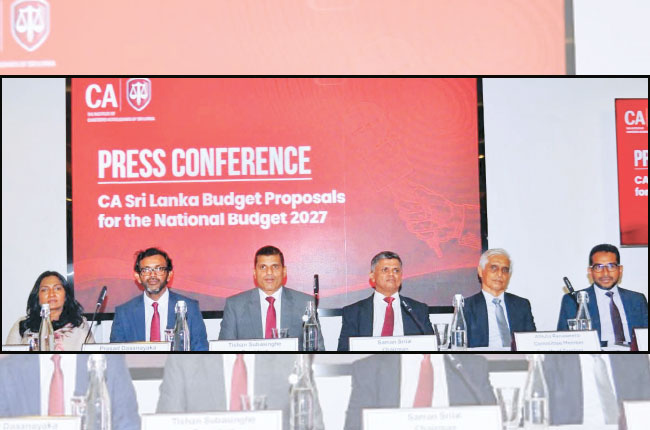
The Institute of Chartered Accountants of Sri Lanka (CA Sri Lanka) has presented a comprehensive set of proposals to the government for the upcoming National Budget 2027, calling for a more efficient, equitable and sustainable approach to revenue mobilisation.
At a recent press conference outlining its recommendations, the Institute emphasised the importance of strengthening tax compliance, accelerating digital transformation and bringing more economic activity into the formal sector, rather than relying excessively on increases in statutory tax rates.
The proposals were formally submitted in September 2026 to Dr. Harshana Suriyapperuma, Secretary to the Ministry of Finance. They are built around three key objectives: mobilising additional revenue without over-reliance on higher tax rates, modernising tax administration to encourage voluntary compliance, and strengthening Sri Lanka’s investment, business and institutional environment to support sustainable economic growth.
Highlighting structural weaknesses in the country’s existing revenue framework, CA Sri Lanka noted that Sri Lanka remains heavily dependent on indirect taxation. This places a disproportionate burden on ordinary consumers and can encourage economic activity to remain outside the formal sector.
To address these challenges, the Institute proposed a clear sequence of priorities for revenue mobilisation, arguing that increases in statutory tax rates should be considered only after other available measures have been exhausted.
These priorities include improving compliance with existing tax laws, identifying untaxed economic activities, reducing revenue leakages across government departments, broadening the tax base through digitalisation and improved data integration, and reviewing and rationalising existing tax exemptions.
CA Sri Lanka believes that following this approach would enable the government to strengthen revenue collection while minimising unnecessary financial pressure on compliant taxpayers and businesses.
To support these reforms, the Institute recommended establishing an integrated data ecosystem to improve the efficiency and accuracy of tax administration. A central element of this proposal is the creation of a National Taxpayer Information Network (NTIN) and a Universal Business Identification Number (UBIN).
These mechanisms would facilitate the integration of information from Sri Lanka Customs, VAT transaction records, corporate ownership registries, financial accounts, property records and other public-sector databases. Better coordination among these data sources could help authorities identify gaps in tax compliance, improve taxpayer identification and reduce revenue leakages.
Through its Budget 2027 proposals, CA Sri Lanka has called for a strategic shift towards a more digitally enabled, compliance-focused tax system that strengthens public revenue while supporting investment, business confidence and long-term economic stability.
ADB Approves US$100 Million to Back Sri Lanka’s Reform and Investment Drive
The Asian Development Bank (ADB) has approved $100 million in financing to support reforms and investments aimed at strengthening social protection, promoting economic inclusion, and improving the well-being and resilience of poor and elderly people in Sri Lanka.
The financing package comprises a $50 million policy-based loan and a $50 million project loan.
The Promoting Resilience and Opportunity for Inclusive Recovery Sector Development Program will help the Government of Sri Lanka expand livelihood and employment opportunities for low-income households, improve eldercare services, and enhance the effectiveness and responsiveness of the country’s social protection system.
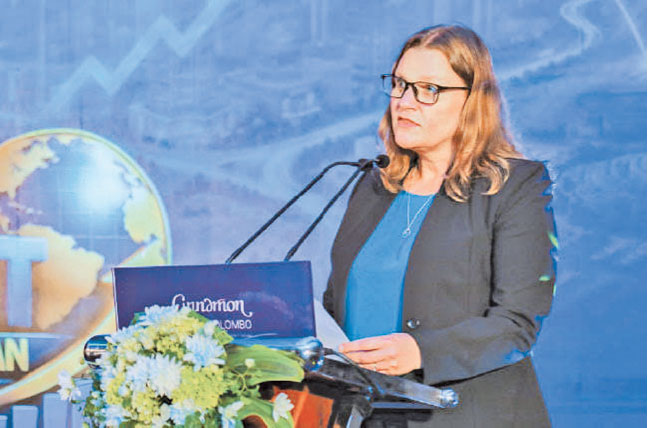
“Sri Lanka’s economic recovery must translate into meaningful improvements in the lives and livelihoods of vulnerable people,” said ADB Country Director for Sri Lanka Shannon Cowlin. “This program will help expand economic opportunities for poor households, strengthen social care services for an aging population, and build a more inclusive, responsive, and resilient social protection system that supports long-term recovery and shared prosperity.”
Despite the country’s continued economic recovery, poverty and vulnerability to economic and other shocks remain high, particularly among women, young people, older persons, persons with disabilities, and communities in rural and disadvantaged areas.
The program will address these challenges through policy reforms, institutional strengthening, and investments in livelihood development and care services.
It will support the implementation of the government’s National Empowerment Program, targeting 30,000 households identified through the Aswesuma social registry across six districts. The initiative will provide support to eligible households, including women and youth, through livelihood grants, employment and business assistance, skills development, financial literacy training, and improved access to reliable markets.
The program will also strengthen the policy and regulatory framework for eldercare services and establish five model elderly day care centres in poorer districts.
These centres will provide integrated care and support services while serving as demonstration sites to test and refine eldercare models that could subsequently be expanded nationwide.
CA Sri Lanka Urges Smarter Tax Administration and Compliance-Driven Revenue Growth in Budget 2027