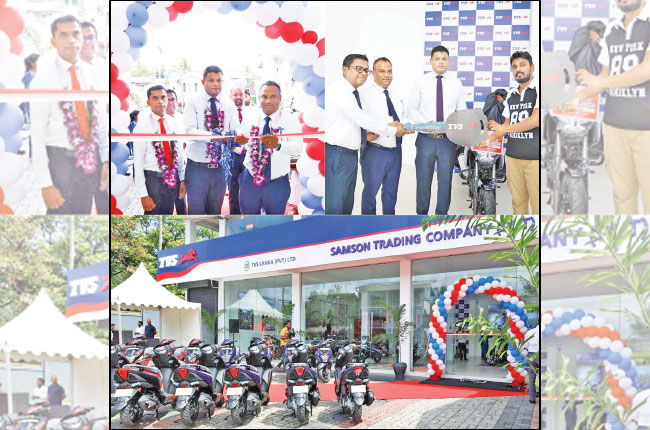





Samson Trading Company Expands Automotive Portfolio with TVS Partnership and New Malabe Showroom
Samson Trading Company (Pvt) Ltd, a member of the DSI Samson Group, has officially entered the two-wheeler automotive sector through a strategic partnership with TVS Lanka (Pvt) Ltd and the launch of its latest TVS showroom in Malabe on May 23.
The partnership marks a significant expansion for Samson Trading Company into Sri Lanka’s growing two-wheeler market, while reinforcing its longstanding reputation for trust, reliability, and customer service within the DSI Samson Group network.
The newly opened showroom is dedicated exclusively to TVS motorcycles and scooters, offering customers a complete retail experience. It showcases the full range of TVS two-wheelers available in Sri Lanka, including the TVS Ronin, TVS Apache RTR series, TVS Raider, TVS Ntorq 125, TVS Jupiter, TVS Sport, and TVS XL100.
The opening ceremony was attended by senior representatives from TVS Lanka, Samson Trading Company, and the DSI Samson Group, highlighting the importance of the partnership in strengthening the brand’s retail footprint across the country.
Speaking at the launch, Samson Trading Company Managing Director Asanka Rajapaksha said the showroom represents an important milestone in expanding the company’s presence in the two-wheeler segment. He noted that with a 47-year legacy, the company continues to build on its foundation of trust and reliability, while working with TVS Lanka to deliver a modern, customer-focused retail experience supported by strong service standards.
TVS Lanka Chief Executive Officer Geethal Anthony added that the partnership reflects TVS’s continued focus on expanding accessibility across Sri Lanka. He stated that collaborations such as this help bring the company’s full product range closer to customers while strengthening a customer-centric dealership network nationwide.
NCE Visit Strengthens Export Sector Linkages in Wayamba Region
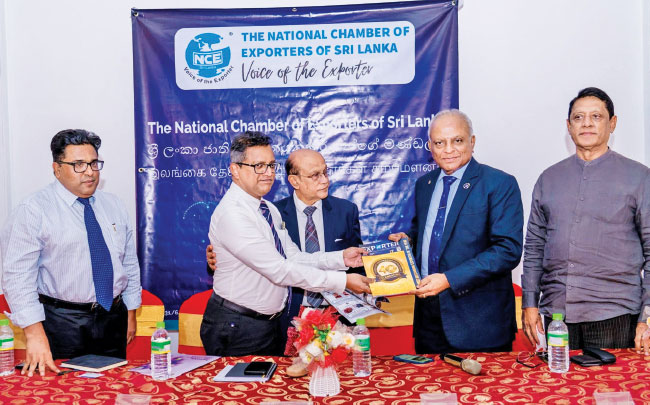
National Chamber of Exporters of Sri Lanka (NCE) conducted a regional visit to Kurunegala in the Wayamba Province on May 15, aimed at strengthening connections between member exporters, regional producers, suppliers, and aspiring exporters through direct business engagement and institutional collaboration.
The programme was organised in partnership with the Industrial Services Bureau (ISB) and the Export Development Board (EDB) Kurunegala office. It featured two business-to-business (B2B) sessions in Kurunegala designed to enhance regional export integration.
Wayamba Province remains an important contributor to Sri Lanka’s export ecosystem, with Kurunegala District alone hosting more than 200 registered exporters. Combined with Puttalam District, the region accounts for an estimated 300–350 active exporters engaged across agriculture, manufacturing, and services sectors.
The region plays a notable role in multiple export industries. The garment and textile sector, which contributes over USD 5 billion nationally, includes several manufacturing facilities in Wayamba that form part of the broader export supply chain. In addition, aquaculture exports—particularly prawns and seafood from the Puttalam area—are estimated at USD 50–100 million annually. Industrial and manufacturing exports, including brushes, packaging materials, and chemicals, contribute a further USD 20–50 million.
The first B2B session, coordinated by the ISB, was held at Hotel Kamrel in Kurunegala with participation from more than 35 regional enterprises, including suppliers, producers, exporters, and aspiring exporters.
The event was attended by North-Western Province Governor Tissa Kumarasiri, Chief Secretary Indika Ilangakoon, NCE President Indhra Kaushal Rajapaksa, Chairman of the National Enterprise Development Authority (NEDA) Lakshman Abeysekara, and NCE Secretary General and CEO Shiham Marikar.
During the programme, regional enterprises showcased their products through a table-to-table engagement format, enabling direct interaction between exporters and local suppliers. Discussions also focused on export procedures, logistics, and market access requirements, aimed at strengthening the competitiveness of regional businesses in global markets.
Samson Trading Company Strengthens Automotive Portfolio Through TVS Partnership