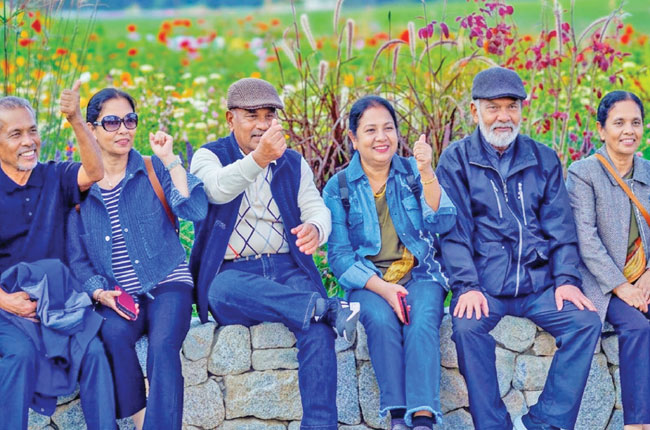
Healthy ageing is emerging as a major priority across Asia, with Sri Lanka facing the challenge of a rapidly ageing population. According to the Final Report of the 2024 Census of Population and Housing, published by the Department of Census and Statistics, almost 18% of Sri Lanka’s population is now aged 60 and above. The World Health Organization (WHO) projects that this proportion could increase to approximately 26% by 2050.
While life expectancy continues to improve, living longer does not necessarily mean enjoying better health. Sri Lanka’s life expectancy at birth reached 77.2 years in 2021, reflecting considerable progress in longevity. However, the country, like several others across Asia, is increasingly confronted with a healthspan challenge, as more people spend their later years managing chronic illnesses, mobility difficulties and limitations in everyday activities.
Against this backdrop, AIA recently collaborated with internationally recognised ageing researcher Lowell Sheppard to explore the experiences of Japan’s so-called super-agers, examining the factors that contribute to healthier and more fulfilling later lives. The research highlighted the importance of psychosocial elements of healthy ageing, particularly having a strong sense of purpose.
AIA Group Chief Marketing Officer Stuart A. Spencer emphasised the need to adopt a broader perspective on ageing, moving beyond conventional approaches that primarily focus on traditional health and mortality risks.
He noted that understanding the ageing process requires greater attention to the mindsets and behaviours of retirees, similar to the way insurers have traditionally engaged with younger and middle-aged populations.
Spencer further highlighted that people's lives are shaped by a wider range of influences than those captured by conventional insurance risk assessments, stressing the importance of exploring how different factors can contribute to better health outcomes, lower morbidity and improved longevity.
Insights from super-agers could provide valuable lessons on extending healthspan, which refers to the period of life spent in good health, with unrestricted mobility and the ability to maintain independence.
Research across the Asia-Pacific region has identified growing concerns about the gap between lifespan and healthspan. Despite improvements in life expectancy in several countries, increasing rates of non-communicable diseases are creating additional challenges, potentially leaving more people to spend longer periods of their lives dealing with chronic health conditions and reduced functional abilities.
Beyond the individual impact, this trend also presents wider social and economic challenges. A growing population living with long-term health limitations may increase dependence on family caregivers and place additional pressure on healthcare systems and resources that are already under strain.
As Sri Lanka moves towards an older population structure, encouraging healthier ageing will therefore require a more comprehensive approach that places equal importance on longevity, physical wellbeing, mental resilience, social connections and independence.
Seylan Bank partners Play.Book as exclusive banking partner

Seylan Bank PLC has entered into a strategic partnership with Play.Book, Sri Lanka’s largest sports venue booking and community platform, becoming its exclusive banking partner. The collaboration aims to provide cardholder privileges and greater payment convenience for sports enthusiasts and recreational players across the country.
Effective from November 1, the partnership offers special discounts and exclusive benefits to Seylan Credit and Debit Cardholders when booking sports facilities through the Play.Book platform.
The collaboration reflects Seylan Bank’s continued focus on addressing the changing lifestyle and wellness preferences of its customers by linking everyday banking services with opportunities to participate in sports, enjoy recreational activities and maintain healthier lifestyles.
Play.Book provides a convenient digital platform through which users can discover, reserve and pay for indoor sports facilities using its mobile application, while also connecting players with sports communities and venues.
Under the agreement, Seylan Credit Cardholders will receive a 10% discount on eligible bookings made through the Play.Book application, while Debit Cardholders will be entitled to a 5% discount. The offers are designed to deliver additional savings and value to customers participating in sports and recreational activities.
Commenting on the partnership, Play.Book Co-Founder and CEO Alexander Poulin said the platform's vision extends beyond simplifying sports venue reservations, focusing instead on building and connecting communities through shared sporting experiences.
He noted that Play.Book aims to bring together people across different sports, venues and neighbourhoods, encouraging more individuals to stay active and invest in their wellbeing. He added that partnering with Seylan Bank as its exclusive banking partner would help advance this vision by combining the bank’s extensive cardholder network with Play.Book’s expanding community of players, venues and experiences.
Rethinking Ageing: Building a Future Where Older Sri Lankans Can Thrive