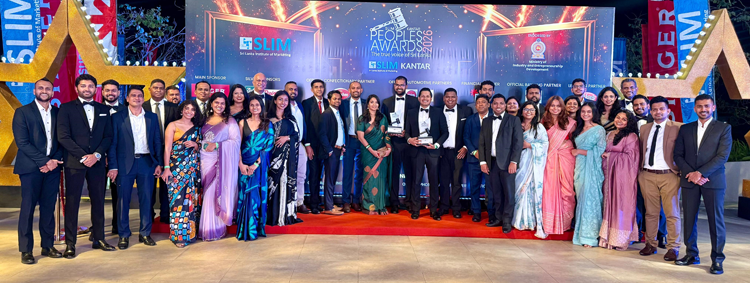





Nestlé’s household favourites continued their winning streak at the SLIM-KANTAR People’s Awards 2026, securing two major accolades this year. NESCAFÉ was named People’s Hot Beverage Brand of the Year, while MAGGI emerged as a joint winner for People’s Snack Brand of the Year—marking the fifth consecutive year both brands have earned top recognition.
Organised by the Sri Lanka Institute of Marketing (SLIM), the SLIM-KANTAR People’s Awards is widely regarded as one of the country’s most prestigious platforms, celebrating brands and personalities that resonate most with Sri Lankan consumers.
Renowned for its distinctive aroma and rich taste, NESCAFÉ is crafted from 100% pure coffee beans, delivering memorable coffee experiences that enhance everyday life. Meanwhile, MAGGI noodles, made using Sri Lankan spices and high-quality ingredients, have remained a trusted household favourite for over four decades.
Commenting on the achievement, Chairman and Managing Director Bernie Stefan stated that the People’s Awards hold special significance as they are driven entirely by consumer choice. He noted that being recognised for the fifth consecutive year reflects the deep trust Sri Lankans place in NESCAFÉ and MAGGI—trust built over generations throughout the company’s 120-year journey in Sri Lanka. He added that the recognition is a testament to the dedication of their teams in maintaining quality while understanding local tastes, and expressed gratitude for the continued support of consumers.
Guided by its purpose of unlocking the power of food to enhance quality of life for everyone—today and for generations to come—Nestlé Lanka has been enriching lives in Sri Lanka for 120 years. The company continues to nourish communities with a wide range of tasty and nutritious products while remaining committed to supporting healthier families, empowered communities, and a greener planet. With over 90% of its products manufactured locally at its state-of-the-art facility in Kurunegala, Nestlé Lanka upholds the highest standards of safety and quality.
Light of Merit over the Glow of Fame: Redefining Global Ranking Systems
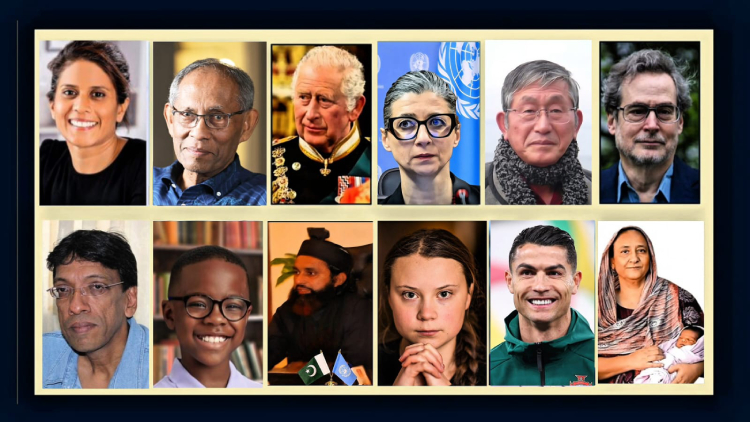
History is often shaped by the loudest voices—not always the most impactful ones. For decades, global rankings have leaned on a “popularity matrix,” where visibility is mistaken for true impact. In such systems, significance is measured by the roar of the crowd rather than by merit, intrinsic value, and meaningful contribution.
Today, however, a notable shift is emerging in how human achievement is recorded and recognised. The Impact Hallmarks©? initiative, through its Quarticentennial Merited Impacts Gazette, introduces a “living ledger” that replaces the fleeting drumbeat of fame with the steady, evidence-based rhythm of a Century Merit Index.
To understand the importance of this shift, we must first acknowledge the limitations of traditional ranking models. Many rely on what can be described as “popular reductionism”—compressing complex, multidimensional achievements into a single, shallow question: how many people are watching? This oversimplification creates a kind of “auto-blurring social alchemy,” where short-lived popularity is mistaken for enduring value. As a result, individuals and initiatives with strong promotional backing rise to prominence, while quieter, transformative contributions remain overlooked.
In contrast, the IH©? Quarticentennial Gazette positions itself as a moral compass for the modern era—a “mirror of rectitude” that documents individuals and initiatives based on measurable, lasting impact rather than momentary attention.
At the heart of this framework is a Multi-Criteria Assessment System that evaluates contributions across scientific, social, and ethical dimensions. Instead of reacting to immediate trends, it takes a long-view approach, assessing impact over a 25-year horizon from 2000 to 2025. This method acts as a systemic audit of real-world change, prioritising depth, consistency, and long-term influence over short-term visibility.
Where conventional rankings offer a mirage-like glow, this approach provides a holistic map of progress. It recognises a fundamental truth: real impact is often subtle and gradual—working beneath the surface before reshaping societies in profound ways.
In moving from the glow of fame to the light of merit, this new paradigm seeks to restore balance, ensuring that recognition is not just seen—but deserved.
Nestlé brands NESCAFÉ and MAGGI have once again secured top honors at the SLIM-KANTAR People’s Awards 2026, marking their fifth consecutive year of victory