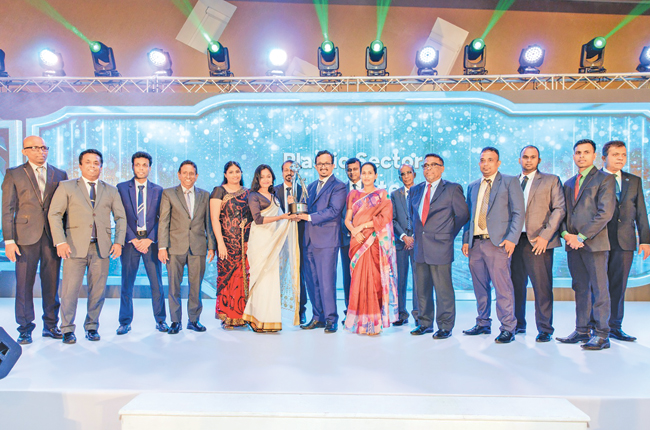
The National Cleaner Production Awards ceremony, recognising outstanding achievements in cleaner production, resource efficiency and environmental sustainability across Sri Lanka’s industrial and business sectors, was recently held at Cinnamon Life in Colombo. The event was graced by Sunil Handunnetti, Minister of Industries and Entrepreneurship Development.
Organised by the National Cleaner Production Centre (NCPC) in partnership with the Ministry of Industries and Entrepreneurship Development, the ceremony honoured organisations that have demonstrated exceptional commitment to adopting cleaner production methods and environmentally sustainable business operations.
A total of 114 awards were presented across five categories, comprising one Platinum Award, 17 Gold Awards, 26 Silver Awards, 33 Bronze Awards and 37 Merit Awards. The recognitions highlighted the efforts of organisations in improving resource utilisation, reducing waste generation, minimising environmental impacts and integrating sustainable practices into their day-to-day operations.
The prestigious Platinum Award, representing the highest level of recognition at this year’s event, was awarded to E. B. Creasy & Co. PLC’s BIC & DENTA Factory for its achievements in cleaner production and sustainability.
The National Cleaner Production Awards serve as an important platform for recognising industrial organisations that demonstrate leadership in environmental responsibility while encouraging wider adoption of sustainable production practices across the country.
Addressing the gathering, Sunil Handunnetti, Minister of Industries and Entrepreneurship Development, emphasised the importance of advancing environmental responsibility alongside economic competitiveness. He also highlighted the role of the National Cleaner Production Awards in encouraging organisations to incorporate sustainability principles into their operational processes and business strategies.
Sri Lanka Looks to Kazakhstan’s AI Data Centre Model to Advance Digital Sovereignty
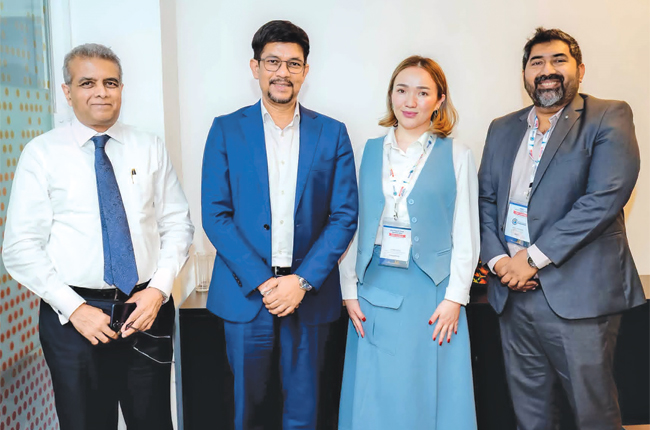
Sri Lanka is exploring Kazakhstan’s experience in developing national artificial intelligence (AI) infrastructure and digital public services as part of its efforts to establish a sovereign National AI Data Centre and accelerate the country’s digital economy. The initiative was discussed at a bilateral meeting between a visiting delegation from Kazakhstan and officials of the Ministry of Digital Economy on Friday (13), led by Deputy Minister of Digital Economy Eranga Weeraratne.
The discussions centred on the proposed National AI Data Centre, Digital Public Infrastructure (DPI), data sovereignty and AI governance frameworks, with particular emphasis on Kazakhstan’s experience in establishing secure national digital infrastructure through direct government investment.
The Kazakhstani delegation outlined its approach to developing a National AI Data Centre using direct state investment to safeguard national data sovereignty and ensure the secure storage and hosting of critical government and public-sector information. Both parties agreed to exchange technical information to evaluate Sri Lanka’s data centre requirements, including electricity consumption, infrastructure capacity and capital investment needs.
The meeting also explored Kazakhstan’s ‘Smart Bridge’ platform, which enables seamless connectivity between public and private-sector digital services across areas such as healthcare, property and government administration.
Further discussions focused on the country’s centralised data-sharing system, which operates through the National Data Exchange (NDX), incorporating citizen consent, security safeguards and fraud-prevention mechanisms. The delegation also highlighted its ‘SuperApp’, which provides access to multiple services through a unified authentication platform.
Kazakhstan shared its progress in introducing AI-powered public services, including ‘e-Gov GPT’, which allows citizens to access government services through voice and text commands, as well as a secure internal GPT environment developed for public-sector employees. Another notable initiative discussed was ‘KazLLM’, a large language model designed to support local languages and address the country’s specific national requirements.
The exchange also highlighted Kazakhstan’s approach to accelerating digital transformation through direct implementation partnerships with trusted technology providers, backed by strong leadership and clear strategic direction, rather than depending exclusively on lengthy conventional procurement procedures.
The discussions are expected to support the development of Sri Lanka’s National Digital Economy and AI Infrastructure Roadmap, while opening avenues for greater international collaboration towards establishing a secure, sovereign and citizen-focused digital ecosystem.
National Cleaner Production Awards Honour Excellence in Sustainable and Environmentally Responsible Practices