




The Department of Economics at the University of Jaffna successfully organized a two-day academic program on 9–10 April 2026, with support from a grant provided by the India–Sri Lanka Foundation (ISLF).
The program was chaired on both days by the Head of the Department of Economics, Dr. Kamalakumari Karunanithy, and featured two guest lectures along with an interactive panel discussion, all aligned with the objectives of the funded initiative.
The events were graced by the Consul General of India in Jaffna, Sai Murali, who attended both days and addressed participants during the opening session. The Dean of the Faculty of Arts, Prof. N. Piratheeparajah, also delivered opening remarks on the first day.
On 9 April, the guest lectures were delivered by distinguished scholars Dr. Brinda Viswanathan of the Madras School of Economics (MSE), on “Nutrition Security through the Life-cycle: An Inter-state Comparison in India,” and Dr. M. Vijayabaskar of the Madras Institute of Development Studies (MIDS), on “Industrialisation for Employment: Catalytic Role of Textiles & Garments in Tamil Nadu State.”
Both speakers also participated in a panel discussion held on 10 April on the theme “Social and Gender Justice Policies for Girls and Women: What can we learn from the Indian experience?” The panel included prominent Sri Lankan resource persons: Mary Delcia Antony Christian (Senior Lecturer in Economics, University of Jaffna), Udhayani Navaratnam (Women’s Development Officer, Kilinochchi District Secretariat), Nisansala Jayawardane (Senior Lecturer, Eastern University of Sri Lanka – Trincomalee Campus), and Dr. Logeswary Sooriyakumaran (Senior Lecturer, Eastern University of Sri Lanka – Trincomalee Campus).
A key highlight of the program was a hands-on Econometrics workshop conducted by Prof. Brinda Viswanathan for undergraduate students on the afternoon of 9 April.
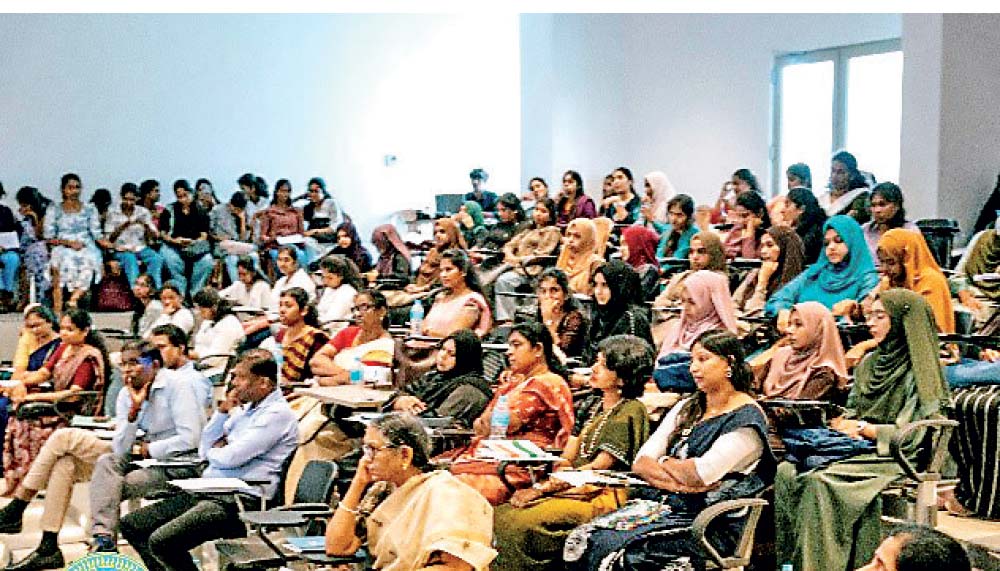
The program saw strong participation, including 21 students and four academic staff members from South Eastern University of Sri Lanka, three academic staff from the Trincomalee Campus of the Eastern University of Sri Lanka, as well as over 100 students and several academic staff from the University of Jaffna. The sessions fostered active academic engagement and meaningful cross-institutional dialogue.
IMF reiterates energy cost recovery as key condition for Sri Lanka review approval
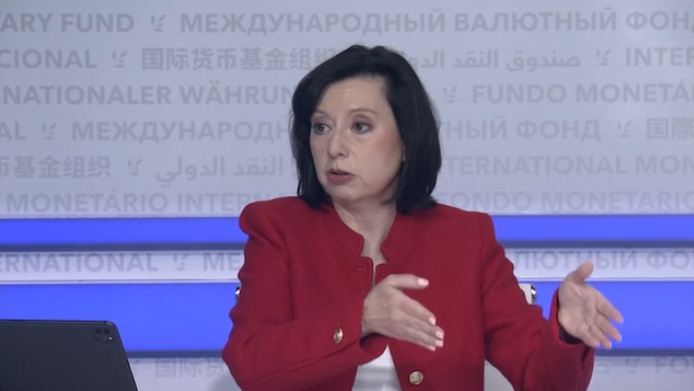
The International Monetary Fund (IMF) has reaffirmed that restoring cost recovery in energy pricing remains a critical prior action for the completion of Sri Lanka’s combined Fifth and Sixth Reviews under the Extended Fund Facility (EFF).
Speaking at a press briefing on 14 May 2026, IMF Director of the Communications Department Julie Kozack addressed questions regarding the alignment of current government subsidy measures with the IMF programme framework. Responding to a query from Ada Derana on a reported Rs. 100 per litre diesel subsidy, she stressed that approval by the IMF Executive Board is contingent on specific prior actions related to electricity and fuel pricing reforms.
She noted that the IMF’s programme requires a “two-part” approach, involving the restoration of cost-recovery pricing for electricity and fuel, while also ensuring protection for vulnerable groups.
“There were a few prior actions that needed to be completed before we could bring the program to our Executive Board, and these were the restoration of cost recovery, electricity, and fuel pricing, while also protecting the vulnerable,” Kozack said.
She further clarified that while moving toward full cost recovery is essential for fiscal sustainability, it must be implemented in a way that safeguards low-income and vulnerable segments of the population from adverse impacts.
ISLF promotes cross-border academic dialogue on economic, gender, and social justice policies